
Key takeaways
- Thermal runaway is a rare but serious chemical process that requires immediate professional intervention.
- Modern Battery Management Systems (BMS) are designed to prevent fires, making software updates vital.
- Always use certified charging equipment and follow manufacturer guidelines for home installations.
- Check your vehicle’s VIN regularly against official manufacturer databases for safety recalls.
Every time a news headline flashes about an electric vehicle fire, it is natural to wonder if your car is a potential hazard. But is the fear justified, or are we just seeing more coverage of rare, isolated events? According to a recent analysis on msn.com, while public anxiety is high, it is vital to separate media sensationalism from technical reality. Mastering ev lithium battery safety does not mean living in fear; it means understanding how the battery used in your EV actually functions. In this guide, we will break down the mechanics of thermal runaway, identify genuine warning signs, and share practical steps to keep your charging environment secure. We will also cover EV Battery Charging Best Practices: An Operator’s Guide to ensure you are protected. Let’s look at the facts, keep things cool, and focus on what truly keeps you safe on the road.
The Chemistry of Thermal Runaway
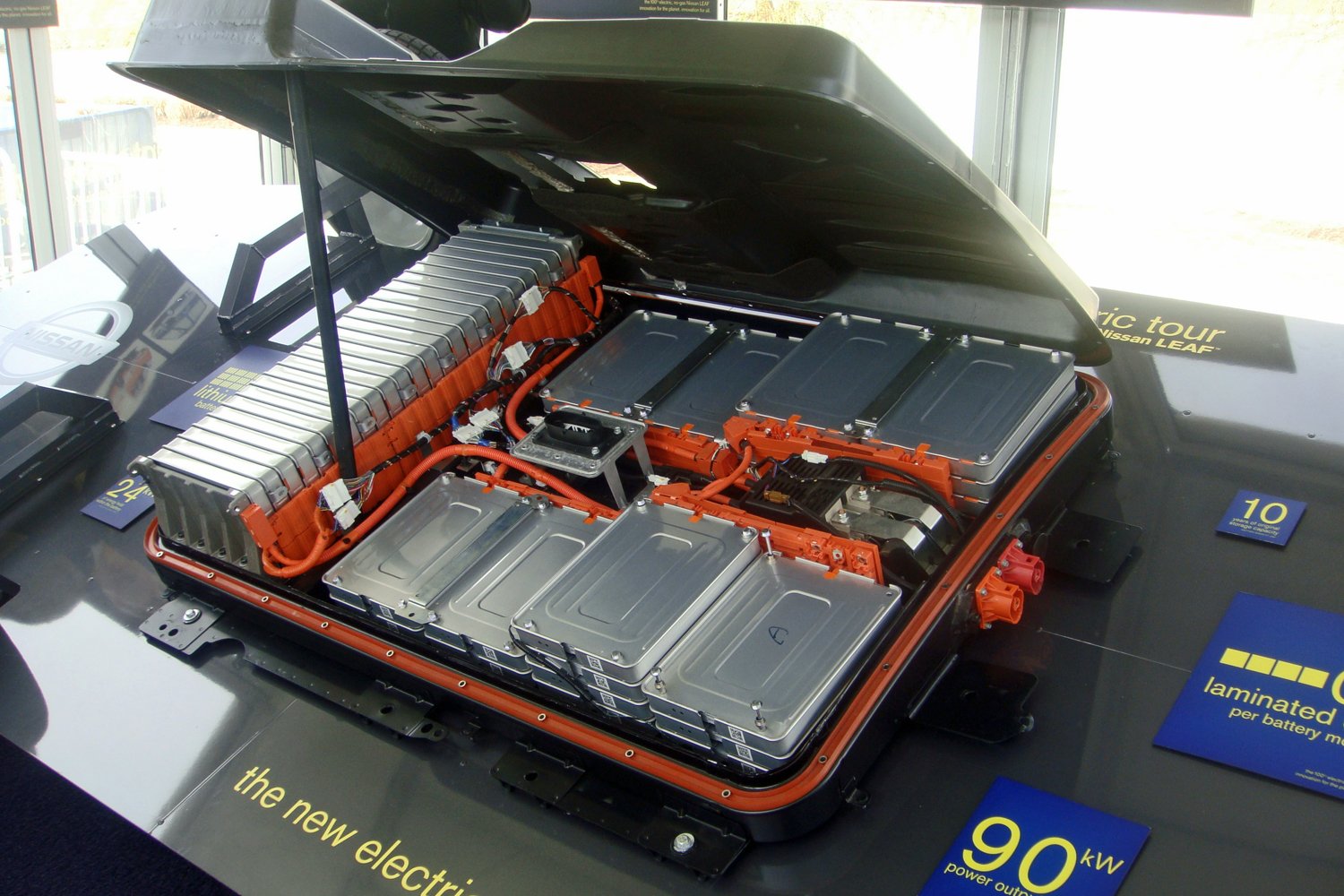
If you’ve ever wondered why an EV battery fire is so stubborn, it comes down to chemistry. Think of thermal runaway as a self-sustaining chain reaction. When a single battery cell short-circuits—perhaps because the internal separator failed—it generates heat. This heat causes the electrolyte inside to break down, releasing gases that ignite and generate even more heat. It becomes a vicious, runaway cycle that’s incredibly hard to kill.
You should distinguish between the causes, though. An internal defect, like a tiny microscopic metal shard left over from manufacturing, can cause a short without any warning. External damage is different; that’s when you hit a curb or get into an accident that physically crushes the battery casing.
The core challenge with the battery used in EVs today is energy density. These packs are designed to hold massive amounts of energy in a compact space. Because the chemistry essentially provides its own oxygen supply once the reaction begins, traditional fire extinguishers often struggle. You’re not just fighting a fire; you’re fighting a chemical plant that’s currently in overdrive. While researchers explore Beyond Lithium: The Reality of Next Gen Electric Car Batteries to mitigate these risks, the current reality remains that preventing these internal shorts through strict manufacturing controls is our best defense. If your battery casing shows signs of deep impact or warping, don’t ignore it.
Identifying Early Warning Signs
You don’t need to be a chemist to spot trouble with your EV. While normal battery aging might lead to a slight reduction in range or slower charging speeds, actual safety hazards show up as physical red flags. If you notice localized heat radiating from the battery pack area or, worse, any visible swelling of the casing, treat it as a critical warning. A sweet, metallic, or pungent odor that doesn’t belong in your cabin is another classic sign of internal electrolyte leakage.
Listen closely to your vehicle. A hissing sound or wispy white smoke venting from the battery is not part of normal operation; it is a sign that the battery is entering a volatile state. If you catch these signals, do not wait for your next service interval. Getting an immediate professional inspection is non-negotiable, as effective lithium-ion fire prevention relies on catching these anomalies before they escalate.
It is worth noting that organizations are increasingly focusing on these risks, with companies like morningstar.com highlighting how vital it is to scale safety protocols as battery use expands. Unlike standard component wear—which happens gradually over thousands of miles—these warning signs are sudden and demand your full attention. If your battery shows these indicators, pull over safely, exit the vehicle, and call for professional support. Never attempt to test or open a battery pack yourself; the risk of injury is simply too high.

Charging Infrastructure and Fire Risk
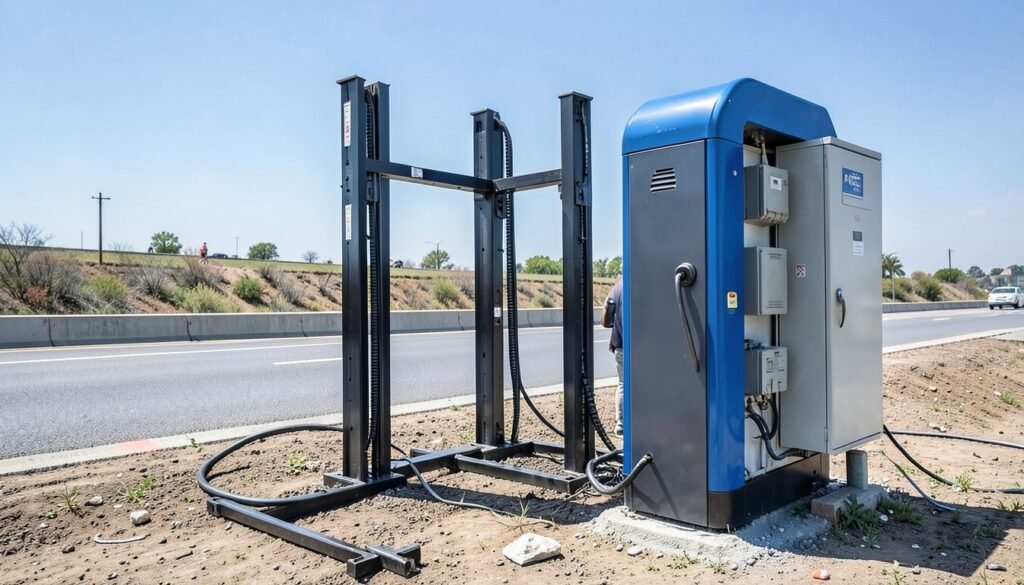
Most charging fires I see reported aren’t necessarily about the car itself, but the equipment pushing power into it. Using non-certified, fraying cables or cheap, unverified adapters is a massive gamble that compromises your safety. Stick to the manufacturer-provided hardware or high-quality certified alternatives; if a cable feels hot to the touch or shows visible wear, retire it immediately.
Never daisy-chain extension cords to reach your EV. Household outlets aren’t designed to handle the continuous, high-amperage draw of an electric vehicle for hours on end, which can lead to melted insulation or electrical shorts. You should always use a dedicated circuit installed by a professional electrician to avoid overloading your home’s wiring. If you are curious about the technical requirements for public or private infrastructure, you might find this guide on How to Start EV Charging Station in India: A Reality Check useful for understanding the scale of these safety requirements.
Ventilation is often overlooked, but it is critical for lithium-ion fire prevention. Charging naturally generates heat; if your charger is tucked into a small, enclosed space without airflow, that ambient heat builds up and stresses your battery pack. Ensure your garage or parking area has proper circulation to dissipate heat efficiently while the battery is at its peak thermal state.
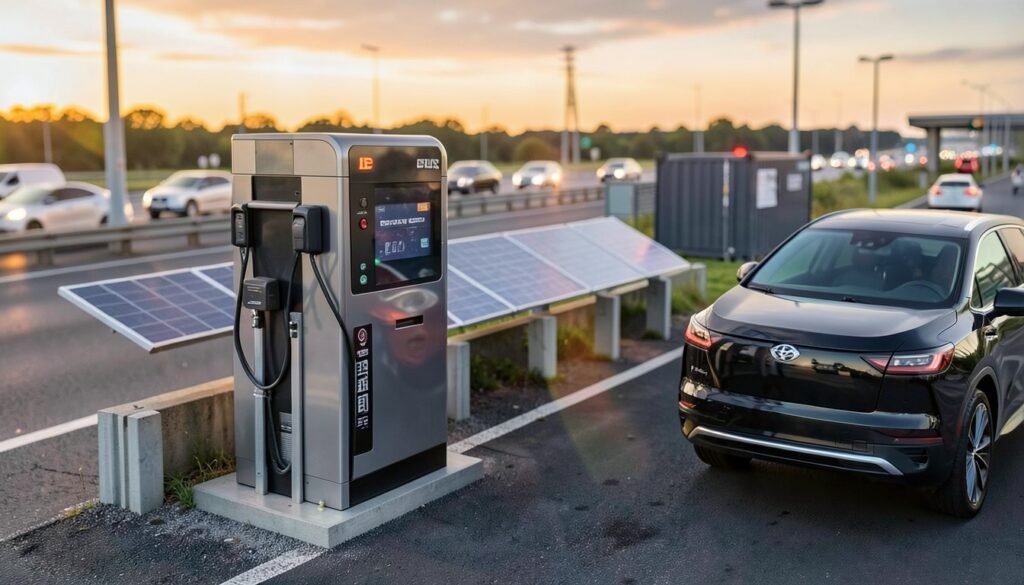
Finally, leverage smart charging features. Many modern home chargers communicate with the vehicle to prevent over-voltage incidents, effectively cutting off the power if the grid spikes or the battery reaches its charge limit. These systems act as a secondary safety layer, keeping your pack within its optimal operating window rather than pushing it to the brink.
The Role of Battery Management Systems (BMS)
Think of the Battery Management System (BMS) as the vigilant guardian of your EV’s health. It doesn’t just look at the pack as a whole; it monitors the voltage and temperature of individual cells every millisecond. If the system detects a cell creeping toward thermal stress, it automatically throttles your power. You might notice a temporary dip in performance or a slower charging speed, but that’s the BMS actively preventing a dangerous spike in heat.
The BMS acts as your primary shield against overcharging, which is a major contributor to battery instability. It cuts the power flow the moment the battery reaches its calibrated limit, ensuring no cell is pushed beyond its design capacity. It’s a sophisticated piece of engineering that keeps the chemistry inside the battery used in EVs from reaching a point of no return.
Software updates are vital here, too. As noted by nytimes.com, manufacturers frequently push firmware improvements that refine how the BMS handles heat and charging cycles. By installing these updates, you aren’t just getting new features; you’re ensuring your car’s safety limits stay sharp and responsive to the latest diagnostic data.
Emergency Protocols: What to Do If You Smell Smoke
If you catch that sharp, metallic or chemical scent inside your cabin, don’t hesitate or try to investigate—get out immediately. The chemistry behind ev lithium battery safety is complex, and once a thermal event begins, those precious seconds matter for your survival.
Follow these steps if you suspect a fire:
- Pull over to a safe, open area, well away from buildings, overhead structures, or other vehicles.
- Turn off the ignition and evacuate everyone, including pets, to a distance of at least 50 feet.
- Call emergency services immediately. Crucially, explicitly state that it is an electric vehicle battery fire so they can arrive with the necessary equipment to handle high-voltage hazards.
You might be tempted to move the car or dump water on the hood, but don’t. While firefighters use massive volumes of water to cool the pack and stop the progression of thermal runaway, water is a cooling agent here, not a simple extinguisher. Attempting to push or drive a smoking vehicle is dangerous, as the fire can intensify rapidly beneath the chassis.
Prevention remains your best defense. Understanding your pack’s health helps you avoid issues entirely. See How to Maximize EV Battery Life: A Guide to Health and Reliability for tips on keeping your system in top shape. Stay clear and leave the heavy lifting to the professionals.
Regulatory Standards and Battery Recalls
When you hear about a massive recall—like the recent campaign covering over 85,000 Volkswagen and Audi electric vehicles—it’s easy to panic. But take a breath. These actions aren’t necessarily a sign of a flawed product line; they are proactive safety measures designed to prevent potential thermal runaway issues before they ever happen. Manufacturers use these recalls to update software or replace components that might not meet the strictest ev battery safety standards.
Regulatory bodies, such as the CPSC, play a vital role here by tracking incidents and demanding transparency. They ensure that when a pattern emerges, the public gets notified immediately. It’s a messy process, but it works to filter out dangerous tech. If you own an EV, don’t wait for a letter in the mail. Regularly check your vehicle’s VIN against the manufacturer’s official recall database to stay ahead of any required updates.
Are these fires becoming more common, or are we just seeing them reported more often? As noted on msn.com, perception often outpaces reality. Treat a recall notice as a service update, not a catastrophe. It’s simply the industry working to keep you safe on the road.

India Context: Infrastructure and Safety Standards
In India, the conversation around battery safety is moving from panic to policy. The government introduced the AIS-156 safety standards, which mandate rigorous thermal management and structural integrity for electric two- and three-wheelers. If you are buying an EV here, look for this certification; it ensures the battery pack is built to withstand local climate extremes and prevent short circuits.
When it comes to charging, the industry is testing smarter solutions. Pilots involving Battery Energy Management (BEM) and HPCL, for instance, focus heavily on centralized thermal management in swapping stations. These stations are designed to monitor each cell’s health in real-time, drastically reducing the risk of a thermal event compared to uncontrolled, amateur home charging.
Testing isn’t just a suggestion here. The Bureau of Indian Standards (BIS) requires battery packs to undergo specific testing protocols before they reach the showroom floor. If you are curious about how these systems function internally, How Oxygen Release Can Help You Prolong EV Battery Life explains the chemistry behind keeping these units stable.
Finally, for home charging, don’t just plug into a standard wall socket. Always verify that your installation aligns with your local DISCOM safety guidelines. A quick call to your regional electricity provider can confirm if your home wiring supports the load, preventing the overheating issues that lead to fire risks. It’s a simple step that keeps your home and your ride safe.
Long-term Storage and Health
Leaving your car idle for weeks? Don’t leave it at 100% or 0%. Keeping your battery at a state-of-charge (SoC) between 40% and 60% is the sweet spot. It minimizes internal chemical stress, which is vital for long-term health.
Extreme temperatures are the biggest threat to battery stability during storage. If you park in a scorching garage or a freezing driveway, you’re asking for trouble. Try to park in a shaded, climate-controlled space whenever possible. If you must leave it outside, avoiding direct sunlight is a simple, effective step to prevent unnecessary heat buildup.
Never let your pack drop to 0% and sit there. A deep discharge can cause irreversible cell damage and lead to internal shorts, creating a serious ev lithium battery safety risk when you finally plug it back in. Manufacturers are increasingly pushing for better monitoring, and businesses are scaling up their own morningstar.com suppression solutions to manage these risks as battery use becomes ubiquitous. Treat your battery like a living thing—it hates extremes, and it needs a little bit of steady energy to stay happy.
Frequently Asked Questions
How can I tell if my EV battery is overheating?
Your vehicle’s Battery Management System is your primary line of defense. It will typically display a warning on your dashboard or limit power output if temperatures spike. Beyond digital alerts, trust your senses: a sharp, acrid chemical smell or visible smoke escaping from the undercarriage are major red flags. If you notice these, pull over safely, exit the vehicle, and call emergency services immediately.
Do I need a special fire extinguisher for my electric vehicle?
A standard home fire extinguisher won’t work on a lithium-ion battery fire. These incidents involve a chemical process known as thermal runaway that generates its own oxygen, making them incredibly difficult to suppress. Experts generally advise that if your EV battery catches fire, you should not attempt to extinguish it yourself. Your priority must be to evacuate everyone and maintain a safe distance.
Are home-installed EV chargers safe for overnight use?
Yes, provided they are installed by a certified professional following local safety regulations. Most modern chargers are designed for overnight charging and include built-in protocols to stop charging once the battery is full. Avoid using cheap, uncertified cables that don’t meet official standards. Regularly inspect your home charging setup for signs of wear to ensure your lithium-ion fire prevention measures stay effective.
What does a battery recall actually mean for my vehicle’s safety?
A recall means the manufacturer has identified a potential defect—like the issues recently affecting over 85,000 Volkswagen and Audi vehicles—that requires professional intervention. Do not ignore these notices. A recall usually involves a software update to monitor battery health or a hardware replacement. Follow the manufacturer’s specific instructions, such as limiting your state of charge, until you reach an authorized service center.
Beyond the Headlines: Living Safely with EVs
If you are feeling a bit uneasy about EV lithium battery safety, I get it. With headlines highlighting battery recalls and fire risks, it is easy to assume your car is a ticking time bomb. But let’s keep things in perspective. Most modern EVs feature sophisticated management systems designed to keep those cells in a safe zone, far from the point of thermal runaway. While we should always be vigilant, these vehicles are engineered for the real world. In fact, worrying about your battery safety is starting to feel a bit like How to Overcome EV Range Anxiety: Why It’s Dying Out in 2026—a common concern that technology is rapidly solving. My best advice? Stop doom-scrolling and start reading your owner’s manual. Look for the section on charging limits and long-term storage, and actually follow those manufacturer guidelines. That is the most effective way to protect your investment.

Join the conversation