Key takeaways
- Always verify that your e-bike battery and charger carry official BIS or UL 2849 certification marks.
- Never charge batteries in hallways, near exits, or in environments without adequate ventilation.
- A sophisticated Battery Management System (BMS) is the primary defense against thermal runaway.
- Avoid aftermarket chargers or ‘range-extender’ batteries that bypass manufacturer safety protocols.
You’ve likely seen the headlines about e-bike fires in your news feed, and if you’re like me, it’s enough to make you double-check your charger before leaving the house. The truth is, lithium ion battery standards are finally catching up to the technology, moving us away from the "Wild West" era of cheap, unregulated packs. Whether you’re riding in Mumbai or Manhattan, understanding how these systems fail is the first step in EV Lithium Battery Safety: Preventing Thermal Runaway and Fires. New resources, like those recently highlighted by safetyandhealthmagazine.com, emphasize that safety isn’t just about luck—it’s about engineering. In this guide, we’ll cut through the confusion to explain UL 2849, how to spot a counterfeit charger, and the essential steps to maintain your battery health. Let’s make sure your ride stays a thrill, not a hazard.
The Science of Thermal Runaway in Lithium-Ion Packs
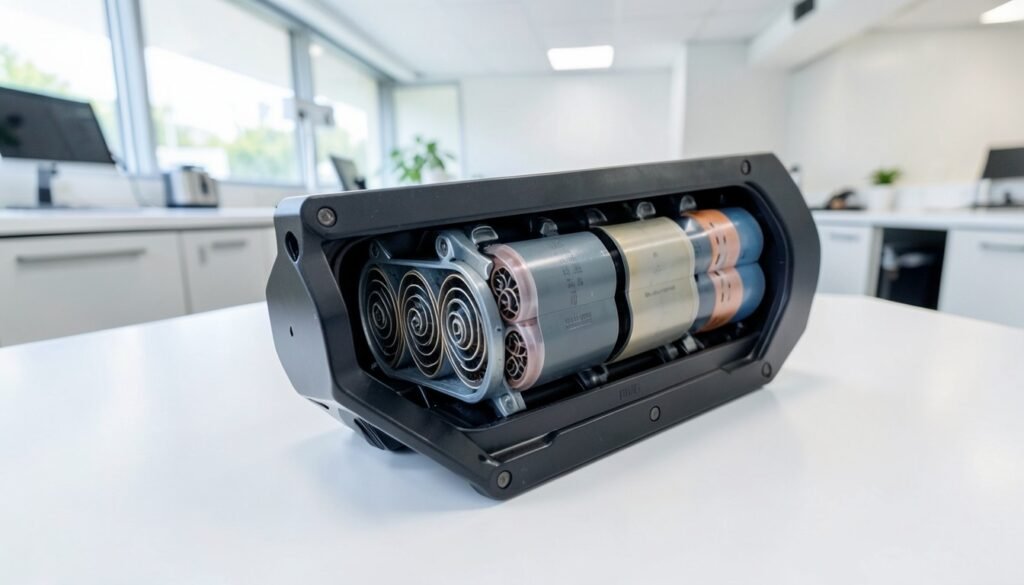
Think of thermal runaway as a domino effect you cannot stop once the first piece tips. It starts when a lithium-ion cell hits a critical temperature, usually triggered by internal shorts or external abuse. Inside the cell, the liquid electrolyte begins to decompose, releasing flammable gases and generating even more heat. This creates a self-sustaining cycle where the temperature spikes rapidly, leading to the catastrophic failure we often see in news reports.
Physical damage—like a heavy drop or a puncture—is a frequent trigger. When the internal separator, that paper-thin barrier between the anode and cathode, is compromised, the components touch directly, causing an immediate, intense short circuit. Manufacturing defects, such as microscopic metal shards left inside during the factory assembly process, can cause this same dangerous reaction over time.
If you are wondering why some packs are safer than others, it comes down to rigorous quality control. High-quality cells undergo extensive testing to meet strict lithium ion battery standards, ensuring they can handle thermal stress without failing. Conversely, cheap, uncertified alternatives often skip these essential safety protocols, frequently using inferior separators that melt at much lower temperatures. Understanding these risks is crucial; even for those riding legal electric bicycles, knowing how to keep e bike battery safe is a non-negotiable skill. For a deeper look at how your specific ride classifies, check out our Difference Between Ebike and Emoto: Laws and Safety Guide to see if your battery setup meets the local safety mark.
Understanding Global Certification: UL 2849 and BIS Standards
When you’re shopping for an electric bike, you’ll quickly run into "lithium ion battery standards" like UL 2849 or BIS. Think of these as your first line of defense. The UL 2849 standard is the gold standard for electrical systems, evaluating the entire package—battery, motor, controller, and charger—together to ensure they don’t turn into a fire hazard. It’s not just about the battery; it’s about how the charger communicates with the management system to prevent thermal runaway.
In India, the Bureau of Indian Standards (BIS) serves as the regulatory backbone. Compliance with the IS 16046 series, which aligns with international safety protocols, is mandatory for manufacturers to sell packs legally. While UL is a voluntary, rigorous certification often pushed by global retailers, BIS provides the baseline legal framework that keeps substandard kits off our roads. Agencies like ohsonline.com emphasize that safety hinges on following these established consensus standards rather than relying on "bargain bin" tech.
If you’re unsure if your ride is safe, use this quick checklist:
- Verify the Label: Look for the ISI mark on your battery pack or the UL 2849 certification sticker on the frame.
- Check Documentation: Ask the dealer for the official compliance report. If they can’t produce it, walk away.
- Match the Charger: Only use the charger that came with your unit; cross-brand charging is a recipe for disaster.
Prioritizing these standards isn’t just bureaucratic red tape—it’s how we keep our daily commutes from becoming an emergency.

Charging Infrastructure: Best Practices for Home and Office
Let’s get real about charging. If you’re trying to save a few bucks by picking up a generic charger from an online marketplace, stop. Stick to the charger provided by your original equipment manufacturer (OEM). These are specifically calibrated to the lithium ion battery standards of your pack, ensuring the voltage cut-offs match exactly. A random "universal" charger might look identical, but it often lacks the handshake communication required to talk to your bike’s Battery Management System (BMS), which is the primary gatekeeper for your pack’s health.
Using aggressive "fast chargers" is another trap. If your battery is rated for a 2A charge, pushing 5A into it to save an hour is asking for trouble. It’s an easy way to trigger e bike battery problems by prematurely overheating the internal cells. To learn more about managing these power cycles properly, check out our EV Battery Charging Best Practices: An Operator’s Guide.
Where you charge matters just as much as what you use. Never charge in high-traffic residential corridors or near emergency exits. If a thermal event occurs, you don’t want your only path out of the building blocked by a fire. Keep your battery in a cool, ventilated space away from direct sunlight or heavy insulation. A steady ambient temperature is the best defense against long-term degradation. Always ensure the area is clear of flammable materials, keeping your setup clean to ensure total e bike battery safety.
The Shift in Urban Policy: Why Cities are Regulating E-bikes
Local governments are moving fast to bring order to our streets. From Maricopa County to Evanston, we’re seeing a wave of new ordinances that restrict where e-bikes can travel and, more importantly, where they can be stored. This isn’t just bureaucratic red tape; it’s a direct response to the rising number of e-bike and e-scooter accidents, particularly among younger riders, and a string of high-profile, fatal battery fires.
In multi-family buildings, the conversation has shifted toward fire prevention. While it’s worth asking if these fires are becoming more common or if they are simply receiving more media coverage msn.com, the reality is that the intensity of a battery fire inside a confined apartment complex is a massive risk. Consequently, property managers are now scrutinizing charging habits, often banning overnight charging in hallways or non-ventilated storage units to mitigate the risk of thermal runaway.
Striking a balance between green mobility and public safety is the challenge of the decade. Cities want us out of cars, but they can’t ignore the safety gap. This is why we’re seeing new electric bicycle battery safety proposals that lean heavily on mandated lithium ion battery standards. Registration is quickly becoming a legal prerequisite in many regions. By tethering ownership to certified equipment, municipalities hope to filter out the cheap, fire-prone imports that cause the most trouble. Staying compliant isn’t just about avoiding a ticket; it’s about keeping our shared living spaces safe.

Battery Management Systems (BMS): The Hidden Tech
Think of the Battery Management System (BMS) as the unsung hero of your ride. It’s the electronic brain that keeps your pack from becoming a fire hazard. By constantly monitoring individual cell voltage, internal temperature, and current flow, it ensures your battery stays within safe operational parameters. If a cell gets too hot or voltage spikes during a charge, a smart BMS instantly cuts the power. This functionality is critical to prevent overcharging and deep discharge scenarios, which are the primary culprits behind degraded cells and potential thermal runaway.
You might wonder why manufacturers push firmware updates to your bike’s display. These aren’t just for show; they often include critical logic tweaks that improve cell balancing and extend your battery’s service life. When you keep your software current, you are essentially aligning with the latest lithium ion battery standards for safe energy management.
However, I’ve seen riders attempt to "chip" or tamper with their BMS to bypass speed limiters or squeeze out extra range. Don’t do it. When you hack the firmware to remove factory-set safety buffers, you are effectively disabling the safety net that prevents catastrophic failure. It’s a bit like trying to disable the advanced detection algorithms in What is Counter Unmanned Aerial Systems? A Technical Guide; you’re removing layers of protection that keep the system from going haywire. If you value your garage—and your bike—leave the BMS alone.
Identifying Counterfeit Batteries and Chargers
When you’re looking to save a few bucks on a spare battery, you’re often walking into a fire trap. Counterfeit batteries are notoriously hard to spot, but they usually give themselves away with poor casing finish, misaligned power ports, or an oddly light weight compared to the original. If the labeling looks blurry or lacks clear, embossed safety certification marks, run.
Never trust an aftermarket charger bought from an unverified online marketplace. These units often skip essential protection circuits that manage voltage spikes. Using them is a fast track to e bike battery problems, as they can easily overcharge your pack, leading to the thermal runaway risks detailed on the safetyandhealthmagazine.com portal.
Always verify the serial number of any battery pack directly through the manufacturer’s official database. If a seller refuses to provide a verifiable code, walk away. For fleet operators, this isn’t just about safety; it’s a massive legal risk. Deploying non-compliant, uncertified hardware in commercial fleets can void your insurance and leave you liable for damages if an incident occurs.
To keep things safe:
- Cross-reference serial numbers with official support pages.
- Avoid "universal" chargers that promise compatibility with every brand.
- Check for consistent, high-quality heat-shrink wrapping on the pack.
- Look for official safety certification stamps, which are non-negotiable for lithium ion battery standards compliance.
Smart maintenance starts with using the right parts, not the cheapest ones.
Maintenance and Lifespan: When to Replace Your Battery
Your battery isn’t going to last forever, but knowing how to maintain an ebike battery correctly can squeeze every possible mile out of it. Most modern lithium-ion packs are rated for 500 to 1,000 full charge cycles before their capacity naturally dips below 80%. When you notice your daily range has dropped significantly—perhaps by 20% or more—or the battery case becomes unusually hot to the touch during standard operation or charging, you are likely encountering common e bike battery problems that signal degradation.
If you are wondering how to check ebike battery health, start by tracking your range over consistent, familiar routes. If the performance gap is widening despite stable riding conditions, it is time for a professional assessment. For those riding high-mileage machines, such as when evaluating options like Zero’s $8K Shift: The Best Electric Motorcycle for Beginners?, aim for a certified dealer inspection every 6,000 to 10,000 kilometers or at least annually. This ensures the battery management system and cells are performing within safe parameters.
When the pack finally reaches the end of its life, never throw it in the regular trash. Lithium-ion batteries are classified as hazardous waste. Always use authorized collection centers or specialized recycling programs in your area. Proper disposal prevents environmental contamination and ensures that valuable metals are reclaimed safely. A well-maintained battery is significantly more reliable, so stay vigilant with your charging habits and never ignore a pack that struggles to hold a charge.
The Future of Battery Tech: Solid State and Beyond
The industry is finally shifting toward solid-state batteries, replacing volatile liquid electrolytes with solid alternatives. By removing the flammable liquid component, these packs significantly reduce the risk of internal short-circuits. It’s a massive leap forward for anyone concerned about electric scooter fire prevention.
We are also seeing a major pivot in battery chemistry. While NMC (Nickel Manganese Cobalt) cells provide high energy density, LFP (Lithium Iron Phosphate) packs offer superior thermal stability. If you want to know how to keep an e-bike battery safe, prioritizing bikes that use LFP chemistry is a practical, smart move. They are inherently more resistant to the heat spikes that lead to e-bike battery problems.
Urban transport is simultaneously moving toward standardized, swappable battery architectures. When cities adopt common form factors, they create a safer, regulated environment where batteries are inspected at centralized stations rather than in cramped apartments. This shift reduces the pressure on individual users and encourages professional maintenance, which is essential as we learn how to check ebike battery health over time.
As ohsonline.com highlights, there is a global push to standardize how we manufacture and manage these energy packs. The industry is moving away from the "wild west" of proprietary, unregulated tech toward robust, certified energy storage. Whether it’s smarter sensor integration or safer chemistry, the focus is clearly on preventing failure before it starts. The future isn’t just more range; it’s about making sure your ride stays cool, stable, and truly reliable.
Frequently Asked Questions
How can I tell if my e-bike battery is safe?
Look for certification marks like UL 2849 or relevant BIS standards on the label. Beyond documentation, inspect the casing for physical cracks, swelling, or signs of liquid damage. If the pack gets unusually hot or emits a hissing sound while charging, stop immediately. Regularly checking your e-bike battery health is simple: if it loses capacity unexpectedly or takes forever to charge, seek a professional inspection.
Why are e-bike batteries catching fire during charging?
Thermal runaway is the primary culprit. When a cell shorts or overheats, it triggers a chain reaction that releases intense heat and gas. This often occurs due to physical impact, using incompatible chargers, or a failed Battery Management System (BMS). Effective electric scooter fire prevention starts by using only the manufacturer-provided charger and avoiding charging in extreme temperatures or near flammable materials.
What is the difference between BIS and UL certification for e-bikes?
These are both essential lithium ion battery standards, though they serve different regions. UL 2849 is a rigorous safety standard for the entire electrical system of e-bikes, widely recognized in North America. In India, BIS certification ensures products meet national safety benchmarks. Both frameworks mandate strict testing on battery packs and chargers to ensure the internal electronics can safely manage power flow.
Can I use a third-party charger for my electric scooter?
Don’t do it. Mixing and matching chargers is a leading cause of e-bike battery problems. A third-party charger may have a different voltage or current output that bypasses your battery’s safety protocols, leading to dangerous overcharging. To keep your e-bike battery safe, always use the specific charger provided by your bike’s manufacturer. It is the most reliable way to prevent preventable electrical accidents.
Protecting Your Ride: The Bottom Line
Standards like UL 2849 and BIS aren’t just red tape; they’re the primary barrier between you and a thermal runaway event. While we wait for solid-state tech to become the industry norm, your focus must remain on using only verified, certified hardware. For context on how global production standards shape the machines we ride, take a look at Where Are Honda Motorcycles Manufactured? Brazil’s $3.3B Strategy.
To keep your e-bike battery safe, stop treating it like a disposable phone battery. Check your pack regularly for physical damage or swelling, and never use a charger that lacks the same certification mark as your battery. If your unit feels unusually hot to the touch or shows signs of e bike battery problems, stop using it and visit a qualified service center immediately.
Your next step is simple: locate the serial number on your battery and check it against the manufacturer’s official safety portal. It takes five minutes, but it’s the most effective way to ensure you aren’t carrying a fire risk into your home or office. Stay smart, ride safe, and keep your gear maintained.
Sources and further reading
- New from OSHA: Lithium-ion Battery Safety website — safetyandhealthmagazine.com
- Are Lithium-Ion Battery Fires Really A Big Problem? — msn.com
- OSHA Launches Webpage on Safe Handling of Lithium-Ion Batteries at Work — ohsonline.com


Join the conversation