
Key takeaways
- Battery chemistry choice directly affects cost and range; LFP is cheaper but lower energy density.
- Real‑world range is typically 15‑20% lower than manufacturer claims due to temperature and load.
- Level 2 chargers are the most cost‑effective for fleet operators, while DC fast chargers are essential for long‑haul vehicles.
- India’s BEML‑HPCL pilot shows swapping can reduce downtime but requires significant upfront investment.
- Smart charging and V2G can turn fleets into grid assets, lowering operating costs and enhancing resilience.
Imagine getting a 70% charge in just five minutes. With breakthroughs like Geely’s 900-V system and BYD’s Flash technology, that dream is moving off the drawing board and into the real world. But for most of us, mastering ev battery charging best practices today is about more than just chasing top speeds. It is about managing your routine to balance daily convenience with long-term battery health.
If you suffer from electric vehicle range anxiety, you are not alone. We will break down everything from how to calculate ev battery charging time to the nuances of various charging levels for ev. Whether you are installing home equipment—check out these top-rated chargers at msn.com—or scaling a fleet, you need a solid strategy. Before diving in, read How to Maximize EV Battery Life: A Guide to Health and Reliability to keep your pack performing for years to come.
Understanding EV Battery Basics
When you’re looking at an EV, the battery is the heart of the machine. In 2026, we’re seeing a clear split in chemistries. LFP (Lithium Iron Phosphate) remains the king of cost-efficiency and longevity, perfect for daily commuters, even if it carries a bit more weight per kWh. On the flip side, NMC (Nickel Manganese Cobalt) and NCA (Nickel Cobalt Aluminum) chemistries pack higher energy density into smaller spaces, which is why you’ll find them in long-range luxury models or high-performance vehicles where every kilogram counts.
For passenger cars, a typical pack hovers between 60 kWh and 100 kWh. Commercial fleets, however, are pushing past 150 kWh to handle heavy hauls and longer shifts. To understand these packs, you need to track a few key metrics:
- C-rate: This tells you how fast a battery can charge or discharge relative to its capacity.
- Depth of Discharge (DoD): How much of the battery you use before recharging; sticking to a 20-80% window is often cited as the sweet spot.
- Thermal Management: Liquid cooling is now standard for high-performance systems to prevent overheating during rapid charging.
If you want your pack to last, learning How Oxygen Release Can Help You Prolong EV Battery Life is essential. Ignoring thermal limits or pushing constant high-C charging will degrade your cells faster than any other variable. It’s a game of balance between chemistry, capacity, and heat.
Range Reality: From Specs to Streets
Ever notice how your dashboard "miles remaining" number drops faster than your battery percentage? Manufacturers usually cite standardized testing, like China’s CLTC or the EPA cycle, which assume perfect laboratory conditions. Real life is messier. Your actual range fluctuates based on your driving style, cargo weight, and, most crucially, the ambient temperature. This discrepancy is the primary source of electric vehicle range anxiety for new owners who expect laboratory results on their daily commute.
Take the latest tech from BYD. Their second-generation Blade Battery, detailed in autoweek.com, claims an impressive 1,000 kilometers under the CLTC cycle. In practice, however, that figure often translates to something closer to 650 kilometers once you adjust for highway speeds and real-world variables. Compare that to a standard Tesla Model 3, which offers a reliable baseline of approximately 400 to 500 kilometers depending on the configuration. While the BYD flagship pushes the boundaries of energy density, the Tesla remains a consistent performer for daily commuting.
To keep your range predictable, watch these three factors:
- Temperature: Batteries struggle in extreme cold; significant energy is diverted to cabin heating and maintaining battery thermal management, reducing total mileage.
- Driving Style: Rapid acceleration is the fastest way to deplete your pack, as high discharge rates generate more waste heat.
- Payload: Extra weight directly increases the kilowatt-hours required to travel each kilometer, especially on hilly terrain.

Charging Modes & Power Levels Explained
Understanding the different charging levels for ev is your first step to managing expectations. Think of it like a tiered system: Level 1 is your standard household wall socket—slow, basic, and free of extra hardware costs. Level 2, typically found in homes or offices, uses AC power to charge significantly faster. If you’re curious about the business side of this, check out How to Start EV Charging Station in India: A Reality Check to see what operators are dealing with.
For speed, we look to DC fast charging. These stations bypass the car’s onboard charger to push electricity directly into the pack. We’ve seen incredible benchmarks recently, like Geely’s 900-V battery reaching a 10% to 80% charge in just 5 minutes and 32 seconds, or BYD’s FLASH system hitting similar marks. However, pushing such massive power—sometimes peaking over 1,000 kW—generates heat. While liquid cooling helps, frequent high-speed sessions can accelerate battery degradation compared to gentler Level 2 charging.
To manage these, we rely on smart charging protocols like OCPP and ISO 15118. These allow your car and the charger to "talk," optimizing how much power is drawn based on grid demand or your specific battery state. It’s not just about speed; it’s about safety and longevity. Knowing how to calculate ev battery charging time is simpler when the grid and your vehicle communicate directly through these protocols, ensuring you don’t pay for peak-hour rates unnecessarily.
Infrastructure Costs: What Operators Pay
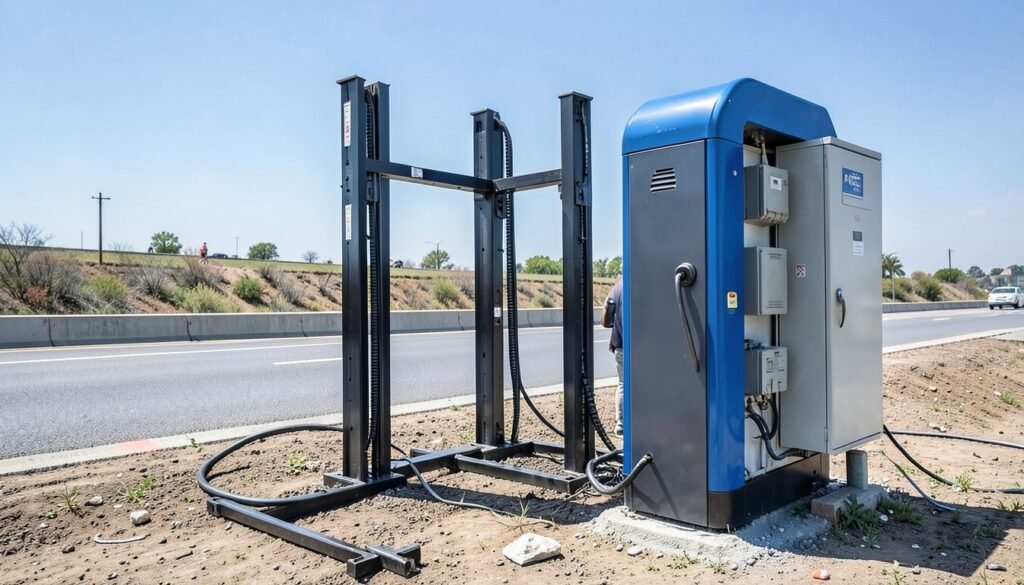
When you look at ev charging infrastructure cost, the gap between a simple home charger and a commercial DC fast station is massive. A standard Level 2 charger might run you a few hundred dollars, but scaling to commercial DC fast charging requires significant capital. You aren’t just buying the hardware; you are paying for the heavy-duty cabling, industrial-grade transformers, and local grid upgrades that can easily push installation costs into five or six figures per site.
Think of it this way: a 7 kW Level 2 unit is a light touch on your electrical panel, but a megawatt-class system—like those using Zeekr’s V4 piles mentioned by newatlas.com—demands grid-level infrastructure. In India, operators often face additional fixed demand charges from DISCOMs, which can drastically shift the economics of your charging business if your utilization rates are low.
Breaking Down the Recurring Costs
- Electricity Tariffs: These are your biggest variable. Look for time-of-use rates to avoid peak-hour pricing.
- Software Licensing: You need a backend platform to monitor uptime, process payments, and manage energy loads.
- Maintenance: Don’t ignore connector wear and cooling system checks.
For fleet operators, the "cost per kW" isn’t just the sticker price of the charger. It’s the total investment divided by the expected energy throughput over five years. If you don’t calculate grid connection fees and future-proofing for higher voltage, you’ll end up paying double for upgrades later.
India’s Pilot Projects: Lessons Learned
The BEML-HPCL battery swapping pilot in Bengaluru serves as a fascinating test case for fleet operators. By focusing on swapping rather than waiting, these stations allow two-wheelers and three-wheelers to trade depleted packs for fully charged ones in mere minutes. While granular, real-time usage statistics remain internal to the participating firms, this model demonstrates how swapping effectively bypasses the typical wait associated with standard ev battery charging time for commercial logistics.
On the public infrastructure front, Tata Power has been aggressively expanding its charging network throughout 2026. Their pricing model generally reflects a per-kWh tariff, which fluctuates depending on whether you utilize a standard AC charger or a high-speed DC unit. It is a practical move to standardize these rates, helping you calculate your potential expenses more accurately before pulling up to a plug.
The government continues to nudge this transition forward. Under the FAME-III framework, various state subsidies and tax rebates are designed to lower the overall ev charging infrastructure cost, making it more viable for private players to install hardware. These financial supports are critical because they address the gaps in charging levels for ev owners who lack dedicated home setups. When you combine this expanding network with improved battery energy density, you will find that How to Overcome EV Range Anxiety: Why It’s Dying Out in 2026 becomes a much more grounded reality for Indian drivers. Seeing these pilots mature is a clear sign that the market is finally moving past the experimental phase.
Optimising Battery Life for Longevity
You want your battery to last? Treat it like a high-performance athlete. Keeping your state-of-charge (SoC) between 20% and 80% is the golden rule for daily driving. Regularly hitting 100% or letting it drop to zero increases chemical stress, which accelerates degradation. If you’re looking for home gear to manage this, msn.com covers chargers that help you set these limits easily.
Temperature is the silent killer of cells. Extreme heat during rapid charging is particularly rough. Most modern cars use liquid-cooled thermal management systems, but you can help by pre-conditioning the cabin while plugged into the wall. This lets the grid—not the battery—handle the heavy lifting of cooling or heating the interior before you even start your commute.
Don’t ignore those pesky over-the-air (OTA) updates, either. Manufacturers often push patches that optimize cell balancing and power management algorithms. These updates might seem minor, but they are crucial for keeping the battery health metrics accurate. Think of it as a software tune-up that keeps your range estimates honest. If you are stuck in a cycle of "range anxiety," these small habits—staying in the 20-80% window and managing cabin temps via wall power—are the single most effective ways to preserve the longevity of your investment over the long haul. Keep the battery cool, keep the cycles shallow, and you’ll be on the road for years.
Smart Charging & Grid Integration
Smart charging isn’t just about speed; it’s about timing. If you’re charging your fleet during peak utility hours, you are almost certainly overpaying. Most utilities now offer time-of-use tariffs, where electricity rates drop significantly during off-peak windows—usually late at night or during midday hours when solar generation is at its highest.
For business operators, demand response programs are the next logical step. By allowing your charging infrastructure to communicate directly with the local grid, you can automatically pause or slow charging when utility demand spikes. In return, you often receive credits or reduced rates. It’s a practical way to shave your operational overhead while helping the grid maintain stability.
Commercial fleets are also perfectly positioned for vehicle-to-grid (V2G) technology. Instead of letting your electric trucks sit idle in a depot, they can act as a massive, distributed battery bank. This allows you to feed power back into the grid during peak demand, potentially creating a new revenue stream. While we look at how these systems interact, Beyond Lithium: The Reality of Next Gen Electric Car Batteries provides a look at the hardware shifts that make this grid-balancing possible.
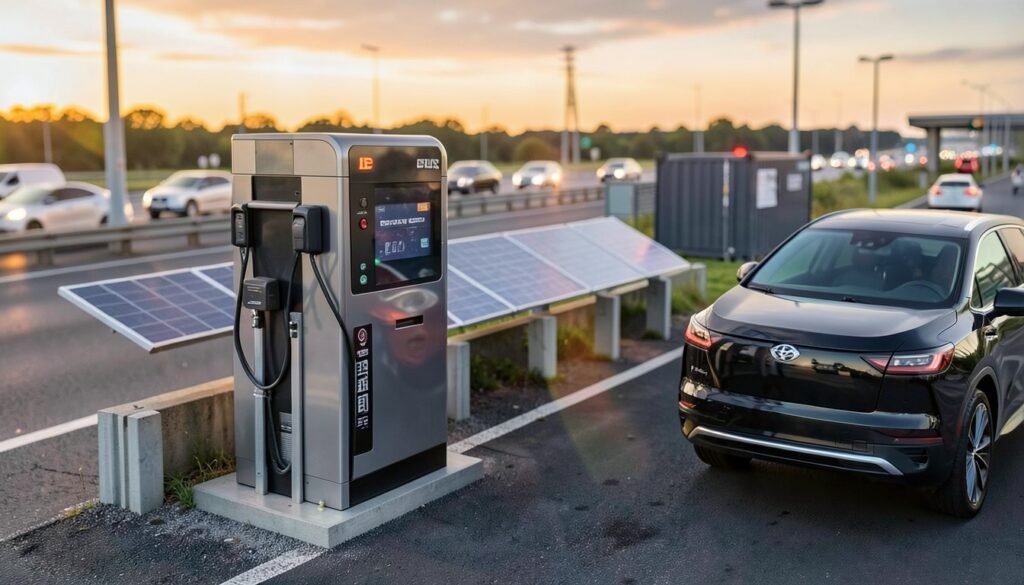
Look at the Marine Corps Base Camp Blaz for a blueprint. They have successfully implemented smart charge management to synchronize EV charging sessions with their local photovoltaic (PV) generation. By timing their charging to match peak solar output, they mitigate power curtailment—effectively using free, on-site energy to power the fleet rather than drawing from the grid during expensive peak hours.
Regulatory Landscape & Compliance
When you are looking into ev battery charging best practices, you cannot ignore the regulatory wall. In India, charging infrastructure must adhere to strict guidelines. While the industry often references international IEC standards for safety and interoperability, local deployment is primarily governed by the Ministry of Power and the Bureau of Indian Standards (BIS). It is worth noting that while some specialized discussions involve aviation-level safety protocols for massive grid-tied hubs, the current focus remains on ensuring that every station installed across the country meets rigorous fire and electrical safety codes.
Globally, the requirements are equally demanding. In the US, look for UL certification, which ensures that battery packs and charging hardware have survived intense testing, including fire and impact resistance. Similarly, the European Union mandates the CE mark, signaling compliance with health and safety standards. As reported by autoweek.com, advancements like flash charging rely on sophisticated chemical and mechanical safety measures that must be validated against these international benchmarks to prevent thermal runaway.
Finally, consider the digital side of your hardware. Modern charging stations are essentially connected devices. They collect data on your habits, location, and power consumption. Always verify that the network operator complies with local data privacy laws. If you are a business owner or fleet manager, ensure your charging provider offers clear transparency on how your energy usage data is stored. A secure network is just as vital as a fast one.
Future Trends Shaping Operators
We are approaching a turning point in how fleets handle energy. With solid-state technology entering the fold, we are seeing real-world benchmarks where batteries like Geely’s 900V Energee or BYD’s Blade 2.0 hit 70% capacity in roughly five minutes. These advances will fundamentally change how to calculate ev battery charging time for commercial operators who currently face significant downtime bottlenecks.
Intelligence Meets Infrastructure
Future-proofing your operation isn’t just about faster cables; it’s about smarter software. AI-driven predictive maintenance is beginning to monitor charger health, flagging component failures before a fleet vehicle plugs in and finds a dead unit. Think of it like 2026 Smartphone Price Trends: Finding Real Value in Flagships; just as you research hardware longevity for your phone, operators must now evaluate the software reliability of their charging networks.
Renewable Integration
The biggest shift involves on-site storage. Projects like those at Marine Corps Base Camp Blaz show that pairing ev charging infrastructure cost with solar PV generation and battery storage helps mitigate grid strain. Instead of drawing expensive power during peak hours, fleets can use stored renewable energy to charge vehicles, effectively lowering operational overhead. As you refine your ev battery charging best practices, look for systems that allow this sort of intelligent grid integration. By combining ultra-fast charging levels for ev with local storage, you stop managing electric vehicle range anxiety and start managing energy as a predictable, manageable asset for your entire business.
Watch: Top 9 EV Battery Charging Best Practices for Long Battery Life
Frequently Asked Questions
What is the average range of a 2026 electric SUV?
While specific figures vary by model, top-tier 2026 electric SUVs are pushing boundaries. For example, vehicles utilizing high-density battery tech, like BYD’s latest systems, are achieving over 621 miles on the CLTC cycle. You should expect an EPA-rated range of well north of 400 miles for leading models. Always check official manufacturer specs, as actual range depends heavily on your driving style.
How much does it cost to install a Level 2 charger in India?
I cannot provide a specific rupee amount for installing a Level 2 charger in India because official costs vary significantly based on your local electricity provider and site requirements. You should check the official notifications from your local DISCOM for installation regulations and potential subsidies. Always consult a certified local electrician to get an accurate quote tailored to your home’s electrical capacity.
What are the best practices to extend EV battery life?
Adhering to proper ev battery charging best practices is key to longevity. While ultra-fast charging is convenient, industry experts caution that frequently pushing for maximum speed can compromise long-term health. I recommend using slower home charging whenever possible and avoiding keeping your battery at 100% or near-zero for extended periods. Consistent, moderate charging cycles are generally better for your battery’s internal chemistry.
How do smart charging protocols improve grid stability?
Smart charging protocols help by aligning your charging times with peak energy production, like when solar generation is high. For instance, facilities like Marine Corps Base Camp Blaz use these systems to manage load and mitigate curtailment. By shifting demand away from peak hours or using on-site battery storage, you reduce stress on the local electrical grid while simultaneously helping to manage your operating costs.
The Road Ahead for EV Operators
The industry is moving at breakneck speed. With brands like BYD and Geely pushing 5-minute charge times using 900-V systems, the hardware is clearly ready for prime time. However, don’t let the marketing hype mask the reality: infrastructure is the actual bottleneck. Whether you’re managing a fleet or just worried about electric vehicle range anxiety, focus on where you plug in today, not just the theoretical specs of tomorrow.
If you’re building your own charging hub, you’ll need to balance grid capacity with peak demand. Sometimes, using tools like the Ideavo AI App Builder: Best AI App Builder for Beginners? can help you prototype custom dashboards to track your energy usage effectively. My advice? Start by auditing your current local energy costs. Before investing in ultra-fast hardware, ensure your site can handle the load. Following established ev battery charging best practices beats chasing vanity specs every time.

Join the conversation