
Key takeaways
- High electricity connection costs and low utilization rates are the primary barriers to public EV charger profitability.
- Battery-buffered charging systems offer a way to provide high-speed power without requiring massive, expensive grid upgrades.
- Battery swapping is currently the most viable path for commercial logistics fleets to minimize downtime.
- Residential charging remains a bottleneck due to space constraints and the need for load-balancing in older buildings.
Imagine standing on a dark highway at 2 AM with 5% battery left, only to find the charger broken. It’s the kind of frustration that keeps many Indians from switching to electric, which is exactly why everyone is talking about the infrastructure gap right now.
If you are researching how to start ev charging station in india, you’ve likely seen the glossy projections of easy profits. But before you commit your capital, we need to look past the hype at the real numbers, grid limitations, and operational headaches.
The core challenge is simple to state: scaling public charging is much harder than it looks. We’re going to break down why the business case stays so thin for many operators today.
The Electricity Connection Hurdle
If you’re wondering how to start an EV charging station in India, the first shock isn’t the hardware—it’s the grid connection. Recently, FADA highlighted that exorbitant electricity connection costs are stalling charging rollouts at dealerships across the country. The upfront expense to secure a high-capacity commercial connection can quickly wipe out your initial capital, making the dream of running a profitable site feel distant.
Think of your monthly electricity bill as having two parts: the energy you actually consume and the "fixed demand charge." Even if no one plugs in at your station for a week, the utility company charges a premium just for keeping that peak capacity available to you. This fixed demand charge is a massive hurdle for small-scale operators. It’s a bit like paying for a massive data plan you never use.
Regulatory friction between private providers and State Electricity Boards (SEBs) further complicates your timeline. Getting a new commercial connection often involves navigating bureaucratic red tape that feels decades behind the current tech.
Typical Cost Components for a Commercial Connection:
- Security Deposit: Often calculated per kW of sanctioned load.
- Infrastructure Charges: Costs for upgrading local transformers or lines to your site.
- Fixed Demand Charges: Monthly overheads regardless of station utilization.
- Meter Installation Fees: One-time regulatory setup costs.
Until these SEBs align their policies with the reality of electric vehicle charging stations in India, the "how to setup ev charging station in india" journey remains a game for those with deep pockets.
Why Highway Chargers Remain Unprofitable
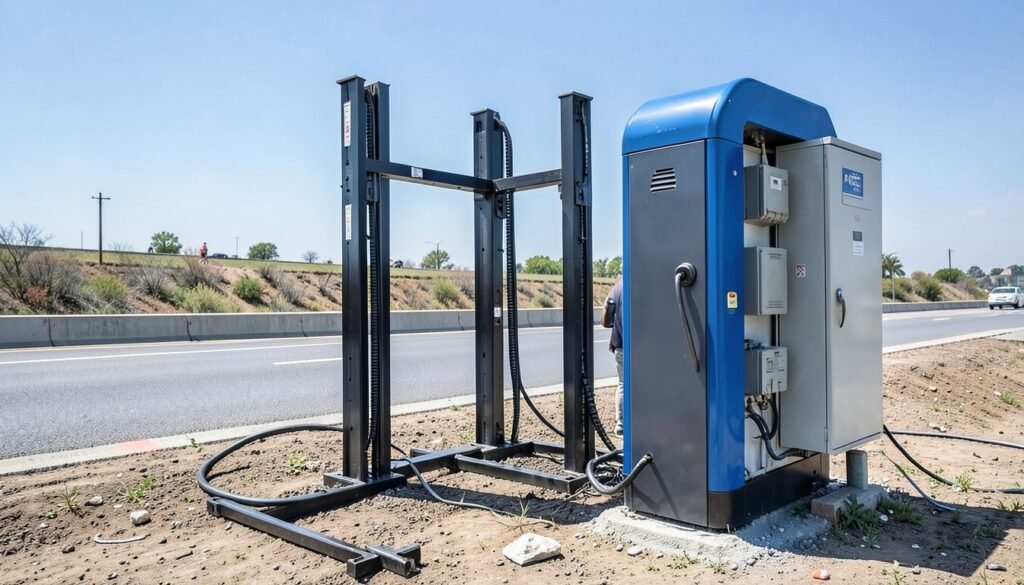
If you are looking at how to start an EV charging station in India, the highway segment is a sobering reality check. While tradebrains.in highlights the massive potential for electric vehicle charging stations in India, the current economics for remote highway units are brutal.
Unlike urban hubs where constant traffic ensures a steady flow of customers, highway chargers often sit idle for hours. This low utilization rate is the primary reason why maintenance is so frequently neglected. When a charger breaks down in a remote area, it is not just a technical issue; it is a logistics nightmare. High temperatures and road dust play havoc with sensitive electronics, and sending a technician to a site with low traffic is a cost that most operators simply cannot justify.
Think about how a traditional petrol pump operates. They thrive on high-volume, quick-turnaround transactions where the profit margin on fuel and snacks covers the overhead. In contrast, public charging is a slow game. The electricity-based model is constrained by power grid limitations and the sheer amount of time a vehicle spends plugged in. You are essentially trying to build a business where your "product" is stuck at the counter for forty minutes, limiting your hourly throughput. If you are figuring out the ev charging station cost in india, remember that remote sites face higher failure rates and much slower returns on your initial capital investment compared to city-based setups.

The Hidden Costs of Grid Upgrades
High-speed charging isn’t just about plugging in a cable; it’s a massive, often underestimated strain on local transformers. When you look at how to setup ev charging station in india, the transformer upgrade cost is frequently the silent killer of project feasibility. Utility providers aren’t just charging for the electricity consumed; they are charging for the infrastructure capacity you occupy.
High-speed chargers draw power in sudden, massive spikes. If a local grid isn’t ready, the entire neighborhood’s voltage might flicker or drop. Grid operators often charge a steep premium for peak-load management because they must maintain substantial backup capacity, which is exactly why startups like Variablegrid are raising capital to optimize these hidden operational costs.
These tech companies are building software to balance the load, ensuring that the local grid doesn’t buckle when several fast chargers pull power simultaneously. You need precise energy management to keep everything running smoothly without causing a system failure.
Without stable, upgraded grid infrastructure, rapid charging expansion remains a major hurdle. You must account for these significant electrical civil works in your initial ev charging station cost in india analysis. If you ignore these, you might face an unexpected, massive bill from your local power utility before you even successfully charge your first customer’s car.
Battery-Buffered Charging: A Technical Solution
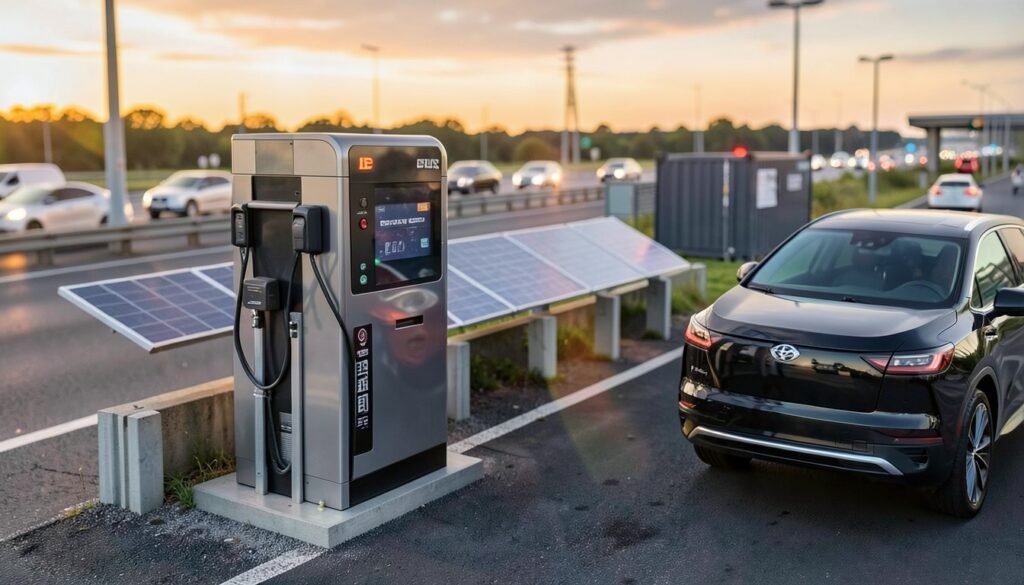
If you’re looking at how to setup ev charging station in india, the biggest technical roadblock is often the local grid’s inability to handle sudden, massive power demands. Traditional fast chargers draw heavy currents that can trip local transformers. This is where Energy Storage System (ESS)-integrated chargers provide a smarter path forward.
Instead of relying solely on the grid, these units use a buffer battery—often utilizing second-life batteries from retired EVs—to store energy during low-demand periods. When a car pulls in for a quick top-up, the charger delivers a high-power pulse from its internal battery rather than straining the local line. This effectively creates a "power reservoir" that allows you to provide rapid charging even in areas with weak electrical infrastructure.
When you compare costs, the initial capital expenditure for a buffered charger is higher than a standard grid-direct unit. However, you save significantly on the hefty grid upgrade fees that utilities often charge to handle high-demand connections. As partnerships like V-Green and ChargeZone demonstrate, expanding the network of electric vehicle charging stations in india requires creative engineering to overcome these site-specific bottlenecks.
For a business owner, this means you don’t necessarily need a dedicated high-voltage substation to offer DC fast charging. By using buffering, you bridge the gap between what your site currently provides and what modern EVs actually need to get back on the road in minutes.
Battery Swapping for Commercial Fleets
If you are looking at logistics, waiting for a truck to charge is a non-starter. That is why the recent launch of the electric truck battery-swap station in Bhiwandi by Blue Energy Motors and HPCL is such a practical shift. Instead of keeping a heavy vehicle stationary for hours, drivers can swap a depleted battery for a fully charged one in minutes.
For fleet owners, downtime is the ultimate enemy. A truck sitting at a charger earns zero revenue, making the math of long-haul logistics look bleak. Battery swapping changes the equation by mimicking the speed of a traditional diesel refuel. Swapping is the most direct way to keep heavy-duty commercial EVs moving.
Consider these operational differences:
- Speed: Swapping takes minutes; fast-charging heavy batteries takes hours.
- Revenue: Higher vehicle utilization directly translates to better margins.
- Infrastructure: Swapping stations avoid the massive grid upgrades needed for ultra-fast charging points.
Scalability remains the real test. Swapping is incredibly effective for predictable, fixed routes, but it requires massive standardization of battery packs across manufacturers. While it works well for heavy trucks, light commercial vehicles often rely on smaller, decentralized charging networks. For a logistics operator, the choice between swapping and charging usually boils down to whether your vehicle can afford to sit still. If it cannot, swapping is the only viable path forward.
Apartment Charging: The Last Mile Challenge
If you live in an older apartment complex in an Indian city, installing a charger feels like a Herculean task. The infrastructure simply wasn’t built for high-voltage demand. You often deal with cramped basement parking and legacy electrical wiring that struggles to support even a standard AC unit, making the process of learning how to setup ev charging station in india quite daunting for residential committees.
To manage this, many societies are turning to pay-per-use platforms. These systems track individual electricity consumption so you don’t have to fight over the common area bill. By automating payments, these platforms resolve the "who pays for my charging" debate that stalls most committee meetings. You can find more updates on how these shared electric vehicle charging stations are expanding at telanganatoday.com.
Safety remains the biggest hurdle. Housing societies are rightfully cautious about fire hazards, especially in dense, underground parking spots. Compliance isn’t just about plugging in a wire; it requires a dedicated meter, fire-rated cabling, and ensuring your hardware meets local safety standards to prevent short circuits.
This is where load-balancing software becomes critical. If ten residents start charging their cars at 8 PM when the entire building is running air conditioners, the main transformer could trip. This software monitors the building’s total draw, intelligently distributing power to chargers only when capacity is available. It keeps the lights on while ensuring your EV gets enough juice by morning.
Global Lessons for Indian Infrastructure
Global markets are already shifting their playbook. Instead of just subsidizing hardware for those figuring out how to start an EV charging station in India, countries like Norway and the UK have moved toward performance-based incentives. They prioritize high-uptime chargers rather than just total installation numbers.
When we compare our electric vehicle charging stations to global benchmarks, we see a clear gap. While many international networks now target 350kW to support long-haul logistics, India is still catching up on standardizing DC fast-charging protocols. We are at a crossroads.
The most practical lesson for us is localizing battery-buffered charging. By using second-life battery packs—repurposed from retired EVs—we can handle peak power demand without needing expensive, time-consuming grid upgrades. This isn’t just a theory; companies are already trialing ESS-integrated chargers globally to bypass utility bottlenecks.
To move from isolated pilots to a national network, our policy needs to evolve. We need:
- Standardized, transparent grid connection fees for all operators.
- Operational subsidies that reward high usage rather than just initial setup.
- Simplified land-use regulations for highway corridors.
If we don’t fix these structural grid costs, we will keep seeing chargers sitting idle because the electricity connection is too pricey to maintain. It is time to stop chasing vanity metrics and start building a grid that actually works for the local user.
Watch: EV Charging Station Business in India | How to Start + Cost, Earnings & Future Opportunity (2026)
Frequently Asked Questions
Why is it so expensive to install a fast charger in India?
High installation costs often stem from the need for major grid upgrades. When you look at how to setup ev charging station in india, the hardware is only part of the bill. You must account for transformer upgrades and heavy-duty cabling required for high-speed power. Recent reports from FADA highlight that these steep electricity connection costs are a significant bottleneck for dealership rollouts.
Can I install a fast charger in my apartment complex?
Installing a fast charger in a residential building is tricky due to limited sanctioned power loads and complex electricity billing. While you might want to know how to open ev charging station in india within your society, you need specific approval for load expansion. New pay-per-use platforms are emerging to help manage billing for shared, multi-user parking areas more effectively.
What is the difference between charging and battery swapping for commercial trucks?
Charging requires parking a vehicle for hours, which hurts business productivity. Battery swapping, like the new facility by Blue Energy Motors and HPCL in Bhiwandi, solves this by exchanging a depleted battery for a charged one in minutes. This is ideal for commercial fleets that need to keep their trucks moving constantly rather than waiting for a slow grid-based charge.
Why do many public charging stations in India appear to be inactive or broken?
Many electric vehicle charging stations in india struggle with low utilization rates, which keeps profit margins paper-thin. When income does not cover maintenance or electricity supply costs, operators often fail to keep them running. Recent industry reports note that these thin margins are why some highway chargers remain unguarded, leading to equipment sitting idle or falling into disrepair over time.
The Verdict: Is It Time to Plug In?
Setting up shop in this sector isn’t for the faint of heart. If you are researching how to setup ev charging station in india, remember that hardware is only the start. Between high grid connection fees and thin margins on highway units, the path to profitability is long. Most operators of electric vehicle charging stations currently struggle with fixed costs versus low utilization.
Before you stress over the total ev charging station cost in india, I suggest looking beyond basic chargers. Consider battery-buffered units or commercial swapping setups, like those piloted by Blue Energy Motors and HPCL, which offer more predictable revenue. Your best first step? Run a site-specific load analysis before signing any lease.

Join the conversation