Key takeaways
- US fast‑charger growth stalled in Q2 2024 due to supply, grid and policy bottlenecks.
- India’s BEM‑HPCL pilot shows how on‑site storage and smart‑charge software can bypass grid limits.
- Standardised permitting and co‑funded grant models are proven levers to accelerate deployment.
- Fleet managers should assess grid capacity early and leverage available federal/state incentives.
- Future ultra‑fast chargers will demand even more grid coordination, making storage‑assisted models critical.
If you’ve pulled up to an empty charging station only to find a blank screen or a "service required" error, you aren’t alone. We keep hearing about an all-electric future, yet the numbers tell a more complicated story about why ev fast charging infrastructure slowed during the second quarter of this year. In the U.S. alone, there are 5.7 million EVs on the road, but only 73,000 DC fast chargers available to keep them moving. It’s a bottleneck that frustrates drivers and stalls adoption.
This isn’t just about plugging in; it’s about grid capacity, complex policy, and the business models behind these stations. As discussed in recent analysis on forbes.com, stationary storage might be the missing piece. Before you plan your next route, check out our EV Battery Charging Best Practices: An Operator’s Guide to understand how this hardware really works. Let’s look at what is actually happening behind the scenes.
The Q2 Fast‑Charging Shortfall – What the Numbers Reveal
If you’ve been tracking the US EV charger build out 2024, the latest data from InsideEVs might leave you scratching your head. We saw a 12% drop in new DC fast-charging site installations during Q2 compared to the previous quarter. In raw terms, that’s 1,850 fewer stations hitting the grid. This isn’t just a minor blip; it marks a sharp reversal from the aggressive growth trajectory we witnessed in Q2 2023.
The slowdown isn’t hitting every network equally. Major players like Tesla, ChargePoint, and Electrify America are all recalibrating their expansion plans. Geography plays a massive role, with deployment stalling in regions where grid capacity simply cannot keep pace with the power demands of the latest ev fast charging technology. It’s a frustrating reality for drivers, even if you’re looking at How to Start EV Charging Station in India: A Reality Check to understand the global bottlenecks.
Why ev fast charging infrastructure slowed so abruptly comes down to a mix of logistical hurdles and economic caution. While the number of EVs on the road continues to climb—hitting roughly 5.7 million in the US—the physical infrastructure is hitting a wall. We aren’t just building chargers anymore; we’re fighting for grid space.
Root Causes in the United States
The slowdown in deploying fast charging ev chargers isn’t just one thing; it’s a perfect storm of technical and bureaucratic hurdles. First, the supply chain for high-output 150kW and 350kW units remains incredibly tight. Manufacturers are struggling to scale production, leaving developers waiting months for the latest fast charging ev technology to arrive at sites.
Then there is the grid. In many high-demand corridors, local utility capacity simply cannot support the immense load required by these power-hungry stations. Upgrading existing substations often takes years of planning and permitting, which significantly stalls the US EV charger build out 2024. Policy is not helping much either. We have seen a noticeable lag in federal tax credit extensions alongside state-level funding freezes that leave planned projects hanging in limbo.
Finally, investor sentiment has cooled. Recent high-profile reports of battery-fire incidents have made capital providers much more cautious about backing large-scale infrastructure projects. It is a tough environment for developers who want to scale, but when you cannot get the equipment, the power, or the funding, the pace of growth inevitably hits a wall.

How Grid Constraints Directly Impact Charger Deployment
Grid constraints are the hidden bottleneck behind why EV fast charging infrastructure slowed. Fast charging isn’t just about plugging in; it requires a massive, dedicated three-phase 480V power supply. Utilities often must install entirely new transformers just to serve a single site, and that physical work rarely happens on a developer’s timeline.
Look at California’s “grid-first” permitting rules. They force developers to prove the local grid can handle the expected load before they even break ground on an EV fast charging station. While this prevents neighborhood brownouts, it has turned what should be a straightforward deployment into a years-long marathon of paperwork and utility negotiations. Managing this level of infrastructure complexity requires as much precision as understanding What is Counter Unmanned Aerial Systems? A Technical Guide.
The cost disparity is equally punishing. A standard 150 kW installation typically requires a baseline investment, but jumping to 350 kW fast charging ev technology can easily double or triple those site development costs. You aren’t just paying for the chargers; you’re paying for the heavy-duty grid upgrades that sustain them. When developers see these price tags, many simply hit the brakes. If the grid can’t keep up, the hardware stays in the warehouse.
Policy Levers That Can Accelerate or Stall Growth
Government policy is the hidden hand controlling the speed of the US EV charger build out 2024. The 2023-2024 Federal EV Infrastructure Grant (EVIG) aimed to jump-start the market, but the Q2 funding timeline often hit a wall of local bureaucracy. When federal cash finally moves, it still has to navigate a complicated web of state and municipal requirements.
States are trying to bridge the gap with their own incentives. California’s aggressive rebate programs and New York’s "Make-Ready" incentives provide clear financial support, while Texas has focused on private-public partnerships to fill gaps in rural corridors. Yet, money alone doesn’t bypass reality. Developers constantly face a gauntlet of permitting delays, complex right-of-way negotiations, and lengthy environmental reviews that can stall a project for months.
These bottlenecks are a primary reason why ev fast charging infrastructure slowed. Even when companies have the capital to build, as thedrive.com notes, the actual execution is often hamstrung by outdated utility interconnection processes. It isn’t just about having the hardware; it’s about having the legal and regulatory clearance to actually turn the power on. Without streamlined permitting, even the most well-funded networks will struggle to meet their deployment targets.
India’s BEM‑HPCL Pilot – A Contrasting Model
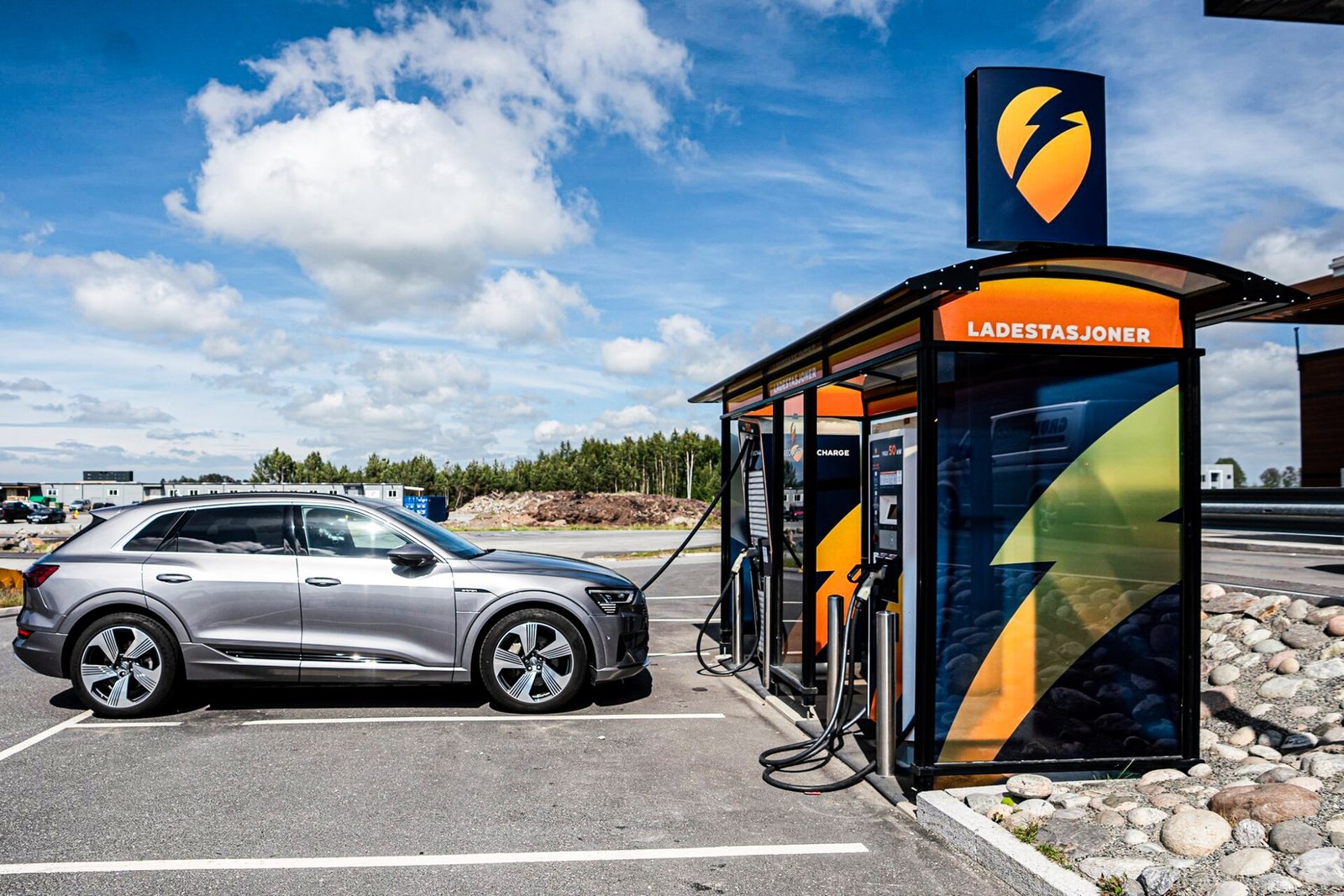
While the US struggles to scale, India is testing a different path to address why ev fast charging infrastructure slowed. According to the Ministry of Power, the joint pilot between Bharat Energy Management (BEM) and Hindustan Petroleum Corporation Limited (HPCL) in Delhi-NCR is moving away from traditional, overburdened grid reliance. This project utilizes the latest ev fast charging technology, deploying 350 kW chargers backed by on-site solar-plus-storage micro-grids. By generating and storing power locally, these stations effectively bypass the grid bottlenecks that often cause headaches for developers.
The financial structure is just as pragmatic as the engineering. The project operates under the “Green Charge” scheme, utilizing a 70% central grant balanced by 30% private-sector equity. This model ensures that high upfront capital costs do not stall the deployment of every new ev fast charging station. Similar to how OpenAI Billion Largest Private Funding Round: What It Means highlights the scale of capital required for modern tech, this pilot proves that targeted policy levers—rather than market demand alone—are the real drivers of growth. It is a sharp contrast to the US EV charger build out 2024, demonstrating that pairing subsidies with decentralized energy generation creates a faster, more reliable path forward.
What the Indian Pilot Shows About Overcoming Grid Limits
India’s BEM-HPCL pilot offers a masterclass in bypassing the utility grid bottlenecks that often stall charger deployment. The core issue, as explored by forbes.com, is that stationary batteries can act as a crucial buffer between the grid and the charger. By integrating on-site battery storage, this pilot successfully shaves peak demand by 40%. This setup prevents the charger from overwhelming local transformers during those hot, high-demand hours.
Beyond just hardware, the software is the real hero here. The project employs a government-approved smart-charge management system that dynamically aligns charging windows with peak solar generation. Instead of pulling raw power from the grid whenever a car arrives, the station "breathes" with the sun. It stores energy when renewables are abundant and discharges when needed, effectively smoothing out the intermittency that keeps many grid operators up at night.
Looking ahead, the scalability of this model is promising. The project is already planning a rollout to 500 stations by 2028. If other global markets can adopt this "buffer-first" mentality, they might find that the grid is far less of a limitation than they previously feared.

Lessons for Global Operators and Policymakers
If you’re wondering why ev fast charging infrastructure slowed, the answer often lies in bureaucracy and grid bottlenecks. To move faster, operators need to stop relying solely on utility-scale upgrades. Integrating renewable-plus-storage at the site level is a smarter move; it buffers the grid and keeps chargers running even during peak demand.
Permitting remains the biggest hurdle for site developers. Data from California and the Delhi pilot shows that standardizing these approval processes can cut wait times by 30%. It’s a simple fix that requires political willpower rather than new technology. When governments streamline the paperwork, capital flows more freely.
Financial models also need a rethink. Co-funding initiatives that blend federal grants with private equity effectively lower the CAPEX risk for operators building out high-power charging networks. It’s not just about spending more; it’s about sharing the burden. Interestingly, similar strategic thinking—like How to Improve Resume with Gemini for ATS Success—applies when you’re trying to optimize your own professional growth in this changing market. By de-risking the build-out through public-private partnerships, we stop the cycle of delays and start actually connecting more cars to the grid.
Practical Guidance for Fleet Managers and Site Developers
If you’re planning a site, don’t just pick a spot on a map. Success boils down to three hard requirements. First, check your grid capacity—consult your local utility to confirm they can handle the load without massive upgrades. Second, secure a long-term lease in a high-traffic area with existing amenities; as noted in this road trip analysis, drivers prioritize spots where they can grab coffee or groceries while waiting. Finally, design for pull-through traffic to keep vehicles moving efficiently.
Costs for hardware vary wildly based on local labor and grid connection fees. While exact pricing per kW remains unconfirmed without a site-specific quote, expect a higher investment for 350kW units compared to 150kW ones, driven by cooling and transformer requirements.
| Charger Capacity | Estimated Cost Trend |
|---|---|
| 150 kW Unit | Baseline for most sites |
| 350 kW Unit | Higher per-kW investment |
Don’t leave money on the table. In the US, monitor the Federal Highway Administration for NEVI funding. In India, always verify your project against the latest Ministry of Power circulars regarding infrastructure subsidies and connection tariffs to ensure your business model holds up.
Future Outlook – Will the Slowdown Persist?
The IEA’s 2026 global projections suggest the current dip in deployment is likely a short-term hurdle rather than a permanent ceiling. While the US EV charger build out 2024 faced clear friction, the agency points toward a sharper uptick in infrastructure investment as grid upgrades finally mature.
Legislative momentum remains a major wildcard. We are watching the 2027 federal tax credit renewal closely; if it stays on track, it should provide the financial tailwind necessary for private operators to scale their networks more aggressively.
Technological shifts are also changing the math. Latest ev fast charging technology, specifically the move toward 800kW chargers, promises to slash wait times to near-gas-pump speeds. However, these units put immense pressure on local grids, often requiring site developers to integrate stationary battery storage just to keep the lights on during peak demand.
As this tech matures, the persistent fear surrounding long-distance travel is fading. If you are curious about how these hardware changes are changing the driver experience, check out How to Overcome EV Range Anxiety: Why It’s Dying Out in 2026. Understanding why ev fast charging infrastructure slowed is the first step toward realizing that better, faster, and more reliable charging is already on the horizon.
Watch: America’s EV Downturn Hides a Silver Lining: Charging Is Quietly Getting Better
Frequently Asked Questions
Why did US fast-charging station additions drop in Q2 2024?
The slowdown in US fast-charging additions during Q2 is largely tied to bureaucratic bottlenecks and complex utility interconnection requirements. While automakers like the Ionna consortium are pushing for massive expansion, projects often stall due to permitting delays and the struggle to secure reliable, high-voltage grid access. It is not just about the hardware; it is about getting the power to the site.
How does grid capacity affect the rollout of DC fast chargers?
DC fast chargers demand massive power spikes that local distribution grids often cannot handle without significant upgrades. When a station requires a high-capacity connection, utility companies may force developers to pay for expensive infrastructure improvements, which delays construction. Without grid reinforcement, even the most advanced fast charging ev technology remains bottlenecked, as the local power lines simply cannot support the constant energy draw.
What are the key components of India’s BEM-HPCL fast-charging pilot?
The BEM-HPCL pilot aims to integrate battery swapping and fast charging at Hindustan Petroleum retail outlets. By leveraging BEM’s battery technology, this model helps mitigate grid stress by buffering energy demand. It allows stations to dispense power without requiring an immediate, high-load draw from the grid, making it a clever workaround for areas where the power supply is not yet ready for high-speed charging.
Can renewable-plus-storage solutions replace expensive grid upgrades?
Renewable-plus-storage systems, like those using large battery buffers, can definitely reduce the strain on local power lines. By storing energy during low-demand periods and releasing it during peak charging times, operators avoid the astronomical costs of direct grid upgrades. This approach is becoming popular because it makes adding a fast charging ev station viable in locations where utility infrastructure is currently too weak.
The Road Ahead for Reliable Power
The current slowdown in the US EV charger build-out 2024 isn’t just about capital; it’s about the hard reality of grid integration. We have 5.7 million EVs on the road in the U.S., yet only 73,000 public DC fast chargers. If you are wondering why ev fast charging infrastructure slowed, look at the permitting delays and transformer shortages—not just the hardware itself.
For fleet managers and site developers, the lesson is clear: don’t prioritize speed at the cost of reliability. Whether you are in New York or New Delhi, a 300kW station is useless if it’s offline or lacks grid support. Always stay informed on EV Lithium Battery Safety: Preventing Thermal Runaway and Fires as you scale, because high-power charging demands rigorous thermal management. My advice? Prioritize sites with existing high-voltage grid connections. It is the single biggest factor in keeping your projects out of the permitting purgatory that has stalled so many others.


Join the conversation