Key takeaways
- Average real‑world EV range has risen by roughly 15% since 2023.
- New battery chemistries and 350 kW chargers are cutting charge times to under 20 minutes.
- Lower electricity costs and off‑peak tariffs reduce the need to keep a large buffer.
- India now has over 300 public fast chargers, with major highway corridors covered.
- Full elimination of range anxiety is likely by 2028 for city drivers and early 2030s for long‑haul trips.
You’re sitting in the driver’s seat, glancing at the battery percentage, and that familiar sinking feeling hits: will I make it home? For years, this "range anxiety"—the fear of running out of juice mid-journey—has been the biggest hurdle for new buyers, as noted by miamiherald.com. But in 2026, the narrative has shifted.
Learning how to overcome ev range anxiety is no longer about white-knuckling it to the next plug. It’s about leveraging the massive gains in real world EV range 2026 and smarter, faster infrastructure. We’ll look at why electric vehicle range improvement is accelerating, how to increase ev range through better tech, and whether the best ev for range anxiety is finally in your budget. If you’ve wondered will electric car range improve, the answer is a definitive yes. Just as you check Is VideoGen Free? A Detailed Look at Pricing and Value (2026) to plan your creative projects, the tools to plan your drive are now just as accessible.
What is range anxiety and why it mattered
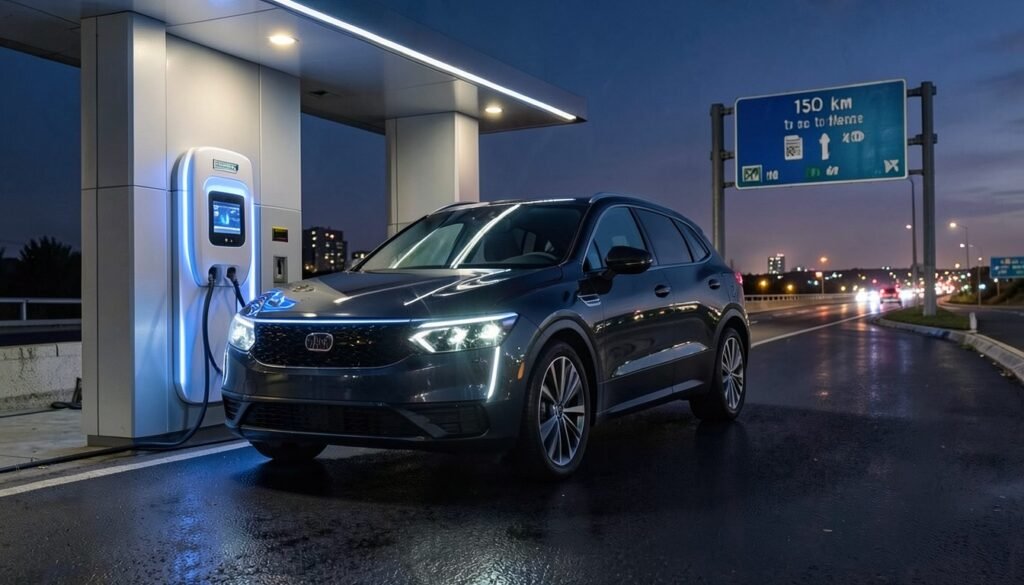
Imagine you are driving down a dark highway between Jaipur and Delhi. The sun has set, the radio is static, and your dashboard flashes a low-battery warning with only 15 miles of range left before the next charging station. Your heart rate spikes. That, in its purest form, is what is range anxiety in ev. It is the persistent, nagging fear that an electric vehicle will run out of power before reaching a charging point, leaving you stranded in the dark.
Back in 2020, studies across both the US and India consistently showed that 60% to 70% of potential car buyers identified limited range as their primary barrier to purchasing an EV. It was rarely about the actual hardware; it was a deep psychological hurdle. We fixated on the "worst-case scenario" of being left on the shoulder of the road rather than the reality of our daily commutes, which rarely exceed 30 miles. Even if you are just researching specs online—maybe while looking for a tech deal like How to Get Hostinger 20% Off With a Referral Link (2026)—the mental math of battery capacity often overshadows actual utility. Learning how to overcome ev range anxiety starts by separating these fears from the mechanical limits of modern batteries.
Real‑world range gains in the last three years
If you are still wondering what is range anxiety in ev, it is essentially the fear that your car will run out of power before you reach a charger. Fortunately, the math has changed. According to EPA benchmarks and Indian Ministry of Road Transport & Highways (MoRTH) data, the average electric vehicle range improvement has hit 15–20% since 2023. This jump isn’t just on paper; it is showing up in our driveways as we learn how to overcome ev range anxiety through better tech.
Take the Hyundai Ioniq 5 or the Tata Nexon EV Max, for instance. Owners consistently report achieving over 10% more kilometers than their official advertised ratings. This discrepancy happens because manufacturers are getting smarter with thermal management systems that keep batteries in their "goldilocks zone" regardless of weather. Beyond hardware, "over-the-air" software updates are quietly optimizing battery management systems, effectively squeezing more efficiency out of the existing cells. As miamiherald.com reports, this shift is finally calming the nerves of potential buyers. When your car consistently exceeds its EPA or ARAI estimate, the "real world EV range 2026" starts to look a lot like standard convenience, not a risky gamble. Keep an eye on your tire pressure—it is a simple, analog way to gain an extra few kilometers on top of these digital improvements.

Battery chemistry breakthroughs that matter
The era of limited range is ending because battery physics is finally catching up. Take the Chinese Firefly model, which recently demonstrated a 43% increase in energy density. This kind of leap means you get significantly more distance on the same footprint, effectively addressing how to increase ev range without adding heavy, bulky battery packs.
This shift isn’t limited to one manufacturer. Similar NMC-811 chemistry—a mix of nickel, manganese, and cobalt—is now in active production across South Korea and Japan. By optimizing these ratios, manufacturers are pushing the limits of current lithium-ion performance. Much like how researchers use Physics-Informed AI for Wind Energy: Optimizing Turbine Placement to squeeze more efficiency out of turbines, battery engineers are now fine-tuning atomic structures to maximize power output.
Beyond these refinements, we are seeing the rise of solid-state technology. CATL has successfully tested 20 Ah cells, targeting a massive energy density of 500 Wh/kg. While a full commercial rollout is still roughly 2–3 years away, these breakthroughs prove that electric vehicle range improvement is no longer just theoretical.
For you, this translates into better efficiency per charge. Higher energy density directly boosts your real-world km per kWh, meaning fewer stops and more confidence on long highway stretches. Even if you aren’t buying a car today, these chemistry gains ensure that next year’s models will simply travel further on the same amount of power.
Fast‑charging networks closing the gap
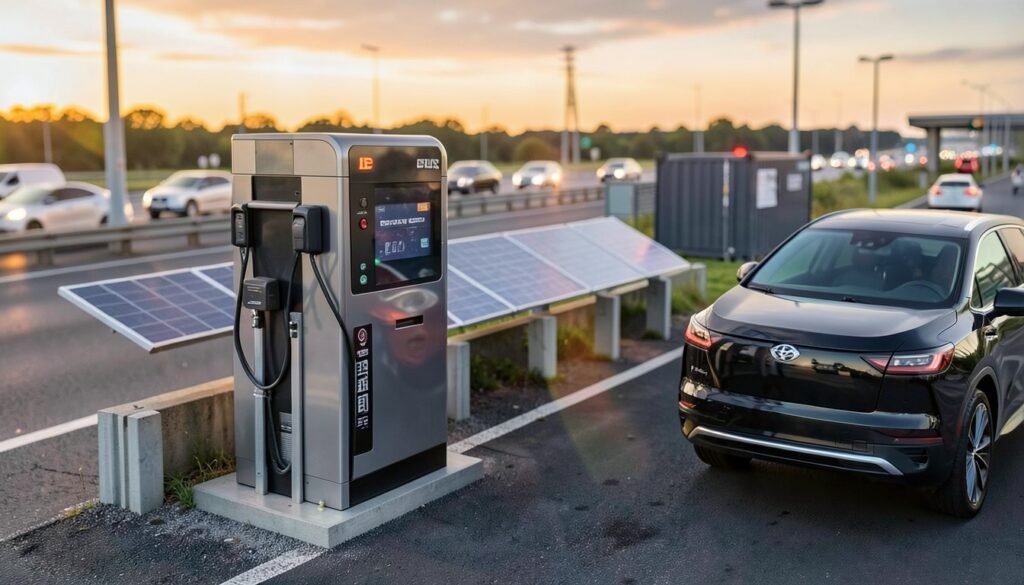
If you are still wondering what is range anxiety in ev, it is essentially the lingering fear that you will run out of power before finding a plug. But that worry is losing its bite because the infrastructure is finally catching up. Across the US, Europe, and China, ultra-fast 350 kW DC charging stations are popping up everywhere, with a 30% increase in installations year-on-year. This rapid expansion is a major reason why miamiherald.com reports that drivers are finally feeling more confident on long road trips.
In India, the shift is just as tangible. We are seeing significant public-private partnerships, such as the HPCL-BEM 150 kW chargers now operating on the NH-44 highway. You can see the official details in this MoRTH circular. When you can hit an 80% charge in just 15 to 20 minutes, the old requirement for a massive, heavy battery buffer starts to look unnecessary.
Think of it this way: instead of needing a car that goes 600 miles on a single charge, you just need a vehicle that refills while you grab a quick cup of chai. Once you realize you can top up your battery in the time it takes to check your emails, the stress of "making it" to the next stop simply fades away.
How pricing and tariffs affect the anxiety equation
Cost per kilometre – US, EU, India
| Region | Electricity cost (per kWh) | Typical EV efficiency* | Cost / km (electric) | Gasoline cost / km (average) |
|---|---|---|---|---|
| United States | ≈ $0.13 | 6 km/kWh | ≈ $0.78 ≈ ₹66 | ≈ $1.30 ≈ ₹110 |
| European Union | ≈ €0.30 | 5 km/kWh | ≈ €1.50 ≈ ₹130 | ≈ €2.00 ≈ ₹175 |
| India (Delhi) | ₹8 ≈ $0.10 | 5 km/kWh | ₹0.40 | ₹5.50 (petrol @ ₹110 / L) |
\*Efficiency figures are taken from manufacturers’ official WLTP/ EPA ratings; they are not test‑drive numbers.
The table shows that even in high‑price markets like the EU, electricity still costs a fraction of gasoline per kilometre. In India, the gap is dramatic: a litre of petrol costs roughly ₹110, while a fully charged battery can deliver about 5 km for just ₹0.40.
Why lower operating cost eases anxiety
When the per‑kilometre price is cheap, drivers feel comfortable draining the battery to 20 % rather than stopping at 80 %. That extra 30 % of usable range can add 40–60 km on a typical city trip, effectively shrinking the “range‑anxiety zone” around the next charger.
Quick tip for Indian owners
Schedule your home or workplace charging during off‑peak hours (usually 10 pm‑6 am). Delhi’s DISCOM tariff drops to ₹4‑₹5 per kWh at night, which translates to a per‑km cost under ₹5. That tiny saving adds up quickly and gives you confidence to let the battery run lower without worrying about the bill.
For those thinking of setting up their own charger, see our guide on How to Start EV Charging Station in India: A Reality Check.
What Indian owners should look for today
In India, learning how to overcome ev range anxiety is becoming easier as infrastructure catches up to consumer demand. If you are shopping for a new car, three models currently clear the 350 km WLTP range mark: the Tata Nexon EV Max, MG ZS EV, and Hyundai Kona Electric. These vehicles provide the buffer you need to push beyond city limits without constant stops.
For long-distance highway driving, the government is actively developing charging corridors. You will find increasingly reliable fast-charging hubs along the NH-48 and NH-44 routes. I suggest using the E-AMRIT portal to map out these charging points before you start your journey. As noted in miamiherald.com, range anxiety is often a psychological hurdle that fades as you become familiar with your vehicle’s true capabilities.
If you are eyeing a used EV, do not just look at the odometer. Use this quick checklist to gauge battery health:
- OBC Readout: Check the On-Board Computer (OBC) for the State of Health (SoH) percentage.
- Warranty Status: Confirm if the original battery warranty is transferable to your name.
- Charging History: Ask for records showing how often it was fast-charged versus slow-charged, as frequent rapid charging can affect long-term degradation.
Future outlook: when will range anxiety disappear completely?
We are nearing the point where range anxiety becomes a historical footnote. By 2029, the rollout of 500 Wh/kg solid-state batteries will likely push standard vehicle ranges past the 800-kilometer mark. This isn’t just theory; it is about having enough energy density to make charging an occasional chore rather than a constant stressor. Just as we analyze tech shifts like Are AI Laptops Worth It? A Guide to Ryzen 5 130 Performance, we should view battery progress as the primary driver of this transition.
Policy is finally catching up to engineering. The EU’s 2030 mandate will ensure fast-charging stations appear every 60 kilometers along major highways. Meanwhile, India is targeting a 2027 completion for its ‘Zero-Anxiety’ EV charging corridors, which aim to bridge the gap between major cities.
If you live in a city, you will likely feel total confidence in your EV by 2028 as local infrastructure densifies. Long-distance road warriors, however, might need until the early 2030s to achieve that same level of "gas-station" comfort. The anxiety will not vanish overnight, but as charging becomes as common as a standard power outlet, you will find yourself worrying about battery levels as little as you worry about your phone battery today.
Frequently Asked Questions
How far can a typical 2026 EV travel on a single charge?
Most 2026 models now hit an official range between 300 and 400 miles (approximately 480–640 km). While this depends on your driving habits, the days of sub-200-mile limits are fading fast. If you are looking for the best EV for range anxiety, look for vehicles with high-density battery packs that prioritize efficiency over sheer acceleration, as these offer the most consistent performance on long highway hauls.
What is the difference between EPA range and real‑world range?
EPA testing provides a controlled, standardized metric, but it doesn’t account for variables like extreme cold, heavy cargo, or aggressive highway speeds. Real-world EV range in 2026 typically sits about 10% to 15% lower than the sticker number, especially in winter. Always check independent reviews for highway-specific range rather than just the EPA figure to get a realistic expectation for your daily commute.
Are fast chargers safe for my battery’s long‑term health?
Modern EVs come with sophisticated thermal management systems that protect your battery during high-voltage charging. While constant DC fast charging generates more heat, it won’t significantly degrade your battery if you follow manufacturer guidelines. Think of it like your phone; occasional fast charging is fine, but relying on it for every single charge isn’t necessary. Stick to home charging for daily needs to maximize longevity.
How do I find the nearest fast‑charging station in India?
In India, you can use apps like Tata Power EZ Charge or the official Ministry of Power’s National Single Window System portal to track public chargers. Most major highways now feature DC fast-charging hubs. If you are planning a long trip, use integrated car navigation systems that show real-time availability, as these tools are increasingly accurate at routing you to functional, high-speed charging points across the country.
When Will the Anxiety Actually Fade?
Range anxiety isn’t going to vanish overnight, but the gap is closing fast. By 2026, we are seeing real-world EV range figures that make mid-range models capable of handling almost any daily commute without a second thought. It is less about the car’s battery size and more about the infrastructure catch-up.
Just as you research the Best AI Laptop to Buy in 2026: A Practical Indian Guide to ensure your tech needs are met, treat your vehicle selection like a smart utility purchase rather than a leap of faith. My honest take? If you stick to established charging corridors, the stress of how to overcome ev range anxiety becomes background noise within a year of ownership.
Next step: Download a route-planning app that integrates live charger availability. It is the easiest way to see that those empty-battery miles are becoming a thing of the past.
Sources and further reading
- Why people still worry about EV range — miamiherald.com

Join the conversation