Key takeaways
- E-bikes are legally defined by pedal-assist limits, whereas e-motos require registration and insurance.
- Modified ‘e-bikes’ that exceed speed and power limits are often classified as illegal motor vehicles.
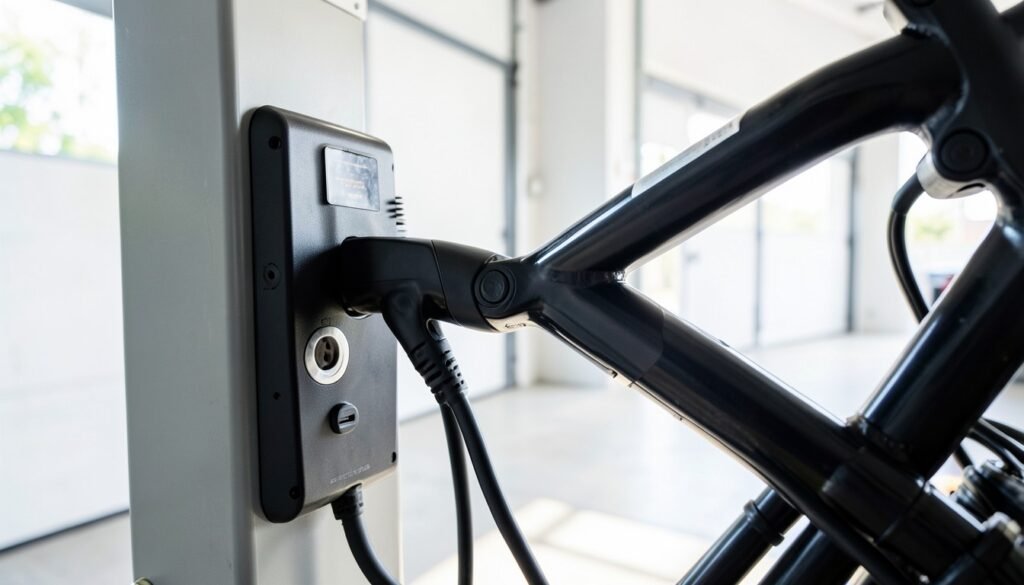
- Battery safety depends on using certified chargers and avoiding cheap, aftermarket replacements.
- High-speed riding on any electric two-wheeler requires motorcycle-grade protective gear.
You see them everywhere now: silent, zippy two-wheelers weaving through traffic. To the untrained eye, a sleek e-bike looks almost identical to a high-speed electric motorcycle, but the legal and safety reality is worlds apart. Misunderstanding the difference between ebike and emoto isn’t just a technical oversight; it’s a gamble with your life and your legal standing.
We’ve seen tragic headlines lately where high-speed machines—often disguised as pedal-assisted bicycles—lead to fatal accidents and criminal charges for owners. According to recent reporting from ocregister.com, this confusion is fueling a rise in dangerous, unregistered vehicles on public streets. Whether you are navigating global urban centers or checking local rules, knowing your machine’s classification is vital. If you are riding in South Asia, start by reviewing A Guide to E-Bike Safety and Regulatory Compliance in India. Let’s break down the laws, speed limits, and why your choice of gear matters.
The Rise of ‘Illegal’ Electric Motorcycles
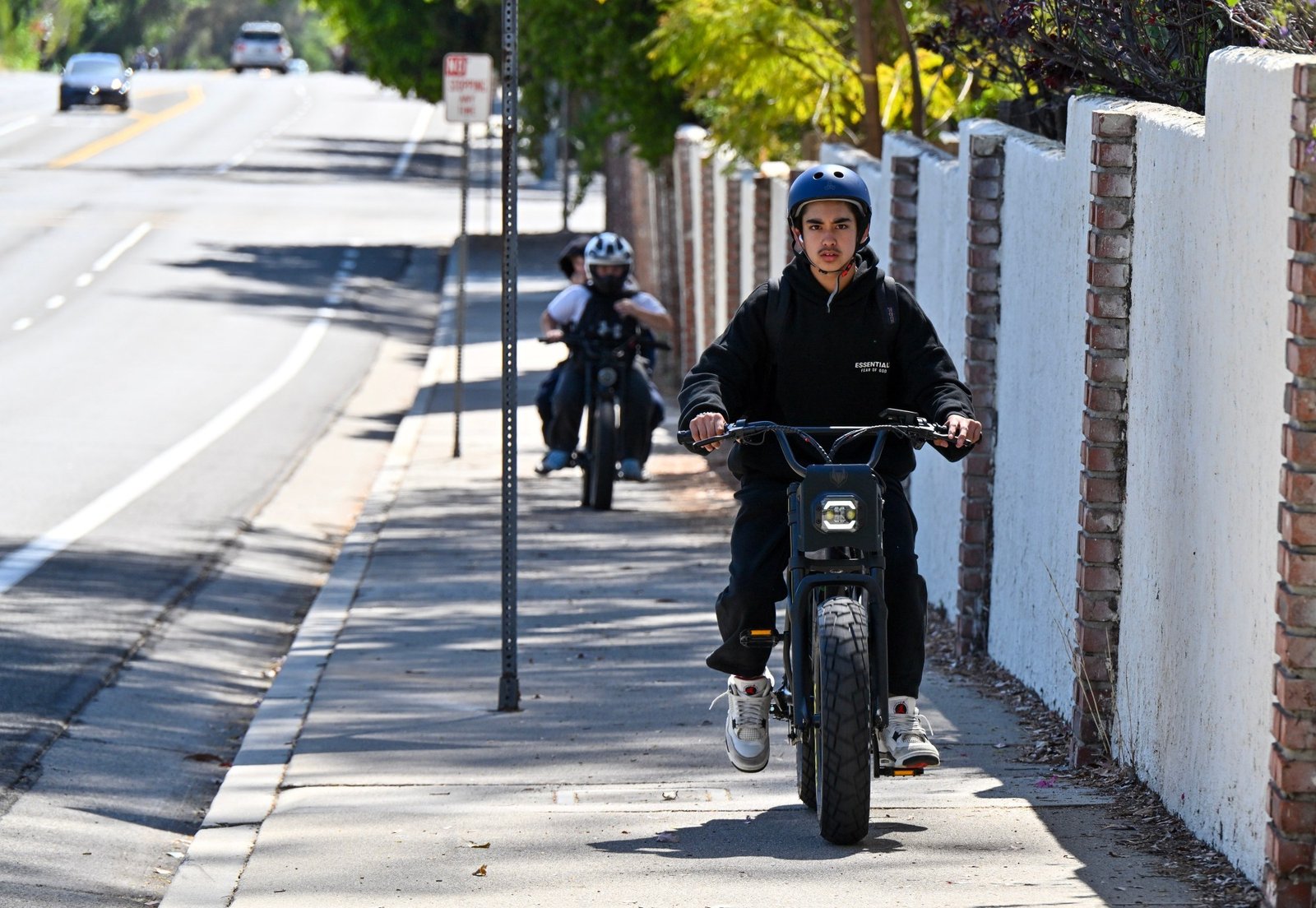
You’ve seen them—those sleek, oversized two-wheelers zipping past cyclists at 40 mph, often sporting fake pedals to trick the law. We are seeing a massive surge in what I call "pseudo-bikes." These aren’t bicycles; they are high-speed electric motorcycles marketed as e-bikes to avoid the friction of registration and licensing.
The problem is simple: physics. A standard bicycle frame is engineered for human power, not the high-torque acceleration of a 3000-watt hub motor. When you put a motorcycle-level powertrain onto a frame built for a Sunday ride, you’re asking for a mechanical failure. This isn’t just about the hardware; it’s about public perception. Because these machines look like e-bikes, every reckless stunt performed on one damages the reputation of legitimate bicycle commuters.
Many of these units are gray-market imports with zero safety certification. They lack the structural integrity of a proper motorcycle chassis, which is designed to handle the forces of high-speed braking and sharp maneuvers. When you look at the LiveWire Survival Warning: Why Premium Electric Motorcycles Stalled, you realize that even major manufacturers struggle to balance weight, power, and safety. Yet, these unregulated imports hit the streets with none of those design considerations. If you’re buying something that does 45 mph but weighs less than 40kg, ask yourself: is it a bike, or is it a liability waiting to happen?
Defining the E-Bike: Pedal-Assist vs. Throttle
Understanding the difference between ebike and emoto starts with how the motor engages. If you aren’t pedaling, you’re likely on something that leans closer to a motorcycle than a bicycle. According to ocregister.com, e-bikes are broken down into three distinct classes:
- Class 1: Pedal-assist only, topping out at 20 mph.
- Class 2: Throttle-capable, also capped at 20 mph.
- Class 3: Pedal-assist only, reaching speeds up to 28 mph.
The core distinction lies in how the motor reacts to you. Pedal-assist systems use torque sensors to measure how hard you’re pushing the pedals. This creates a natural, predictable surge of power that keeps you in control at low speeds, especially when navigating tight spaces or crowded bike lanes. Conversely, many e-motos feature a twist-throttle that ignores your pedaling entirely. If your bike moves forward without any leg work, it is effectively functioning as a motorized vehicle, not a bicycle.
To verify your classification, look for the manufacturer’s label, which is required on all compliant e-bikes. If there is no label, or if the motor exceeds 750 watts, the law usually stops treating it like a bicycle. Simply adding pedals to a heavy frame doesn’t make it an e-bike; if it lacks a pedal-driven speed limit or exceeds power ratings, it’s an unregistered e-moto, putting you at risk of serious legal and safety consequences.
Understanding Speed Limits and Motor Power
Most e-bikes are legally limited to a 750W motor. When you push past these ebike speed and power limits, you aren’t just getting a faster ride; you are often crossing into unregistered motorcycle territory. If your bike has a motor exceeding this threshold, it lacks the legal classification of an e-bike in many jurisdictions, making the difference between ebike and emoto a significant legal headache.
Classes 1, 2, and 3 e-bikes are restricted to speeds between 20 and 28 mph. It sounds manageable, but the physics of stopping a heavy, high-torque electric vehicle is vastly different from a traditional bicycle. If you are hitting 30+ mph on a frame designed for casual pedal speeds, your braking system and suspension are likely inadequate. Lightweight bicycle rims and standard mechanical calipers often fail to handle the heat and inertia generated by a 100-pound vehicle at high speeds.
When considering vehicle safety, remember that motor power is just one piece of the puzzle. Just as discussed in Tesla Robotaxi Expansion: Real-World Safety and Tech Limits, safety depends on how hardware integrates with speed. You need robust, hydraulic disc brakes and a reinforced chassis designed specifically for higher impact loads. A powerful motor on a flimsy frame is a recipe for a frame failure, not just a speeding ticket. Always check your local regulations to ensure your motor wattage aligns with the specific rules for your area before pushing the throttle.
The Battery Safety Crisis: Why Fires Happen
We’ve all seen those tempting "high-capacity" battery packs on online marketplaces. Here’s the hard truth: if it costs a fraction of the OEM price, it’s likely a fire hazard. Using aftermarket batteries or chargers that aren’t matched to your bike’s specific voltage requirements is a recipe for disaster. According to ocregister.com, understanding your vehicle’s technical specs is vital, and this applies double to your power source.
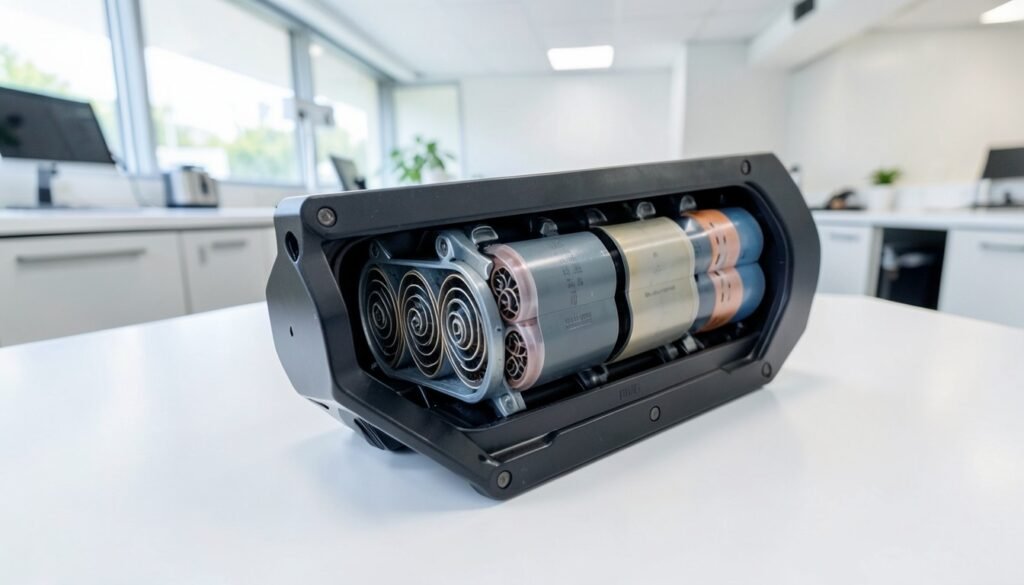
Lithium-ion cells operate on a razor’s edge. If a cell is punctured or poorly manufactured, it can trigger thermal runaway. This is when one cell overheats, ignites, and rapidly spreads that heat to its neighbors, creating a fire that is notoriously difficult to extinguish.
Follow these safety rules to protect your home:
- Charge in sight: Never charge your battery unattended or while you are sleeping.
- Keep exits clear: Never charge near your only front door or in a narrow hallway.
- Spot the danger: If the battery feels painfully hot, smells like burning plastic, or shows signs of bulging, unplug it immediately.
- Trust the OEM: If a charger isn’t from the manufacturer, don’t gamble with your safety.
Treat your charger like a precision instrument, not a generic appliance. If you notice any strange rattling or casing deformation, stop using the pack entirely. Battery health is non-negotiable for anyone serious about riding.

Defensive Riding: Why Your E-Bike Needs Motorcycle-Grade Gear
Most standard bicycle helmets are engineered for impacts at speeds under 15 mph. When you are pushing a Class 3 e-bike to its 28 mph limit, that thin layer of EPS foam simply won’t protect your head in a high-speed collision. If you are still trying to grasp the difference between ebike and emoto, start with your gear: if it’s electric and fast, you must treat it like a motorcycle, not a toy.
For speeds consistently over 20 mph, a full-face helmet is the only responsible choice. You need the jaw and chin protection that a standard open-face lid lacks. Pair this with abrasion-resistant clothing—look for reinforced denim or dedicated riding jackets—to prevent severe road rash during a slide. When evaluating specialized machinery, even reports like the Honda New Off Road Bike India: What Riders Should Expect highlight the necessity of proper protection for high-performance riders.
Visibility is your best defense against distracted drivers. Always use high-lumen front and rear lights, even during the day, to stand out. In dense urban traffic, assume you are invisible. Never linger in a car’s blind spot and watch for turning vehicles at intersections, as drivers often misjudge the speed of electric bicycles compared to traditional pedal bikes.
Defensive riding means predicting the worst. Keep your fingers hovering over the brake levers at all times. Whether you are riding in India or elsewhere, remember that traffic doesn’t always look for fast-moving cycles. Stay predictable, stay armored, and never compromise on safety.
Legal Consequences of Riding Unregistered E-Motos
If you’re riding an unregistered e-moto, you aren’t just bending the rules; you’re operating an uncertified vehicle that hasn’t been vetted for public safety. It’s critical to understand the difference between ebike and emoto because the legal fallout is massive. An e-bike is legally defined as having a motor under 750 watts with strict speed caps, whereas an unregistered e-moto is effectively a ghost vehicle.
When you ride an unregistered machine, you face significant legal consequences. If you are involved in a crash, standard insurance policies typically won’t cover you, leaving you personally liable for potentially life-altering medical expenses or property damage. Moreover, local law enforcement is increasingly cracking down on modified bikes that exceed legal speed limits. Per ocregister.com, authorities have already pursued criminal charges—including involuntary manslaughter—against parents whose children caused fatal accidents while operating high-speed electric motorcycles on public streets.
Adhering to vehicle registration requirements isn’t just about bureaucracy; it’s about safety standards. If your bike lacks a VIN, turn signals, mirrors, and a headlight, it doesn’t belong in traffic. If you want to ride at higher speeds, follow ebike vs electric motorcycle laws by registering your vehicle, obtaining the proper license, and securing liability insurance. Don’t risk your financial future or your freedom for a faster commute. Stick to what your local laws permit, or get the right paperwork sorted before you hit the road.

Choosing the Right Vehicle for Your Commute
Before you drop your hard-earned cash, be honest about your daily commute. If your ride is under five miles on flat, paved streets, a standard bicycle or a Class 1 e-bike is usually all you need. Once you cross the 10-mile threshold or start tackling steep inclines, the extra power of a Class 3 e-bike becomes a massive benefit for keeping your arrival time consistent.
If your commute involves highway speeds or distances exceeding 20 miles, you aren’t looking for an e-bike; you’re looking for a legitimate electric motorcycle. For those in India considering this step, keep an eye on developments like the Royal Enfield Flying Flea S6: What the Test Mules Reveal About India’s New Electric Bike to see how established brands are approaching this transition.
Whatever you pick, look past the initial price tag. You must budget for the "hidden" costs: brake pads wear out faster on heavy e-motos, and tires on high-speed machines aren’t cheap. Most importantly, check for local service centers. Buying a gray-market import from an online-only brand might save you $500 upfront, but it becomes an expensive paperweight when you need a proprietary part or a software update. Don’t buy a bike you can’t get fixed within 50 miles of your home. It’s better to ride a reliable, lower-spec bike than a "high-performance" machine that’s always in the shop.
Maintenance Tips for Long-Term Battery Health
Your battery is the heart of your ride, but it’s also the most volatile component. According to ocregister.com, understanding the technology in your ride is vital, and that starts with keeping your cells happy. Lithium-ion batteries thrive in moderate temperatures; charging them in extreme heat or freezing cold accelerates chemical degradation. Always bring your battery inside to charge at room temperature, ideally between 10°C and 25°C.
Never be tempted by cheap, "universal" chargers found online. Stick strictly to the OEM-certified hardware provided by the manufacturer. Using a knock-off charger with the wrong voltage output is a fast track to a thermal runaway event.
If you’re parking the bike for the off-season, don’t leave the battery fully charged or completely drained. Aim for a 40% to 60% charge level to maintain internal chemical stability. Store it in a cool, dry place away from any combustible materials.
Finally, make a habit of visual inspections. Every month, check your wiring harness for cracks, exposed insulation, or signs of heat damage. If your battery casing shows any bulging, stop using it immediately. Proactive maintenance isn’t just about performance; it’s about preventing a fire hazard before it starts. A few minutes of checking your cables and connections could save your garage or your life. Treat your battery with respect, and it will keep you moving safely for years.
Watch: E-Bike vs. E-Motorcycle Safety
Frequently Asked Questions
What is the main difference between an e-bike and an electric motorcycle?
The primary difference between ebike and emoto comes down to speed, power output, and legal classification. E-bikes are generally limited to 750 watts and require pedal input, keeping them in the bicycle category. E-motos, however, are essentially motor vehicles. They often lack pedals, exceed speed thresholds, and require mandatory registration, insurance, and a valid motorcycle license to be street-legal.
Are e-bikes with throttles considered motorcycles?
Not necessarily. A Class 2 e-bike uses a throttle but remains a legal e-bike provided it stays under 20 mph and 750 watts. The danger arises when manufacturers add fake pedals to high-powered emotos to disguise them as bicycles. If your "bike" can hit high speeds without pedaling, it is likely an unregistered motorcycle, not a regulated e-bike.
Why do some e-bike batteries catch fire?
Battery fires typically stem from improper charging, damaged internal cells, or using non-certified aftermarket chargers. When a lithium-ion battery is compromised, it can enter a state of thermal runaway, making it incredibly difficult to extinguish. Always use the manufacturer-provided charger, avoid charging overnight, and inspect your battery casing for any physical dents or swelling before every single ride.
Do I need a driver’s license to ride an e-bike?
In most cases, no. Standard e-bikes do not require a driver’s license to operate. However, this only applies to legitimate e-bikes meeting established ebike speed and power limits. If you are operating an unregistered emoto on public roads, you are violating ebike vs electric motorcycle laws, which can lead to severe legal consequences of unregistered emotos and heavy fines.
Keep Your Battery Alive: Practical Maintenance Tips
Battery health is the core of your ride’s safety and longevity. Never use a third-party charger just to save a few bucks; always stick to the official charger provided by the manufacturer to avoid serious fire risks. If your battery feels scorching hot or shows visible swelling, stop using it immediately. These aren’t just minor annoyances; they are early warning signs of a potential fire, much like ignoring persistent engine warning lights on a high-performance machine.
If you are into serious power, you might appreciate the engineering detailed in our Ducati Desert X V2 Review: New Engine and Off-Road Features, but even a simple daily e-bike demands that same level of respect. Finally, never charge your battery unattended or overnight. Keep it on a flat, non-flammable surface at room temperature. If you notice your range dropping significantly, get it checked by a professional rather than trying to rig a fix yourself.


Join the conversation