
Key takeaways
- In India, e-bikes with motors under 250W and speeds capped at 25 km/h are generally exempt from registration and licensing.
- ARAI certification serves as the benchmark for vehicle safety and quality assurance.
- Battery safety, specifically adhering to BIS standards, is critical for preventing thermal runaway incidents.
- Riders must treat e-bikes as vehicles, prioritizing maintenance of braking and lighting systems to ensure road safety.
The surge in electric bicycle adoption across India has changed how we move through our cities. As these vehicles become common, understanding the legal framework governing them is vital for any rider. Whether you are commuting to work or running errands, knowing where your bike stands in the eyes of the law is the first step toward a safe and stress-free experience.
In India, the regulatory environment is primarily defined by the Central Motor Vehicles Rules (CMVR). These rules distinguish between low-speed electric cycles and high-speed electric motor vehicles. If you ride an e-bike, you are likely operating under the assumption that it is a bicycle, but the legal reality depends entirely on your bike’s power output and speed capabilities.
Understanding the Regulatory Threshold
The most important regulation for Indian e-bike riders is the threshold for motor power and speed. Under current guidelines, an electric bicycle is generally exempt from the requirements of motor vehicle registration, driver licensing, and insurance if it meets specific criteria: the motor power must not exceed 250 watts, and the maximum speed must be capped at 25 km/h.
If your bike exceeds these limits, it is no longer considered a “bicycle” by the transport authorities. Instead, it falls into the category of a motorized two-wheeler. This shift is significant. Once you cross the 250W or 25 km/h limit, your vehicle requires Type Approval from an agency like the Automotive Research Association of India (ARAI). Without this certification, the vehicle is essentially unroadworthy for public streets, and you may face significant hurdles regarding insurance claims or legal liability in the event of an accident.
Always check the manufacturer’s documentation for the ARAI certification. This document confirms that the bike has undergone rigorous testing for structural integrity, braking performance, and electrical safety. If you are shopping for a new model, ask the dealer specifically for the ARAI compliance certificate. It is your best protection against buying a non-compliant machine.
Battery Safety and Standards
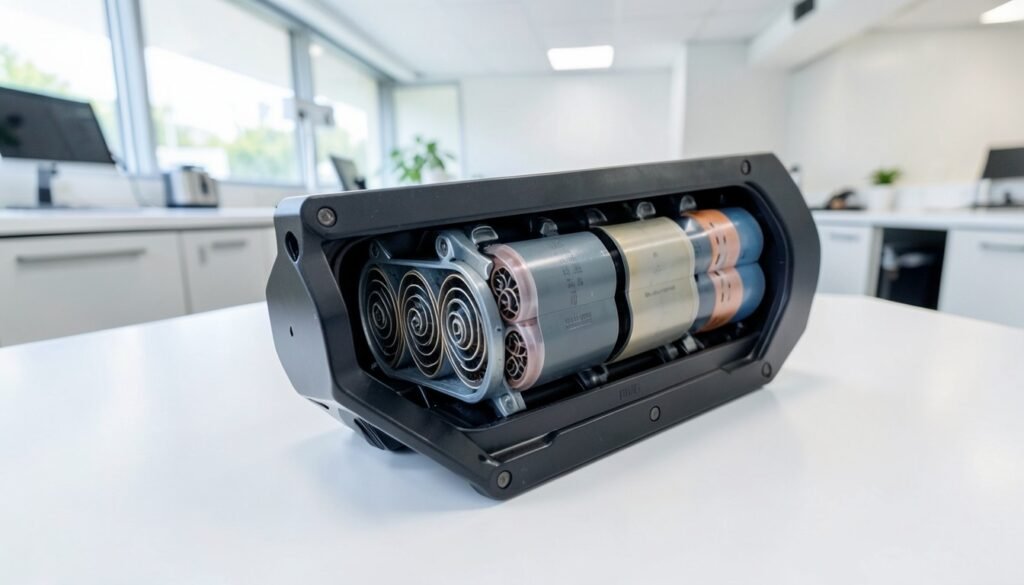
The battery is the heart of your e-bike, but it is also the most common source of safety concerns. Thermal runaway—a process where a battery overheats and can catch fire—is a real risk if the battery pack is poorly designed or improperly charged. In India, the Bureau of Indian Standards (BIS) has introduced specific testing protocols for lithium-ion battery packs used in electric vehicles.
When purchasing an e-bike, prioritize models that use battery packs compliant with the latest BIS standards. These standards mandate that batteries pass tests for short-circuiting, overcharging, and physical impact. Avoid the temptation to use “universal” or unbranded chargers. A charger that is not matched to your battery’s specific Battery Management System (BMS) can lead to overcharging, which is a leading cause of electrical fires.
If you notice your battery casing bulging, the charging time increasing significantly, or the battery overheating during normal use, stop using it immediately. Contact the manufacturer for a professional inspection. Never attempt to open or modify the battery pack yourself. The internal cells are under high pressure and contain volatile chemicals that require specialized handling.
Maintenance for Road Safety
Because e-bikes are heavier than traditional bicycles and travel at higher average speeds, they put extra strain on mechanical components. Your braking system, in particular, needs to be up to the task. If your bike uses mechanical disc brakes, check the pads regularly. If they become thin, they won’t provide the stopping power necessary to handle the weight of an e-bike in traffic.
Tire pressure is another often-overlooked safety factor. Riding on under-inflated tires increases the risk of a puncture and makes the bike harder to steer, especially when cornering. Check your tire sidewalls for the recommended PSI and stick to it. Additionally, ensure your lights are functional. In urban environments, visibility is your primary defense against accidents. If your bike has factory-installed lights, ensure they are clean and aimed correctly. If you ride in low-light conditions, consider adding secondary, high-visibility reflectors or battery-powered auxiliary lights.

Riding Responsibly
The legal status of your e-bike is only one part of the equation. Your behavior on the road dictates your safety. Even if your bike is legally classified as a bicycle, you share the road with cars, buses, and heavy trucks. Always signal your intentions, stay visible, and respect traffic signals.
If you are riding on shared paths, remember that pedestrians have the right of way. An e-bike approaching at 25 km/h is much faster than a pedestrian expects a bicycle to be. Slow down when passing others and use a bell to announce your presence. Avoid the temptation to use throttles in crowded pedestrian areas, as sudden acceleration can lead to loss of control.
If you are involved in a minor collision, the first step is to ensure your safety and the safety of those around you. If there is property damage or injury, notify the authorities. Having documentation—such as your purchase invoice and the vehicle’s certification details—can be helpful when speaking with officials. It demonstrates that you are a responsible owner who has invested in a compliant, safe vehicle.
Choosing the Right Bike
When selecting an e-bike, look for established manufacturers who provide clear specifications. A reputable brand will explicitly state the motor wattage and the top speed of the bike. If a seller claims a bike is “unlocked” or can be easily modified to go faster than 25 km/h, be wary. Modifying your bike to exceed its designed limits not only voids your warranty but also places you outside the legal protections afforded to electric bicycles.
Consider the intended use. If you are commuting, look for a bike with a sturdy frame, reliable brakes, and a battery that is easy to remove for charging. If you are riding in hilly terrain, look for a mid-drive motor system, which is generally more efficient and offers better torque than hub-drive systems. Regardless of the type, always prioritize a model that has been tested and certified for the Indian market.

Watch: E-Bike Laws & Classes Explained | Class 1, 2, 3 Electric Bikes Made Simple | Trek Bikes
Frequently Asked Questions
What happens if my e-bike exceeds 250 watts?
If your e-bike has a motor exceeding 250 watts or a top speed higher than 25 km/h, it is legally classified as a motor vehicle in India. This means it must be registered with the Regional Transport Office (RTO), requires a valid driver’s license to operate, and must be insured. Riding such a vehicle without these requirements is a violation of the Motor Vehicles Act.
Is ARAI certification mandatory for all e-bikes?
ARAI certification is mandatory for all electric two-wheelers that function as motor vehicles (i.e., those exceeding 250W/25 km/h). Low-speed e-bikes that fall within the specified limits are generally exempt from this specific type approval but should still meet basic quality and safety standards to ensure reliability.
Can I charge my e-bike battery inside my home?
Yes, provided your battery pack is BIS-certified and you are using the original, manufacturer-provided charger. Avoid charging in areas with poor ventilation or near flammable materials. If you notice any signs of damage or unusual heat, disconnect the charger and contact the manufacturer.
How do I know if my e-bike is street-legal?
A street-legal e-bike in India should come with documentation from the manufacturer stating its motor power and maximum speed. If the bike is a low-speed model, it should be clearly labeled as such. If you are unsure, check the user manual or contact the customer support department of the brand you purchased from.
Staying Informed
As the electric mobility sector continues to grow, it is likely that regulations will be updated to reflect new technologies and safety data. You can stay informed by checking the official website of the Ministry of Road Transport and Highways (MoRTH) for updates on vehicle classification and safety standards. Being a responsible e-bike rider means staying informed, maintaining your vehicle, and respecting the rules of the road. By following these principles, you contribute to a safer environment for everyone.


Join the conversation