
Key takeaways
- Electric motorcycles currently face a trade-off between heavy battery weight and limited high-speed range.
- Infrastructure for fast-charging remains inconsistent, impacting the viability of electric bikes for long-distance travel.
- Battery Management Systems are critical for safety and longevity, requiring rigorous adherence to official charging protocols.
- Prospective buyers should prioritize real-world range data over manufacturer-stated ideal conditions.
The transition to electric motorcycles is often framed by viral social media tests that prioritize spectacle over utility. While these videos suggest that cross-continental travel on a battery is standard, the reality for the average commuter is far more nuanced. When we examine the current state of electric motorcycles, we are looking at a fundamental shift in physics and charging infrastructure rather than a simple swap of fuel for electricity.
Honda’s recent entry into the electric two-wheeler market demonstrates that even industry giants are contending with the same engineering hurdles as smaller startups. Whether you are weighing the performance of an electric motorcycle against a traditional combustion model, or simply trying to determine if an electric bike can handle your daily commute, the constraints regarding weight and energy density remain constant. As we explore the hurdles facing the industry, it becomes clear that hardware is only half the battle. If you want to understand why early market entries struggled to gain traction, read our LiveWire Survival Warning: Why Premium Electric Motorcycles Stalled. Let’s pull back the curtain on the engineering bottlenecks slowing down the ride.
The Current State of EV Motorcycle Tech
The transition from internal combustion engines to electric drivetrains has fundamentally changed how we view two-wheelers. If you are confused by the terminology or the legal implications of these new machines, check out our Difference Between Ebike and Emoto: Laws and Safety Guide to see where these machines sit legally. When we discuss what constitutes an electric motorcycle, we are essentially talking about a machine that replaces pistons and fuel tanks with lithium-ion cells and electric magnets.
Legacy manufacturers like Honda are finally entering the space, but they face significant hurdles. According to official documentation from Honda’s global corporate site, these machines often require careful optimization to balance the agility of their internal combustion counterparts with the added weight of battery systems. The fundamental challenges involve more than just software; it is a rigid battle with physics.
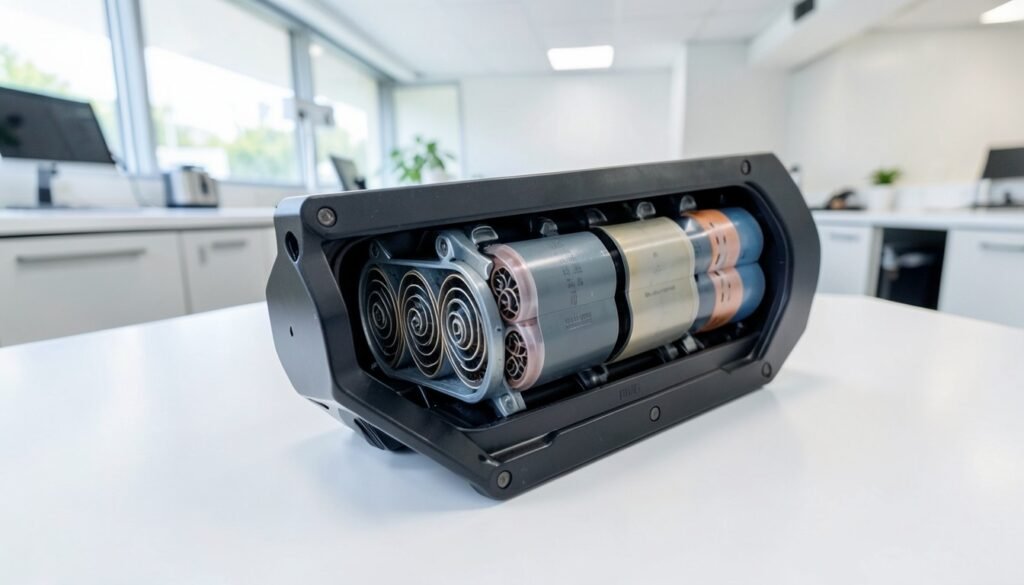
The primary deterrent for high-performance design remains energy density. To match the range of a 15-liter fuel tank, a battery pack currently adds immense weight, which compromises handling. While many viral videos highlight straight-line speed, they often ignore the reality that doubling your battery capacity usually means adding 30 to 50 kilograms to the chassis.
When performing an electric motorcycle requirement comparison, you quickly realize that in-wheel electric motor designs—which often increase unsprung mass—can prevent these bikes from feeling as responsive as a traditional sportbike. Until we see a shift in battery chemistry, we are forced to choose between usable range and the razor-sharp feedback riders expect.
Battery Density vs. Weight: The Physics Problem
The most persistent barrier to EV adoption isn’t just technology; it is pure, unadulterated physics. Modern lithium-ion batteries simply do not pack enough energy density to match the weight-to-energy ratio of a tank of gasoline. When you see riders taking on various long-distance endurance tests, you notice they often struggle with the sheer mass required to achieve a decent range.
Consider a standard 300cc internal combustion motorcycle. It typically weighs around 160kg to 170kg. To reach equivalent power and highway-capable range, an electric motorcycle often balloons well past 200kg. This extra weight isn’t just about the cells; it is the casing, thermal management, and structural reinforcement needed to house them.
| Spec Category | 300cc ICE Bike (Approx) | Equivalent EV |
|---|---|---|
| Curb Weight | 165 kg | 210 kg+ |
| Energy Density | High | Low |
This weight impacts your ride immediately. A heavy battery pack forces engineers to raise the center of gravity or extend the wheelbase, which ruins the flickable agility you expect from a light bike. If a manufacturer prioritizes range, the bike becomes a heavy tourer. If they prioritize sportiness, the range shrinks to city-commuter levels. You are constantly choosing between being able to reach the next town or having a bike that actually feels fun in the corners. It is the fundamental trade-off that manufacturers are forced to balance, which keeps the electric motorcycle vs. motorcycle debates so heated.

Charging Infrastructure: Global Realities
Charging your bike shouldn’t feel like a puzzle. In Europe and North America, you see a mix of CCS and Type 2 connectors, but in other markets, the environment shifts toward proprietary battery-swapping stations. This lack of a universal standard is one of the biggest challenges facing riders today. If you’re trying to participate in a daily commuting challenge, you’ll quickly realize that having your own dedicated home charger is non-negotiable.
While major cities in the West have expanding public networks, the grid is still catching up. Relying on public infrastructure for long-distance touring is currently impractical because protocols aren’t standardized. For most, the reality of owning an electric motorcycle is simple: you must charge at home.
- Home Charging: Install a dedicated 15A wall socket to ensure safe, consistent power delivery.
- Portable Chargers: Essential for office commutes if you lack a private garage or wall box.
- Swappable Tech: A helpful solution in specific markets, but currently limited to brand-specific ecosystems.
If you are watching online videos, remember that those creators often have specialized setups. In the real world, unless you have a standardized fast-charging port at your destination, your range is strictly limited by your overnight charge. Standardizing these connections is the only way to make electric touring a reality.
Performance Parity: How EVs Stack Up Against ICE
When you compare an electric motorcycle vs. a traditional motorcycle, the first thing you notice is the torque. Electric motors deliver instant, linear power from zero RPM, which makes city commuting feel snappy. However, these bikes often struggle at sustained high-speed cruising. While an internal combustion engine thrives on the highway, many EVs see efficiency drop once you push past 100 km/h. This is a common theme in social media tests, where riders realize that real-world range rarely matches the brochure.
Thermal management remains a hurdle. When you ride hard, heat builds up in the battery pack. To protect components, the bike’s software often throttles power, leading to performance dips. If you look at what is an electric motorcycle in today’s market, manufacturers are still balancing power against the risk of overheating. Unlike combustion engines, which use simple cooling, EVs are limited by battery discharge rates.
Regenerative braking is another variable. It helps in stop-and-go traffic—perfect for a work commute—but it alters the bike’s natural feel. Furthermore, using in-wheel electric motors challenges the unsprung weight, which can make the ride feel heavy compared to a traditional mid-mounted motor setup.
| Metric | ICE Motorcycle | Electric Motorcycle |
|---|---|---|
| Torque | Linear build-up | Instant |
| Sustained Speed | Excellent | Battery-dependent |
| Maintenance | High | Very low |
Ultimately, acceleration curves for current EVs are impressive, but they rarely match the top-end endurance of a well-tuned combustion engine.
The Cost of Ownership: Maintenance and Longevity
When you compare an electric motorcycle vs. a traditional motorcycle, the maintenance math is initially tempting. Without oil changes, spark plugs, or complex cooling systems, you avoid those routine garage visits. However, look past the immediate service savings. The real expense is the battery. As cells degrade over thousands of charge cycles, that range anxiety becomes a genuine financial headache. If you are a high-mileage rider, replacing a proprietary battery pack might eventually cost more than a mid-life engine overhaul on a traditional combustion bike.
Resale value remains a volatile variable. Established combustion brands hold their value because buyers trust their long-term mechanical reliability. With newer electric models, the technology moves fast, making your specific battery pack potentially obsolete or hard to service within a few years.
Do not forget taxes and insurance. While many regions offer subsidies to lower the upfront price, insurance premiums for EVs are often higher due to the specialized cost of replacing high-voltage components after a crash. Before committing, calculate your estimated battery lifespan against your actual daily mileage.
Safety Standards and Battery Management Systems
The Battery Management System (BMS) is the most critical piece of tech. It acts as the bike’s brain, constantly balancing individual cells to prevent thermal runaway—the dangerous scenario where a battery overheats and potentially ignites. Without a sophisticated BMS, you are relying on luck rather than engineering.
Manufacturers must follow strict safety frameworks to get their products on the road. Globally, reputable brands adhere to international safety protocols to ensure that high-voltage battery packs do not fail under standard operating loads. According to the Society of Automotive Engineers (SAE), standardized testing for battery safety is a core requirement for any vehicle entering the public market.
To keep your setup safe at home, follow these practical steps:
- Always use a dedicated, manufacturer-approved wall charger rather than daisy-chaining standard extension cords.
- Avoid plugging in your bike immediately after a long, high-speed ride; give the cells at least 30 minutes to cool down.
- Inspect your charging port and cables for signs of fraying or heat damage every month.
Advanced sensors play a massive role here. They monitor voltage and temperature across the entire pack, adjusting power delivery if you are riding in extreme heat or freezing temperatures. While many online videos focus on raw speed, the real engineering work happens in these invisible safety layers. Always prioritize bikes that offer clear, transparent data on their battery health and official safety certifications.
Future Outlook: Solid-State Batteries and Beyond
If you are looking for a solution to the weight-to-range dilemma, solid-state batteries are the most promising candidate. Unlike current liquid-electrolyte lithium-ion packs, solid-state designs offer significantly higher energy density. This shift could finally help resolve the ongoing challenges by allowing smaller, lighter battery packs that deliver double the current range. This technology would provide engineers with unprecedented design freedom, letting them build electric bikes that feel more like traditional motorcycles in terms of handling and weight distribution.
However, the industry is not putting all its eggs in the battery basket. Major manufacturers are also researching hydrogen fuel cells and synthetic fuels to overcome the limitations of pure battery-electric powertrains. While hydrogen offers faster refueling, it introduces its own engineering hurdles. Synthetic fuels, meanwhile, allow internal combustion engines to remain relevant in a carbon-neutral future.
Don’t expect these breakthroughs to hit the showroom floor immediately. Current research investments suggest that mass-market solid-state production is still years away. While online creators often highlight the limits of current tech, the transition to next-generation energy storage will be a slow, iterative process. For now, focus on the practical trade-offs of existing models rather than waiting for an overnight miracle in energy density.
Choosing Your First Electric Motorcycle: A Practical Guide
When shopping, ignore the optimistic range figures on the brochure. If your daily commute is 40km, look for a bike with at least 60km of real-world range to account for traffic, headwinds, and battery degradation. Manufacturer claims rarely hold up in stop-start city conditions.
For urban dwellers without private parking, prioritize bikes with swappable battery systems. Being able to carry a battery upstairs to a wall socket is often more valuable than a slightly faster top speed. Before putting your money down, grill the dealer on:
- Battery warranty terms: Does it cover capacity loss over time or just total failure?
- Service network: Where is the nearest authorized shop, and do they have trained technicians?
- Spare parts: What is the current lead time for a replacement controller or motor components?
During your test ride, stop obsessing over 0-60km/h acceleration. Focus instead on how the weight is distributed during low-speed maneuvering and how the brakes handle the extra mass of the battery pack. These challenges—like weight management and charging logistics—are the real hurdles you face, not just the raw power output.
Frequently Asked Questions
What is the real-world range of a modern electric motorcycle compared to an ICE bike?
When you compare an electric motorcycle vs. a traditional motorcycle, the range difference is stark. A combustion bike easily covers 300km, while most urban EVs struggle to hit 100km. You’ll find range drops quickly at highway speeds. Unlike petrol bikes, consistent long-distance performance remains a hurdle for current battery technology.
How does the weight of a battery pack affect the handling of an electric motorcycle?
Batteries are heavy, and that mass sits high, making the bike feel top-heavy in tight turns. Unlike traditional bikes, EVs often face balance hurdles. While in-wheel electric motor designs include managing unsprung mass, the overall weight distribution can make steering feel sluggish. During any requirement comparison, you should note that this added weight changes how a motorcycle handles compared to a lighter petrol equivalent.
Are there standardized charging plugs for electric motorcycles globally?
Unfortunately, there is no global standard for charging plugs, which remains one of the major challenges today. While some markets use CCS or J1772, many smaller bikes rely on proprietary connectors. This fragmentation makes public charging tricky. Before buying, check your local infrastructure, as the lack of a universal plug standard is a significant barrier to long-distance touring.
What is the expected lifespan of an electric motorcycle battery before it needs replacement?
Expect about 800 to 1,500 full charge cycles. After that, capacity degrades, though the bike remains functional. It’s not an instant death sentence, but you will notice reduced range. Proper charging habits, like avoiding deep discharges and extreme heat, are essential to keeping your battery healthy for several years of ownership.
Picking Your First Electric Ride
If you are looking to jump into the world of electric bikes, don’t let the shiny marketing videos distract you from the basics. An electric motorcycle vs. motorcycle comparison usually boils down to your specific daily use case. Are you commuting 10km a day or planning a weekend tour? For most riders, a reliable daily commuter is the smarter buy right now.
Before you put down a deposit, check your local grid and charging access. If you are eyeing the latest releases, look at our breakdown of the Royal Enfield Flying Flea S6: What the Test Mules Reveal About India’s New Electric Bike to see how legacy brands are handling the transition. My honest advice? Rent or demo one for a full week before committing. Your biggest hurdle isn’t the bike’s specs; it’s whether your parking spot can actually support a dedicated charger.


Join the conversation