
Key takeaways
- Silicon anode technology is currently the most viable path to increasing energy density in existing EV platforms.
- Higher energy density requires more sophisticated thermal management systems to maintain safe charging speeds.
- Semi-solid batteries offer a practical bridge between current liquid-electrolyte technology and future all-solid-state designs.
- Infrastructure must evolve to include onsite energy buffers to support the power demands of next-gen fast charging.
Imagine an EV battery that sheds the weight of a spare tire while adding fifty miles to your weekend range. That is not just marketing fluff anymore; it is the core promise of next gen electric car batteries hitting the streets in 2026. We are finally moving past the theoretical limits of traditional graphite anodes into a space where silicon and semi-solid designs are tackling energy density head-on.
According to recent research reported by sciencedaily.com, scientists are even perfecting anode-free architectures that could make our battery packs significantly smaller and lighter. But as we analyze the future of ev batteries, we have to look past the lab and face the reality of charging speeds and grid readiness. If you are curious about how this high-tech hardware impacts ground-level infrastructure, it is worth checking How to Start EV Charging Station in India: A Reality Check. Let’s break down what actually works on the road today.
The Silicon Anode Shift: Moving from Lab to Road
For years, we’ve relied on graphite anodes to move lithium ions, but the physical limits of that material are hitting a wall. To get more range without just adding a heavier, bloated battery pack, the industry is shifting toward silicon anodes. If you’re wondering what are silicon anode batteries, think of it as a capacity upgrade: silicon can store significantly more lithium ions than graphite in the same amount of space. This is the core of next gen electric car batteries.
The 2026 Mercedes-Benz implementation offers a glimpse into this reality. By replacing or supplementing traditional graphite with silicon, engineers are boosting energy density without increasing the physical volume of the pack. It’s a key reason why How to Overcome EV Range Anxiety: Why It’s Dying Out in 2026 is a conversation we’re actually having now.
However, silicon comes with a catch: it swells. When it absorbs lithium, it expands like a sponge, which can crack the structure if not managed. Modern engineering uses specialized binders and protective nano-coatings to contain this expansion. It’s not magic; it’s precise material science keeping the battery stable, ensuring these next generation ev batteries don’t just perform well on day one, but last for years.
Energy Density vs. Charging Speed: The Hidden Trade-off
Everyone wants next gen electric car batteries that pack enough energy to cross a continent, but physics doesn’t offer free lunches. Packing more energy into a smaller space is the dream, yet it turns every battery pack into a potential thermal nightmare during DC fast charging. When you push electrons into a dense cell, the internal resistance generates significant heat. If you can’t dump that heat fast enough, you risk damaging the battery’s internal structure.
While traditional Nickel Manganese Cobalt (NMC) cells have a predictable charging curve—starting fast and tapering off as the pack nears capacity—silicon-anode cells behave differently. They can accept high power initially, but managing that thermal surge requires sophisticated liquid cooling systems. Research, such as this study via digitaljournal.com, highlights that even manufacturing variables can introduce hidden degradation, making thermal control even more critical as we push for higher density.
You might see headlines boasting about 500 Wh/kg cells. Keep in mind, this is a laboratory target for the future of ev batteries, not a spec you’ll find in your next family SUV. Mass-market packs today sit significantly lower. Chasing that 500 Wh/kg benchmark without solving the heat dissipation puzzle is like trying to fit a firehose into a straw; it just isn’t practical yet.

Manufacturing Hurdles: Why Scaling is a Bottleneck
Building next gen electric car batteries isn’t just about chemistry; it’s about assembly precision. Traditional liquid-electrolyte batteries are like filling a bottle; you simply inject the electrolyte into the cell. It is a mature, fast, and relatively inexpensive process. Moving to solid-state or even high-energy semi-solid packs, however, introduces massive production hurdles. Companies are currently struggling to maintain the extreme environmental cleanliness required for these cells, as exposure to even trace amounts of air during assembly can severely degrade high-nickel cathodes.
When you look at the future of ev batteries, the cost-per-kilowatt-hour remains the biggest barrier for early adopters. While companies like Svolt are pushing ahead with mass production of 100-kWh semi-solid fast-charging battery packs, other manufacturers are pausing expansion to refine their assembly lines. The precision required is so intense that protecting proprietary manufacturing data has become as critical as the research itself—a challenge mirrored in sectors like cybersecurity, where firms must guard against complex threats, much like the Binance Hack: Understanding State-Sponsored Crypto Security Risks.
Essentially, we are trading the simplicity of liquid-based manufacturing for the high performance of next generation ev batteries. Until these assembly processes reach the same yield rates as current lithium-ion lines, your next car will likely stick to conventional chemistries for a while longer.
The Semi-Solid Middle Ground
If you’re waiting for the future of ev batteries, you’re likely hearing a lot about "solid-state" tech. But the reality for 2026 is actually the semi-solid middle ground. These batteries aren’t fully solid, but they aren’t traditional liquid-filled cells either. They use a hybrid, gel-like electrolyte that keeps the conductivity we need for high-performance driving while significantly reducing the risk of thermal runaway. Think of them as a safer, more stable bridge to true solid-state chemistry.
From a production standpoint, this isn’t just a lab concept anymore. Svolt has officially begun mass production of 100-kWh semi-solid battery packs, signaling that these next generation ev batteries are ready for prime time. Because they are less prone to overheating, they require less complex cooling infrastructure than older designs, which helps keep weight down.
When it comes to longevity, these packs are showing real promise. While standard lithium-ion cells can start showing noticeable capacity loss after 100,000 miles, early data suggests semi-solid designs manage that degradation more gracefully. They maintain better health across high-speed charging cycles. As noted in recent reports on msn.com, this improved durability could change the long-term value proposition for your next electric vehicle purchase.
Real-World Performance: What Drivers Actually See
When you see marketing brochures for next gen electric car batteries, take those range estimates with a pinch of salt. While manufacturers often tout 600km plus, real-world highway driving at 120km/h is a different beast compared to city crawling. Silicon anode batteries are energy-dense, but they still fight the same physics as traditional lithium-ion packs when pushing through wind resistance.
Extreme temperatures remain a challenge. Silicon expands during charging, and while the latest news on ev batteries suggests smarter thermal management, deep winter or sweltering heat can still throttle your charging speed significantly. Think of it like comparing high-end hardware; just as Are AI Laptops Worth It? A Guide to Ryzen 5 130 Performance depends on cooling, your battery’s health relies heavily on how well the vehicle manages its internal temperature.
How do you keep tabs on it? Don’t just rely on the dashboard "percentage" gauge. Use an OBD-II scanner paired with an app like Car Scanner or ABRP to monitor "State of Health" (SoH). If you see your max range dropping faster than expected, it’s likely due to frequent high-speed charging habits rather than a faulty pack. Stick to slower charging where possible; your battery will thank you after 100,000 kilometers.
India’s Battery Pilot Landscape
India isn’t just watching the global battery race; we are running our own pilot programs to see how these chemistries hold up in our intense heat. Take the collaboration between BEML and HPCL; they are actively testing battery swapping stations and stationary storage solutions to see how they perform outside the controlled conditions of a lab. It is a practical move, because what works in a temperate climate often falters in our 45-degree summers.
The Automotive Research Association of India (ARAI) is now stepping up to test next-generation chemistries specifically for our local conditions. Their work is vital because high-ambient temperatures can wreak havoc on charging cycles. While researchers are making strides in reducing battery size and weight as noted in recent reports on sciencedaily.com, we have to ensure these dense power packs don’t overheat during rapid charging.
Adapting global innovations for our grid is another hurdle. Tropical grid stability means our chargers frequently face voltage fluctuations that could damage sensitive silicon anode systems. These pilots are effectively stress-testing whether international designs need local cooling adaptations or different software logic to stay safe. If you are looking for the future of ev batteries, watch these local testbeds; they are the true proving ground for whether new tech can handle the actual Indian road.
Lifecycle and Aftermarket: The Second Life of Advanced Packs
Think of your EV battery like the hardware in your laptop; just as you’d check the Best Laptops for AI Work: A Practical Hardware Guide before buying, you should consider your battery’s second-life potential before you drive off the lot. When a pack drops to 70% capacity, it is no longer ideal for the road, but it is perfect for stationary grid storage. This "second life" keeps valuable materials out of landfills while helping balance local power grids.
Next generation ev batteries introduce a new challenge, though. While silicon anode batteries offer better energy density, their unique internal chemistry can complicate the recycling processes designed for traditional graphite-based lithium-ion cells. Globally, recycling infrastructure is racing to catch up. In India, policy-led initiatives are starting to formalize the collection of used packs, though we remain behind the specialized, automated facilities currently operating in parts of Europe.
For you, the owner, simple habits are the best way to protect your resale value:
- Keep your daily charge between 20% and 80% to reduce stress on the cells.
- Avoid constant DC fast charging; reserve it for long road trips.
- Park in the shade during peak heat to minimize thermal degradation.
Treating your pack with care today ensures it holds real value—both for your bank account and the planet tomorrow.
Infrastructure Implications: Can the Grid Handle Faster Charging?
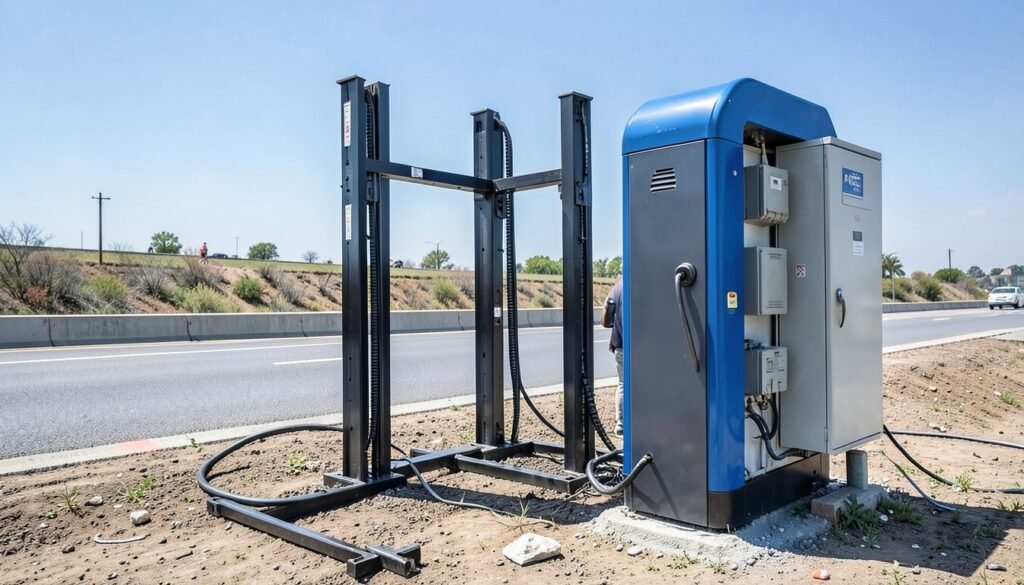
If you’ve ever wondered why your local charging speed fluctuates, it’s often because the grid is hitting its physical limit. Ultra-fast charging networks create massive power spikes, acting like industrial-scale appliances. When several cars pull maximum current simultaneously, the local distribution transformer risks a trip, which is why utilities are cautious about where they place high-capacity chargers.
The "more plugs, less power" strategy helps manage this reality. Instead of building massive, expensive dedicated grid connections for every single station, engineers now use load management software. It intelligently throttles power across multiple plugs, ensuring that while every car receives a charge, no single vehicle slams the grid with an unsustainable demand.
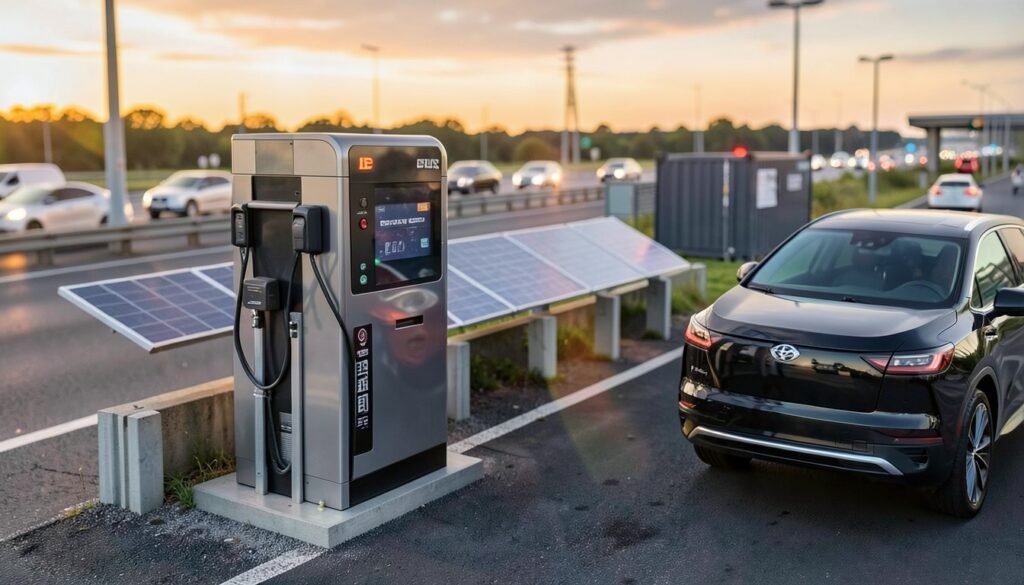
This is where onsite energy storage becomes essential. By placing large stationary batteries at charging hubs, operators can draw power from the grid steadily during off-peak hours and dump that energy into your car at high speeds when you arrive. It acts as a buffer that keeps the grid stable. As research into the future of ev batteries advances, as noted at digitaljournal.com, grid-connected smart charging is becoming standard. These systems communicate with local utilities to shift charging loads, turning your vehicle into a grid-stabilizing asset rather than just another strain on the system.
Watch: How Silicon Anode Batteries Will Bring Better Range To EVs
Frequently Asked Questions
Are silicon anode batteries safer than traditional lithium-ion batteries?
Safety depends on how manufacturers stabilize the internal chemistry. Silicon expands significantly during charging, which can cause internal damage if not managed correctly. While researchers at KAIST are refining protective layers to prevent dendrite formation—those needle-like structures that cause electrical shorts—these next-gen electric car batteries are still undergoing rigorous real-world testing. They aren’t inherently "safer" yet; they just pack more energy into the same space.
How much range will I actually gain with a next-gen battery pack?
You shouldn’t expect a sudden doubling of range overnight. The primary benefit of next generation ev batteries is energy density—fitting more power into a smaller, lighter package. By removing bulky graphite anodes, engineers can achieve weight savings that translate into more efficient miles per kilowatt-hour. Think of it as incremental efficiency gains that help the car travel farther, rather than a miraculous leap in total driving range.
Can I replace my current EV battery with a newer silicon-anode pack?
Simply put, no. Your current vehicle’s battery management system and physical chassis layout are designed specifically for the weight, voltage, and thermal profile of your existing lithium-ion pack. Swapping in a silicon anode battery would require a complete redesign of the car’s electrical architecture and cooling circuits. If you want to use the latest battery tech, you will need to buy a new vehicle.
Why is it taking so long for solid-state batteries to reach mass production?
The latest news on ev batteries shows that manufacturing scale is the real bottleneck. While companies like CATL are pushing toward 500 Wh/kg capacities, producing a solid-state or high-silicon cell consistently is incredibly difficult. Factors like air exposure during production, as noted by Hanyang University researchers, can ruin performance. Achieving high specs in a lab is one thing; manufacturing millions of perfect, reliable cells is another.
Beyond the Hype: What Should You Actually Expect?
The transition to next gen electric car batteries is finally moving from academic journals to showroom floors. While researchers are busy solving the dendrite issues that plague anode-free designs, manufacturers like Svolt and CATL are already pushing into 500 Wh/kg territory. It is impressive, but you should temper your expectations for immediate, widespread adoption. These advanced cells are still navigating complex manufacturing hurdles, from air exposure sensitivity to the sheer cost of scaling precision techniques.
If you are watching the industry closely, it is worth looking at how these power densities translate to heavy-duty applications. For instance, see our breakdown on the Tesla Semi: Is Electric Trucking Ready for Long-Haul Logistics? to see how battery size influences real-world utility. My advice? Don’t wait for the perfect battery to arrive. If you need a car today, buy for the range you need now, not the theoretical capacity promised for 2030.
Sources and further reading
- Smaller EV batteries, longer range? Scientists may have found a way — sciencedaily.com
- Cheaper EVs and next-gen batteries in the US could make your next car electric — msn.com
- Hidden flaw in next-generation EV batteries uncovered: New research points to longer-lasting electric vehicles — digitaljournal.com

Join the conversation