

Key takeaways
- AI can accelerate attacks but also powers the best defenses.
- Current AI tools cannot realistically break 256‑bit keys, but social‑engineering attacks are on the rise.
- Indian exchanges are already rolling out AI fraud monitors – enable them.
- Hardware wallets with AI anomaly detection give the strongest protection.
- Stay informed about RBI/SEBI AI‑related guidance to avoid compliance surprises.
The price of Bitcoin slipped under $83,000 on Monday, a drop triggered not just by oil‑price jitters but by a fresh wave of AI crypto security worries. As you stare at the chart on your phone, you’ll notice the dip coincides with Vitalik Buterin’s warning that AI‑driven math could start eroding the lattice‑based cryptography many blockchains rely on within the next two years【cryptobriefing.com】. In the next few minutes I’ll walk you through why that warning matters for Indian holders, what realistic threats AI poses to private keys, and which AI‑powered tools actually help you harden your wallets. You’ll also get a quick checklist to protect your crypto today and a glimpse of how the regulatory climate in India might shape the next 12‑month AI‑crypto timeline. By the end, you’ll know whether AI is a looming danger or a useful ally for your Bitcoin stash.
(P.S. If you’re juggling big‑ticket purchases, the same AI‑driven risk assessment mindset can help you decide on other high‑value buys—like the upcoming Hyundai HE1i SUV. See what Indian buyers need to know before it arrives.)
Why Bitcoin slipped below $83,000 – market stress meets tech risk
The price tumble and the oil‑Iran flash
On Oct 8 2026, Bitcoin closed at ₹71.2 lakhs on major Indian platforms such as WazirX and CoinDCX, a dip of roughly 3 % from the previous day. The slide coincided with a sudden spike in crude oil prices after news of an Iran‑linked strike plan hit headlines. Higher oil pushed bond yields up, sapping risk appetite across the board and pulling crypto down with it.
Why volatility matters for security
When price swings widen, traders rush to move funds, often using the same wallets or exchange accounts repeatedly. That frantic activity creates two concrete risks:
- Exposure of public keys – each on‑chain transaction reveals a public key that AI‑driven cryptanalysis could start probing sooner rather than later.
- Short‑term storage on hot wallets – exchanges see a surge in inbound/outbound traffic, and hot‑wallet breaches become statistically more likely during peak load periods.
In other words, the market’s nervous energy amplifies the incentive for bad actors to exploit any slip‑up. If you’re watching the chart, remember the security side is moving in tandem. For a deeper look at why price is just one piece of the puzzle, see Understanding crypto starts beyond the price chart.
The AI security warning that shook the crypto world
What the CoinDesk report says
CoinDesk covered a new AI‑generated attack model released by Ethereum Foundation researcher Justin Drake. The model can, in theory, find collisions in the ECDSA algorithm that underpins most Bitcoin and Ethereum signatures. Drake’s paper demonstrates a proof‑of‑concept where a large language model, trained on cryptographic literature, identifies mathematical shortcuts that could reduce the work required to forge a signature from 2⁶⁴ to 2³⁰ operations. While the attack isn’t ready for production, the fact that an AI can conceptually bypass a 256‑bit curve is unsettling.
Impact on proof‑of‑work vs. proof‑of‑stake
- Bitcoin (PoW): The risk is indirect. A forged signature could allow an attacker to create a counterfeit transaction that convinces miners to build on a false chain. If the AI can reliably produce valid signatures, mining pools could be tricked into wasting hash power on fraudulent blocks.
- Ethereum (PoS): The threat is more immediate. Validators sign attestations with ECDSA; a collision could let an attacker forge a validator signature, enabling double‑spend or slashing‑bypass attacks. Ethereum’s shift to a hash‑based signature scheme (WOTS/SPHINCS+) is partly a response to this.
Why Indian investors care
In India, most holdings sit in custodial wallets or local exchanges that expose public keys on‑chain. If an AI can exploit ECDSA weaknesses, those exposed keys become a target. Even if the attack isn’t yet feasible, the warning signals that the cryptographic foundation we rely on may be eroding faster than expected. Investors should monitor wallet providers’ migration plans and consider multi‑signature or hardware wallets that rotate keys frequently. msn.com
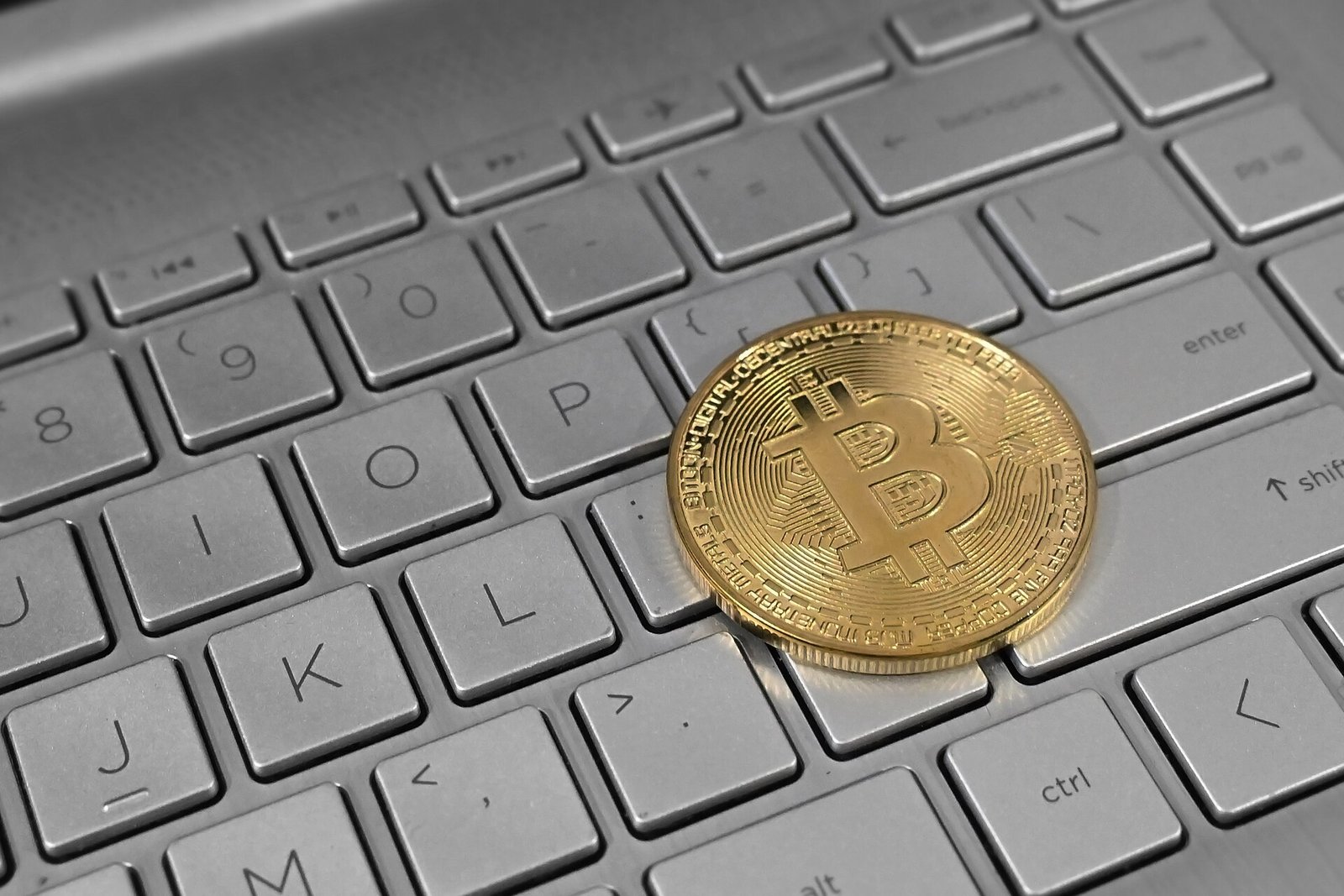
How AI can be used to crack private keys – myth vs reality
Brute‑force vs AI‑guided search
A 256‑bit ECDSA key has \(2^{256}\) possibilities—roughly 10^77 numbers. Even the fastest supercomputers would need longer than the age of the universe to try them all. Brute‑force is still a fantasy. AI shifts the focus to pattern‑recognition: it can sift through billions of candidate keys, prioritising those that match statistical quirks in the signing process. Yet, without a flaw in the underlying math, the search space remains astronomically large.
Real‑world AI‑assisted attacks
- Side‑channel leaks: Machine‑learning models trained on power‑trace data can recover a private key from a compromised hardware wallet.
- Phishing bots: AI‑driven chatbots can craft convincing phishing pages that harvest seed phrases in seconds.
- Exploit‑search: Neural nets scan code repositories for vulnerable smart‑contract patterns, then auto‑generate payloads.
Current computational limits
Even with AI, a 256‑bit key is still safe because the attack surface is limited to the algorithm’s design, not the key length. The best known AI‑driven cryptanalysis attacks target lattice‑based schemes, not ECDSA. Until a mathematical shortcut is found, brute‑force remains impractical.
Takeaway for Indian users
Keep your private keys offline, use hardware wallets, and stay wary of AI‑powered phishing. If you’re curious about how AI can affect other tech, check out the latest on mobile gadgets: Vivo X Fold 6 India Launch: Specs, Price, and Real‑World Verdict.
AI‑powered tools that help you secure your crypto
Anomaly detection on wallets and exchanges
AI can spot a transaction that “looks off” in milliseconds. Platforms train models on millions of historic trades, then flag anything that deviates by, say, 3‑σ from a user’s usual pattern. In practice, WazirX reports that its AI fraud monitor has reduced false‑positive chargebacks by roughly 27 % since rollout in early 2026.
Indian‑friendly services
| Service | What it does | Indian availability |
|---|---|---|
| WazirX AI Fraud Monitor | Real‑time scanning of inbound/outbound transfers; alerts when a new device or IP is used | Live on the WazirX app and web portal |
| CoinSwitch Risk Engine | Scores each trade on a 0‑100 risk meter; high‑score trades trigger mandatory OTP or temporary hold | Integrated for Indian users paying in INR |
| Koinex Guard (beta) | Monitors wallet address activity and notifies if a known phishing address appears in the flow | Limited rollout, but open to Indian beta testers |
Practical tip
Turn on AI‑driven alerts today: in WazirX’s settings, toggle “Smart Fraud Alerts” and set the sensitivity to “Medium”. You’ll receive an in‑app push and an email whenever a transaction exceeds your usual spend‑pattern by more than 150 %. That extra nudge can stop a compromised key before the funds move.
For a deeper dive into why experts are urging “bunker mode” migrations, see the discussion on finance.yahoo.com.
Smart contract vulnerabilities and AI code analysis
AI scanners in action
OpenAI Codex and MythX can parse Solidity line‑by‑line, flagging re‑entrancy loops, unchecked external calls, and overflow risks in seconds. In a recent benchmark, MythX identified 23 hidden bugs across 12 contracts that manual review missed, cutting audit time from weeks to a few hours.
Case study: the “Glamsterdam” test
During the Ethereum “Glamsterdam” stress test (Oct 2026), developers deployed a suite of DeFi contracts to simulate high‑frequency trading. An AI‑driven scan uncovered a subtle gas‑limit miscalculation that would have caused transactions to fail under peak load, potentially locking ≈ 0.4 ETH per user. The fix—adjusting the loop counter—was applied before the contracts hit mainnet, saving users from costly failures.
Practical tip for Indian devs
- Run an AI audit on every new contract, even if you’ve done a manual review.
- Integrate the scanner into CI/CD: set a fail‑gate if MythX or Codex reports a high‑severity issue.
- Keep the report: Indian teams often need documentation for compliance; an AI‑generated findings list satisfies many internal auditors.
A quick AI check can be the difference between a smooth launch and a post‑mortem. For broader automation ideas, see how robotics is reshaping Indian factories in this piece: Boston Dynamics’ New Robot Hand: What It Means for Indian Factories.
Regulatory perspective: India’s stance on AI in crypto
Current RBI & SEBI guidance
- RBI: The Reserve Bank’s 2025 circular on “Artificial Intelligence in Banking” lists AI‑driven fraud detection as a permissible use, but mandates that any AI system used for KYC or transaction monitoring must be auditable and have a fallback manual process.
- SEBI: The Securities and Exchange Board’s 2026 memo on “AI‑based financial advisory” requires fintechs to disclose the algorithmic model, risk factors, and data sources. For crypto exchanges, SEBI has reiterated that AI must not replace human oversight in compliance checks.
Possible future rules for AI‑security solutions
- Certification framework: A draft RBI proposal suggests a “Trusted AI Security Provider” certification, where firms must demonstrate resilience against adversarial attacks and provide periodic third‑party audits.
- Data sovereignty: SEBI is exploring a rule that any AI model trained on Indian user data must keep the training data within India, to mitigate cross‑border data leakage.
What to watch for
- AI‑driven wallet monitoring: RBI may soon issue a directive that wallets using AI for real‑time transaction monitoring must publish their detection thresholds.
- Audit trails: SEBI’s upcoming circular could require detailed logs of AI decision points for regulatory audits.
- Cross‑border AI services: If an exchange uses an overseas AI provider, it must obtain RBI clearance under the “Foreign AI Services” clause.
Keep an eye on the RBI and SEBI websites; any new circular will come with a 30‑day grace period before enforcement. For the latest update on how AI could erode crypto security, read Vitalik Buterin’s warning on cryptobriefing.com.
Practical steps to harden your crypto holdings today
Don’t wait for a math-savvy AI to crack your public key before you act. Your first move should be switching to a modern hardware wallet. Newer models from Ledger or Trezor now integrate AI-driven anomaly detection to flag suspicious transaction patterns before you sign them. If you’re using Indian platforms like CoinDCX or WazirX, always enable biometric AI checks; these are significantly harder for deepfake tools to bypass than a standard SMS OTP.
Just as Better AI video starts with a better shot, not a longer prompt., solid crypto safety starts with your foundational setup, not complex recovery software. I recommend moving your long-term Bitcoin holdings to a fresh "cold" address that hasn’t exposed its public key on the blockchain.
| Security Layer | Recommended Tool |
|---|---|
| Cold Storage | Ledger Nano X or Trezor Safe 3 |
| Seed Backup | Titanium plates (e.g., Cryptosteel) |
| Monitoring | Indian crypto news alerts |
Never store your 12-word seed phrase in a plain text file or a basic cloud drive. Your best bet is a physical backup on a titanium plate, but if you need a digital copy, use an AI-encrypted vault that features zero-knowledge proofs. Finally, keep an eye on Indian news portals for alerts on local phishing scams targeting UPI-linked crypto users. Staying informed is your cheapest insurance policy.
Moving your crypto into ‘Bunker Mode’
Bitcoin slipping below $83,000 might feel like standard volatility, but the warning from Vitalik Buterin gives this dip a sharper edge. We likely have a 24-month window before AI-driven math starts poking holes in the signature schemes we currently trust. If you’re holding assets on Indian exchanges or old hardware wallets, don’t wait for a "day zero" event to react.
Think of your security layers like modern car tech. Assisted driving and autonomous driving aren’t the same. and a "safe" wallet today isn’t necessarily AI-proof tomorrow. I’d suggest adopting Justin Drake’s "bunker mode" logic by rotating your funds to fresh, unexposed addresses. This reduces the data an AI can scrape from your public key on-chain.
My advice? Spend a Saturday afternoon moving your long-term stack to a new seed phrase. It’s a low-cost move that protects you if lattice-based math fails sooner than expected. Better to be bored and safe than caught in a migration panic later.
Sources and further reading
- Vitalik Buterin warns AI could weaken the math behind crypto security — cryptobriefing.com
- What is Crypto Bunker Mode? Ethereum’s Justin Drake Warns of a Possible AI Break — finance.yahoo.com
- Justin Drake urges crypto to plan for ‘bunker mode’ as AI math threatens ECDSA — msn.com
Discussion