

Key takeaways
- Boston Dynamics’ hand adds human‑like dexterity to industrial robots.
- Indian firms can leverage government incentives to offset high upfront costs.
- Integration requires software bridges and workforce up‑skilling, but ROI can be rapid.
- Successful global pilots show measurable gains in speed and defect reduction.
- A small pilot project is the fastest way for Indian manufacturers to test the technology.
Imagine trying to use a power drill while wearing a thick oven mitt. For years, that’s been the reality for industrial robots—clunky, imprecise grippers that struggle with actual finesse. Boston Dynamics just shifted the goalposts with their new Boston Dynamics robot hand for the Atlas humanoid. It uses 13 degrees of freedom to actually manipulate tools, not just grab them.
For factory managers in manufacturing hubs like Chennai or Pune, this matters. We’re moving toward machines that can handle welding or power tools rather than just basic sorting. I’ll break down if this tech is a viable upgrade for our shop floors today. We also need to keep the human element in mind, so let’s address Are AI‑driven layoffs looming for Indian workers? as we look ahead.
Why a new robot hand matters now
Boston Dynamics has finally unveiled a new four-finger hand for its Atlas humanoid, and honestly, it’s about time we saw this kind of dexterity. With 13 degrees of freedom and dense tactile sensors across its fingertips, this isn’t just another robotic claw; it’s built for actual, nuanced tool use—think welding torches, drills, and power torque drivers.
If you walk through most assembly lines in Pune or Chennai today, you’ll mostly see stiff, pneumatic grippers. They’re great for high-speed, repetitive movements, but they’re essentially "blind." They lack the sensitivity to handle delicate parts or adjust their grip if something slips. It’s a massive leap from those rigid systems to what Boston Dynamics is doing now.
This shift couldn’t come at a better time for our manufacturing sector. With the government pushing "Make in India 2.0" and offering various automation incentives, Indian firms are hungry for systems that can handle human-centric workspaces. While we aren’t all jumping to buy humanoids yet—just like how we carefully consider tech like the Xiaomi Redmi Note 13 Series Lands in India: What You Need to Know—the shift toward high-dexterity automation is officially underway.
Technical deep‑dive: sensors, actuation and AI integration
Let’s talk specs. The new GR3 model isn’t just a mechanical claw; it’s a sensory powerhouse. With 13 degrees of freedom, this hand uses dense tactile pressure sensors across the fingertips and palms to "feel" the environment. It relies on internal proprioception—knowing exactly where every joint is without needing a camera to watch it—while force-torque sensing lets it handle delicate tools or heavy lifting without crushing them.
The real magic, though, is the AI stack. Boston Dynamics built this for high-fidelity simulation. By using sim-to-real reinforcement learning, the robot masters a task in a virtual world before ever touching a physical bolt. This means the low-latency control loop can adjust a grip in milliseconds if an object starts to slip.
For Indian robotics labs, this is a massive win. Since the system supports ROS 2, you don’t need to reinvent the wheel. You can integrate these grippers into existing pipelines that your teams are already using for research or pilot testing. It moves past simple "pick and place" and into actual tool manipulation. If you’ve struggled with proprietary lock-in before, this open-standard approach is a refreshing change of pace.
From lab to shop floor: realistic use cases in India
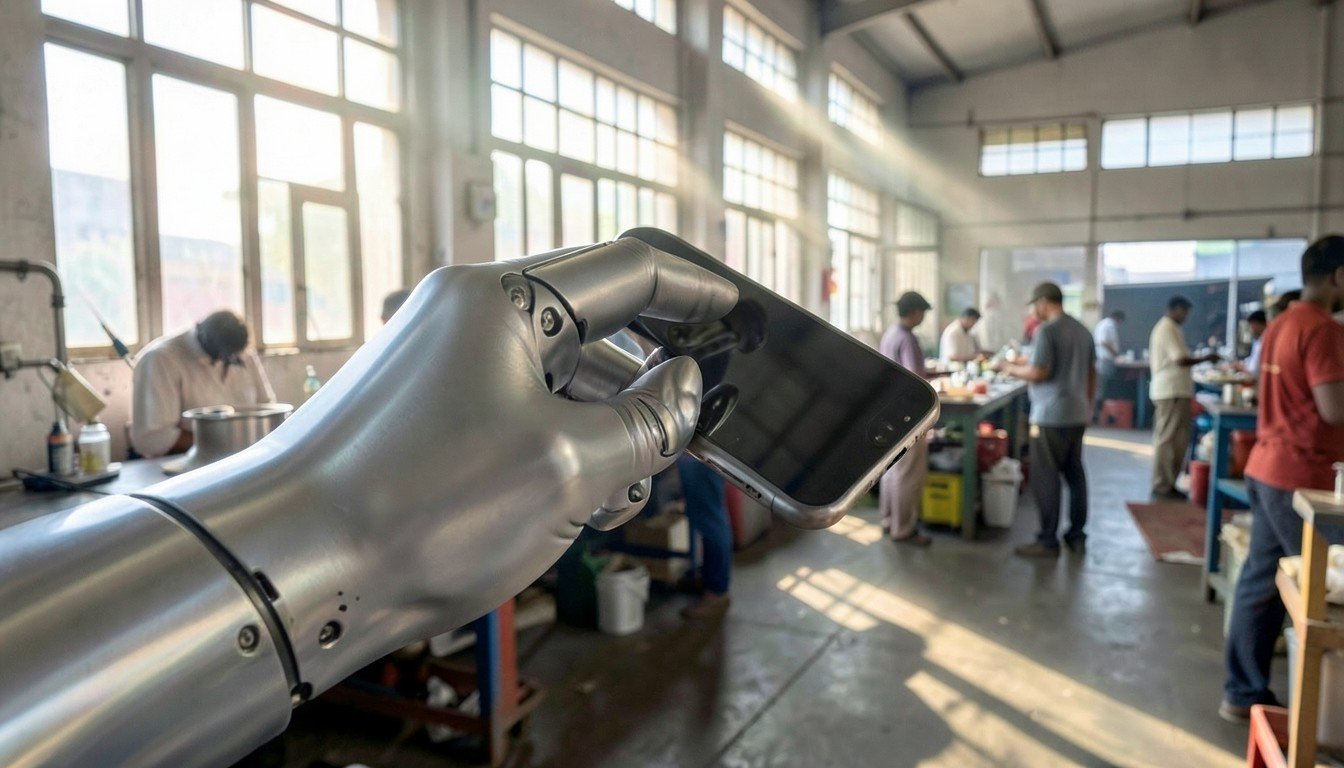
In Indian factories, the hurdle has always been the "last inch" of automation. Robots can move crates, but they often struggle with the finesse required for delicate assembly tasks. Boston Dynamics’ new four-finger hand changes that by shifting the focus from simple grasping to actual, high-precision tool manipulation.
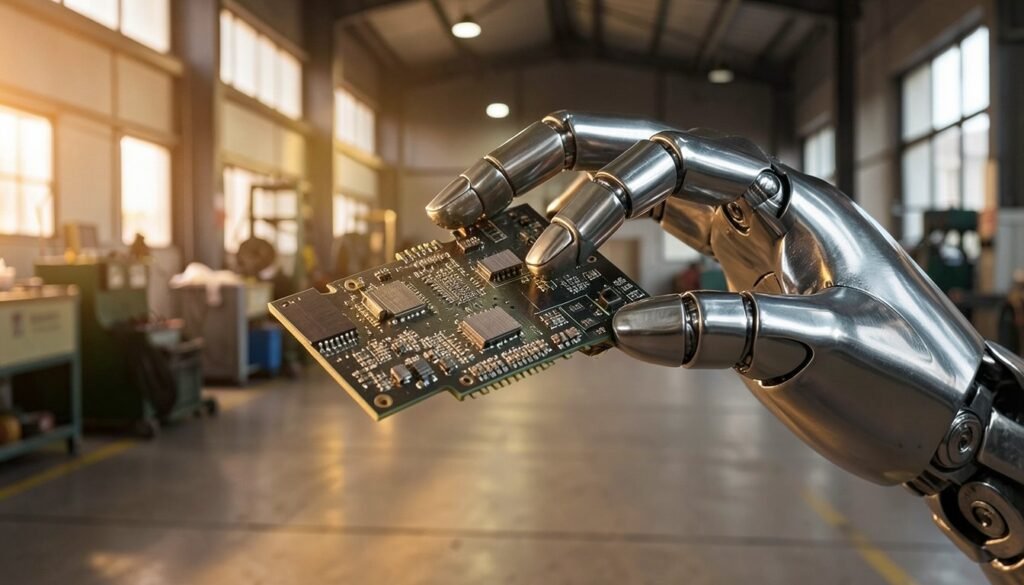
Think about India’s growing electronics sector. As we see with devices like the OnePlus Nord CE4 India Launch (April 2024): Price, Specs and How It Holds Up, assembly requires high precision. This hand could theoretically manage small-electronics components or IoT sensors, tasks currently dominated by human dexterity on our assembly lines.
Beyond electronics, the pharmaceutical industry in hubs like Baddi or Hyderabad could use this for handling delicate medical devices during packaging. The tactile sensors allow for a light touch that prevents damage to fragile sterile equipment. Finally, consider our massive e-commerce warehouses. Sorting and palletizing heterogeneous goods—where a box of tea meets a shampoo bottle—is a nightmare for rigid grippers. This 13-DOF hand can reorient items in-hand, making it perfect for the unpredictable mix of products in a typical fulfillment center. It is not just about raw power; it is about the intelligence to handle variety without stopping for constant recalibration.
Cost and procurement realities for Indian firms
If you are eyeing this new four-fingered hand for your assembly line, prepare for a steep initial climb. While Boston Dynamics hasn’t slapped a final price tag on this unit, enterprise-grade hardware of this caliber typically demands an investment in the range of several crore rupees. You aren’t just buying a gripper; you are purchasing a system designed for high-fidelity simulation and intensive reinforcement learning.
For Indian manufacturers, the procurement math is tricky. Beyond the base price, factor in a 10-20% basic customs duty plus the standard 18% IGST. It is a heavy hit for a pilot project. However, don’t write it off yet; look for these avenues:
- Leasing Models: Many local robotics integrators are shifting to "Robots-as-a-Service" (RaaS) models, which can turn a massive capex burden into a manageable monthly opex.
- Government Support: Investigate if your facility qualifies under state-specific industrial automation grants or central PLI schemes aimed at high-end manufacturing tech.
- Local Assembly: Currently, these units are imported. Watch for partnerships where global firms might collaborate with Indian engineering giants for partial local assembly to bypass some import barriers.
My advice? Start with a simulation-first approach before buying the hardware.
Integration challenges and how to overcome them
Integrating the new four-fingered Atlas hand into a factory floor in Pune or Chennai isn’t just plug-and-play. Most legacy plants run on rigid PLC (Programmable Logic Controller) systems, while these advanced robots communicate via ROS (Robot Operating System). Bridging this gap requires high-speed middleware that translates real-time sensor data from the hand into machine-understandable commands. If you are handling complex documentation to support these systems, you might find that tools like Gemini 4 Argon: AI That Reads 1 Million Words at Once help simplify the technical manuals.
Upskilling is your biggest hurdle. Your team likely knows ladder logic, but operating a 13-DOF hand requires Python and simulation proficiency. Look for certification courses on platforms like Coursera or specialized robotics labs in Bengaluru that offer hands-on experience with sim-to-real reinforcement learning.
Finally, don’t ignore the legalities. Every installation must adhere to ISO 10218-1 standards for industrial robots, which also align with the safety protocols under the Indian Factories Act. You will need to certify that the robot’s force-limiting sensors and emergency stop mechanisms are calibrated correctly for human-shared spaces. Compliance isn’t just about avoiding fines; it’s about ensuring your floor stays open.
Success stories abroad that Indian companies can emulate
We don’t have to guess if this tech works on a factory floor. Look at a German automotive supplier that recently integrated these new four-finger hands into their assembly line. By replacing older, less precise grippers, they cut defect rates by 30% in just three months. They stopped dropping parts and damaging delicate connectors, which had been a constant headache for their quality control team.
Then consider a US-based medical device manufacturer. They needed consistent handling for high-precision components. By training their Atlas units with this hand, they achieved stable 2-second pick-and-place cycles. This isn’t just about speed; it is about keeping that pace for three shifts a day without a single second of fatigue.
For Indian SMEs, these numbers are the real bottom-line indicators. If you are manufacturing auto parts or electronics in Pune or Chennai, you know how much a 30% reduction in waste adds up over a fiscal year. The return on investment here isn’t just about replacing manual labor; it is about scaling quality. If a robot can handle a power torque driver or a welding torch for hours without a break, your throughput becomes predictable. It turns your factory into a machine that hits targets every single time. Start by auditing your most repetitive manual tasks.
Future roadmap: where the hand could go next
What’s next for the Boston Dynamics robot hand? The company is already eyeing higher payload capacities and modular fingertips that can be swapped depending on the specific surface tension or grip required. Think of it like changing a drill bit, but for a machine that can actually feel the material it’s holding.
Beyond the Atlas platform, I expect to see this dexterity integrated into more common industrial cobots, like those from Universal Robots, which are already popular on many Indian assembly lines. If you’re a shop floor manager, imagine a standard cobot arm suddenly gaining the ability to handle delicate electronics without crushing them.
Indian institutions are also moving fast. Research teams at various IITs and the DRDO are already testing how these kinematics perform in disaster-response scenarios and space-bound prototypes. These experts understand that building a machine is only half the battle; making it smart enough to operate in unpredictable, high-vibration Indian environments is the real test. Whether it’s clearing unstable debris or performing remote maintenance, the long-term goal is to offload dangerous, repetitive tasks that currently keep our human workforce in harm’s way.
Practical steps to start a pilot today
If you’re running a factory in Pune or Chennai, don’t wait for the hype to settle. Start by identifying a low-risk, high-repetition task—think sorting components or basic material handling—where human error often creeps in due to fatigue. You need clear success metrics before the robot enters the floor. Are you looking for a 15% increase in throughput or a reduction in rework? Quantify it now.
Next, reach out to local system integrators experienced in industrial automation or contact Boston Dynamics’ Indian sales office directly. They can guide you on the specific capabilities of the new GR3 model, which offers 13 degrees of freedom for advanced manipulation.
Commit to a 3-month pilot rather than a permanent installation immediately. Your plan should include:
- Data Collection: Track performance against your baseline metrics every single shift.
- Safety Audits: Conduct weekly reviews to ensure the robot’s direct actuation and tactile sensors play nice with your existing safety protocols.
- Feedback Loops: Involve the floor staff daily; their insight on how the robot handles tools like drills or torque drivers is more valuable than any simulation report.
Keep it small, keep it focused, and measure everything.
Watch: What’s in a humanoid hand? | Boston Dynamics
Frequently Asked Questions
What is the price of Boston Dynamics’ new robot hand in India?
Boston Dynamics hasn’t announced a specific price for this new hand, in India or anywhere else. Since the component is built specifically for the Atlas humanoid platform, you won’t find it on a standalone retail shelf. For Indian manufacturers interested in the tech, costs will likely be bundled into broader service and support agreements rather than as individual hardware price tags.
Can the robot hand be used with existing Indian cobots?
No, this isn’t a "plug-and-play" gripper for the cobots already working in Indian factories. The new hand is purpose-built for the Atlas humanoid’s architecture, using a specific direct-actuation system and internal software stack. While it is an engineering marvel, you cannot simply bolt it onto a standard industrial arm without significant, and likely prohibitive, custom integration work.
What safety certifications does the hand have for Indian factories?
Details on specific safety certifications for the Indian market haven’t been shared by Boston Dynamics yet. Since Atlas is an industrial-grade machine designed for environments where humans work, it will eventually need to meet strict compliance standards set by the Bureau of Indian Standards (BIS). For now, it remains a tool primarily for controlled, site-specific pilot programs.
How does the hand’s tactile sensing improve pick-and-place accuracy?
The hand features dense tactile pressure sensors across the fingertips and palm, which communicate directly with the robot’s AI. This allows Atlas to detect if an object is slipping in real-time, letting it adjust its grip force instantly. It moves beyond simple "grasping" to "manipulating," enabling the robot to recover from slips and handle delicate or slick items with human-like precision.
Your First Move Toward Humanoid Integration
Indian manufacturers shouldn’t wait for these robots to hit the mass market before prepping their shop floors. Start by auditing your current manual tasks—specifically those that require tool handling like welding or drilling—and digitizing your workspace geometry.
If you are curious about how AI fits into smaller, everyday hardware, check out our piece on the Google Pixel 8a (2024) Revisited: Specs, AI Features and Whether It’s Still Worth Buying for a baseline on how we are currently integrating smart features into standard devices.
My honest take? Don’t look for a "human" replacement yet. Look for a partner that can handle the repetitive, dangerous stuff while your human workers focus on oversight. Start a pilot program by identifying one specific station where consistency beats human fatigue. It is better to automate one task perfectly than to try and replace an entire assembly line at once.
Sources and further reading
- Boston Dynamics unveils new four-finger hand for Atlas humanoid robot — roboticsandautomationnews.com
- Boston Dynamics drops pinkie on new humanoid hand — therobotreport.com
- Boston Dynamics Unveils Atlas GR3 Robotic Hands with 13 Degrees of Freedom — geeky-gadgets.com
Discussion