

Key takeaways
- Open‑source bipedal robots cut entry barriers for Indian makers.
- Modular design allows local sourcing and easy upgrades.
- They can be deployed in both industrial and home settings.
- Regulatory compliance is manageable with existing Indian standards.
- The first generation is expected to reach Indian factories by late 2027.
Imagine a robot that doesn’t just walk, but actually learns to recover its balance after a solid shove. That is what I saw in recent demos of the RP1, a new open source humanoid robot turning heads at labs worldwide. For years these machines stayed behind the doors of massive tech giants, but that is changing fast.
By moving to a full‑stack open platform, developers are finally democratizing high‑performance movement once reserved for billion‑dollar projects. If you are a maker in Bengaluru or a student in Pune, this shift matters. We’ll break down how the tech works, why it matters for our ecosystem, and India’s Path to Affordable Humanoid Robots with the New Open‑Source Biped. Let’s look under the hood.
What Makes an Open‑Source Humanoid Different?
Think of an open‑source humanoid as a public blueprint. In robotics, “open‑source” means schematics, control code, and hardware designs are shared for anyone to inspect, modify, and improve. Unlike proprietary systems where the maker acts as a gatekeeper, open‑source platforms invite a community to fix bugs or add capabilities.
It’s the difference between buying a locked‑down phone and building your own PC. You get full access to the control architecture, like the UFO framework or real‑time motion systems found in newer bipedal units. When you compare this to a closed ecosystem, the shift is clear. While I’ve written before about how Boston Dynamics’ New Robot Hand: What It Means for Indian Factories represents a massive leap in proprietary precision, it also hides its logic behind corporate firewalls.
For Indian labs and startups, this is a huge advantage. You aren’t just a customer; you’re a contributor. If a motor fails, you aren’t waiting months for a replacement; you’re likely 3D‑printing a part or writing a patch. It turns a static product into a living project, letting local talent iterate without paying massive licensing fees for every minor update.
The First Full‑Stack Open‑Source Biped: Technical Snapshot
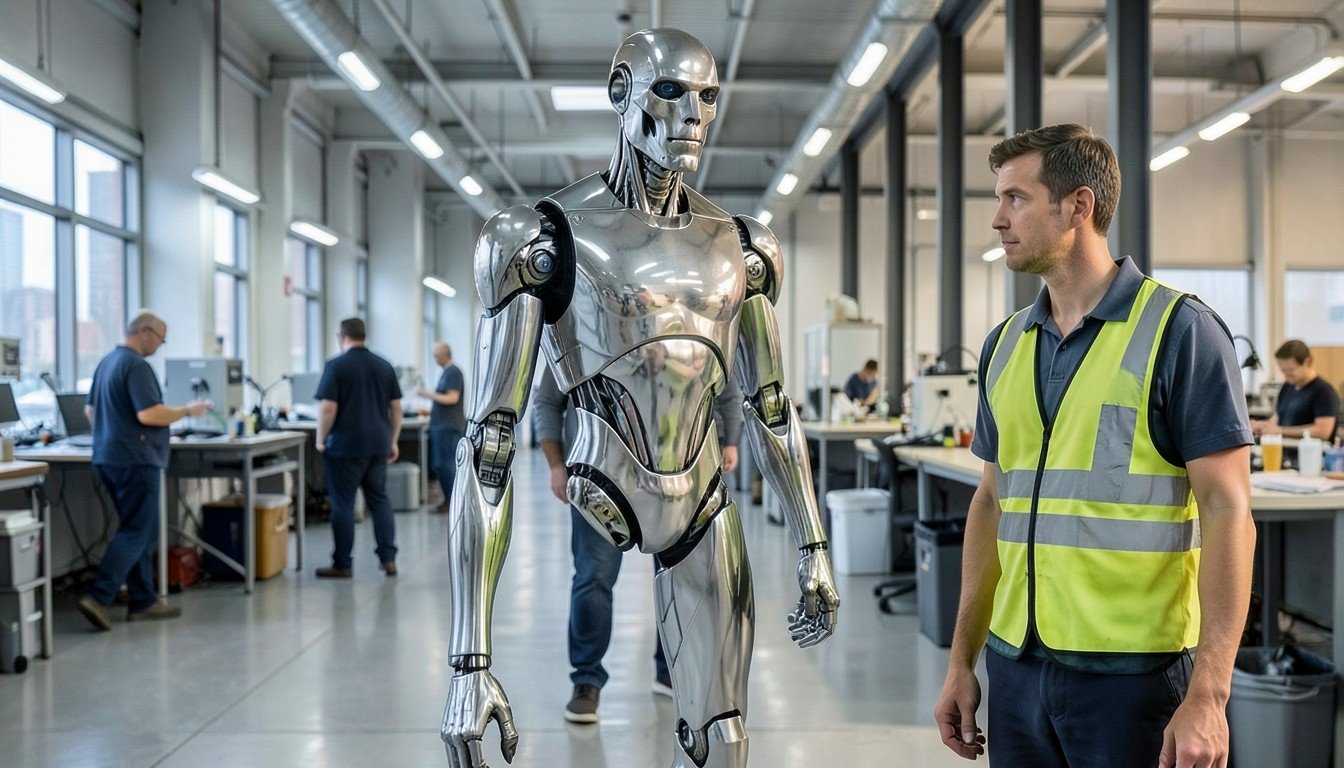
When we talk about “full‑stack” in robotics, we usually mean hardware and software talk to each other without a dozen middleware patches. RoboParty’s RP1, unveiled at IROS 2026, is exactly that. It isn’t just a skeleton; it’s a cohesive ecosystem for researchers who want to stop fighting with drivers and start training embodied AI.
At its core, the RP1 relies on RoboParty’s Romomo actuator modules. These aren’t hobby‑grade motors; they deliver a peak joint torque of 160 Nm, essential for dynamic balancing and walking on uneven ground. You can see the details on electronicsforu.com.
Key Technical Specs:
- Actuation: Custom Romomo modules for high‑torque balance recovery.
- Operating System: PartyOS, built for real‑time motion control.
- AI Framework: The UFO framework, which uses unsupervised reinforcement learning for movement policies.
- Modularity: A chassis designed for interchangeable limbs and sensor expansion.
The software layer is where the magic happens. The UFO framework lets the robot learn movement policies rather than following fixed trajectories. If you push the robot—or “kick” it, as they demonstrated at IROS—it adjusts its posture instantly. For Indian labs, this means you can swap an arm, integrate your own sensors, and retrain gait patterns directly on the hardware. It’s essentially the Linux of bipeds, giving you full control over how the machine processes its environment.
Cost Breakdown: Why India Loves Open‑Source
If you’ve ever looked at the price tag of a commercial humanoid, you know it’s enough to make your chai go cold. Most industrial‑grade bipeds cost more than a high‑end sedan. By contrast, an open‑source model changes the math. Take the PhoneBot project: it turns a dusty, decommissioned Android phone into the brain, sensors, and camera system of a robot. For a hobbyist or a small lab, that’s essentially free if you have an old phone lying around.
When we talk about serious hardware like the RP1, the savings aren’t just in the phone; they’re in the modular design. Instead of buying a proprietary, locked‑in machine, you invest in standard Romomo actuators. Many of these components are already available through local electronic hubs, allowing you to iterate on your own terms. Just as How Indian SMEs are Using Voice AI to Cut Costs and Grow Sales showed, the real value for our businesses lies in avoiding vendor lock‑in.
Building a Prototype: Step‑by‑Step Guide
If you’re planning to build a bipedal bot in your garage or lab, stop thinking about importing every component. India’s hobbyist hubs in Mumbai’s Lamington Road or Bengaluru’s S.P. Road already stock most high‑torque motors and microcontrollers you need.
The Assembly Workflow
- Frame Fabrication: Most open‑source designs, like the PhoneBot, rely on 3D‑printed chassis parts. A reliable PLA or PETG printer is enough to get your frame standing.
- Actuation: For a high‑performance unit like the RP1, you’ll need specialized actuators. For budget builds, focus on high‑quality servos that meet the torque requirements for a 1.8 kg frame.
- Central Intelligence: Don’t overcomplicate the compute. As the PhoneBot project proves, an old Android smartphone handles cameras, GPS, and motion sensing efficiently without a dedicated processor.
Calibration and Software
Once the hardware is assembled, the real work begins with gait calibration. You’ll inevitably face mechanical irregularities—one leg might be slightly stiffer. Don’t panic. Follow the researchers’ lead: use mirrored training in your simulation environment. By flipping the training data for left and right sides, you can resolve gait imbalances without touching a screwdriver.
Keep your software setup modular. Whether you use ROS or PartyOS, ensure your motion‑control loop runs at a high frequency. If the robot feels sluggish, check your sensor polling rate before blaming the motors. Tip: Keep wiring neat; loose cables are the fastest way to trigger a failure during a test run.
Industrial Use Cases in India
In the auto corridors of Chennai and Pune, a platform like the RP1 changes the conversation. Unlike fixed‑base robotic arms, a bipedal humanoid can traverse narrow walkways designed for human workers. Think of an assembly line where a chassis needs a hand in a tight engine bay; a biped with 160 Nm of torque can reach spots a static arm cannot.
Warehouse logistics is another frontier. India’s e‑commerce giants often struggle with pallet handling in legacy spaces. An open‑source biped, trained with reinforcement learning, could adapt to changing layouts without expensive infrastructure upgrades.
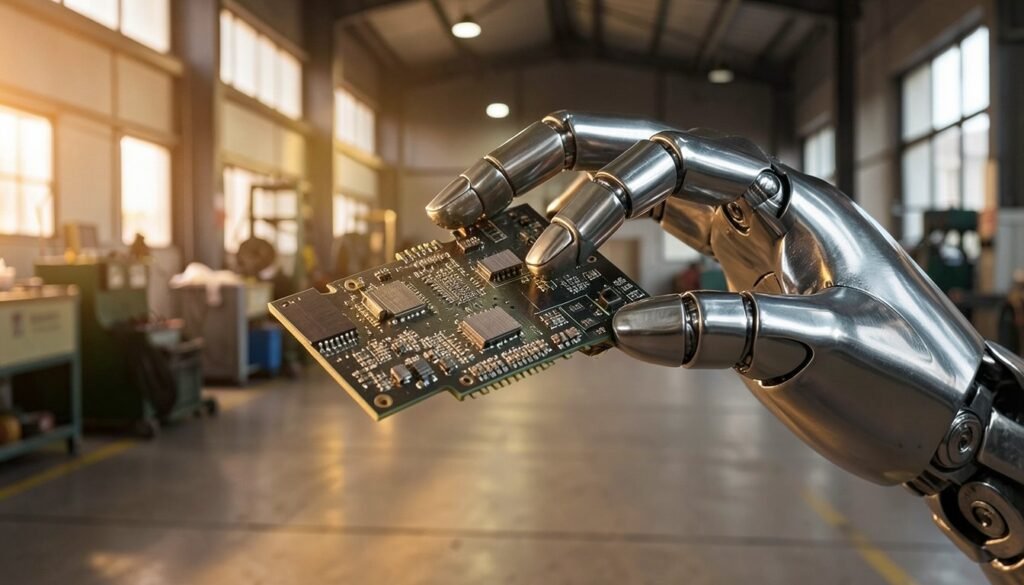
For electronics manufacturing, the priority is dexterity. Sensors and AI‑driven motion control—like the UFO framework—can handle delicate components. However, we must watch how this shift affects the workforce. As we automate, we need to ensure we’re not sidelining human talent, a concern echoed in discussions like Why India’s AI Boom Is Leaving Women Behind.
If these robots can manage the “dull, dirty, and dangerous” tasks, they could bridge the gap in manufacturing efficiency. The open‑source nature means local engineering teams can customize software for specific floor quirks rather than paying for a closed‑box solution from abroad. It’s practical, it’s modular, and it’s the flexibility our factories have been waiting for.
Home and Service Applications
Beyond factories, the potential for open‑source humanoids like the RP1 is massive for everyday life in India. Imagine a helper that doesn’t cost a fortune because the software isn’t locked behind a proprietary wall. For elderly care, these machines could eventually handle simple, repetitive tasks—fetching a glass of water or monitoring for falls—provided the hardware remains safe and reliable. As noted by msn.com, the move toward full‑stack open platforms is key to making embodied AI accessible.
Classroom to Workshop
In Indian STEM labs, these robots act as the ultimate teaching tool. Instead of theorizing about dynamics, students can tweak reinforcement‑learning algorithms themselves and see how a change in torque affects balance. It’s a massive upgrade from static textbook models.
For hobbyists in Bengaluru or Pune, the “open” tag is a goldmine. Start with a basic torso and legs, then add 3D‑printed modules as you get comfortable. Want to swap head sensors or add a custom hand? You’re not waiting for a manufacturer; you’re building it. This shifts robotics from “buying a toy” to “mastering a machine,” exactly the change we need in local tech workshops.
Regulatory and Safety Environment in India
Bringing a high‑torque bipedal robot like the RP1 into an Indian factory isn’t just about plugging it in; it’s a compliance hurdle. India lacks a dedicated regulatory framework for humanoid safety. We currently lean on international standards like ISO 10218 for industrial robots, but bipeds moving alongside humans present unique risks those standards don’t fully cover. Just as we have seen AI Detects Heart‑Transplant Rejection Without Biopsy – What It Means for India push boundaries in medical diagnostics, robotics regulation needs to catch up before these machines hit production floors.
When importing components, expect customs duties and the standard 18 % GST on robotic parts. If you are building a fleet, keep this checklist handy:
- BIS Certification: Ensure power supplies and electronics meet Bureau of Indian Standards requirements.
- Risk Assessment: Document every “pinch point” or potential fall trajectory for insurance purposes.
- Emergency Stop: Integration of a hard‑wired, physical kill switch is non‑negotiable for site approval.
- Data Privacy: If your robot uses sensors or cameras, you must comply with the Digital Personal Data Protection Act.
Skipping these steps means you’ll get stuck at the prototype stage.
When Will It Reach Indian Factories?
Don’t expect a bipedal humanoid on your factory floor in Pune or Chennai tomorrow. While RoboParty’s RP1 made a splash at IROS 2026, we are still in the “lab‑to‑pilot” phase. Real‑world deployment needs safety certification and local maintenance networks that don’t yet exist for open‑source bipeds.
According to electronicsforu.com, the RP1 combines Romomo actuators with the UFO reinforcement‑learning framework, allowing researchers to iterate directly on hardware. For Indian factories, the timeline likely looks like this:
- 2026–2027: Research labs and elite engineering institutes acquire dev‑kits for testing.
- 2028: Initial industrial pilots for non‑critical tasks like warehouse inventory sorting.
- 2029+: Small‑batch manufacturing integration as hardware costs scale down.
If you are a business owner, treat this as an R&D window. Build internal expertise now. Don’t wait for a turnkey machine; start experimenting with open‑source software stacks today so you’re ready when the hardware matures.
Future Outlook: Beyond the First Generation
The first generation of open‑source bipeds like the RP1 or the scrappy PhoneBot is just the starting gun. We’re moving toward a future where hardware is merely a chassis for sophisticated AI brains. Expect the next iteration to ditch tethered testing for fully autonomous movement, using multimodal models from companies like NVIDIA or OpenAI to interpret cluttered factory floors without manual intervention.
For Indian startups, the real win will be how the community iterates on these designs. Once the basic gait is stable, expect crowdsourced modules—bespoke grippers or low‑cost LiDAR arrays—to appear on GitHub. If you’re planning to manage data streams for your own fleet, check out Production‑Ready Prompt Engineering with Snowflake: A Practical Guide to handle the backend load.
The path forward isn’t just about walking; it’s about “embodied intelligence.” Robots will observe a task, infer intent, and execute it without explicit coding. If the open‑source community keeps feeding these models with diverse, real‑world data, we might stop seeing these machines as expensive science projects and start seeing them as standard utility workers in our warehouses.
Watch: ROBOTO Origin: Fully Open‑Source Bipedal Humanoid Robot
Frequently Asked Questions
What is an open‑source humanoid robot?
It is a machine where the blueprints and software code are shared for anyone to modify. Instead of buying a locked‑down black box, you get the schematics. Projects like the UCLA‑developed PhoneBot use an old smartphone for sensing, while RoboParty’s RP1 provides full‑stack access to actuators and AI. It is essentially the Linux of the robotics world.
How much does it cost to build one in India?
Exact pricing in rupees remains unconfirmed, as these platforms target research labs rather than retail shelves. However, the PhoneBot approach saves a lot by repurposing a used smartphone—like a Moto G or Samsung Galaxy—for processing. High‑performance units like the RP1 will cost more, but the open‑source nature lets Indian makers avoid proprietary licensing fees.
Can I use it in a factory setting?
Currently, these are development platforms for researchers and students. The RP1, with its 160 Nm joint torque and disturbance recovery, is moving toward industrial‑grade capabilities, but it isn’t ready for a shop floor yet. You could use them for testing AI movement or logistics simulations, but don’t expect them to assemble cars tomorrow.
What safety certifications are needed?
Because these robots are still in R&D, there is no dedicated “humanoid safety” standard in India yet. Deploying one in a workspace means following existing industrial machinery guidelines, like ISO 10218, and ensuring physical barriers until the AI is fully validated for human interaction.
The Road Ahead for Open‑Source Bipeds
We aren’t just looking at academic toys anymore. With platforms like RoboParty’s RP1 offering 160 Nm of torque and open‑source projects like PhoneBot repurposing existing hardware, the barrier to entry for Indian robotics startups is finally collapsing. We are shifting away from proprietary “black box” systems toward a collaborative model where a student in Bengaluru can iterate on the same AI movement policies as a lab in California.
The next frontier for AI is the physical world. If you’re a developer, stop waiting for expensive, enterprise‑grade hardware. Start by simulating simple gaits in environments like the UFO framework or experimenting with basic smartphone‑sensor integration. The hardware isn’t perfect, but the ability to modify the source code is the real differentiator. Keep an eye on open‑source repositories; your contribution might be the patch that finally makes these bipeds stable enough for Indian factory floors.
Sources and further reading
- New RP1 humanoid for open-source robotics research unveiled by RoboParty — msn.com
- PhoneBot: Humanoid open-source robot based on an old smartphone — heise.de
- RoboParty RP1 Targets Open Humanoid Robotics With AI — electronicsforu.com
Discussion