
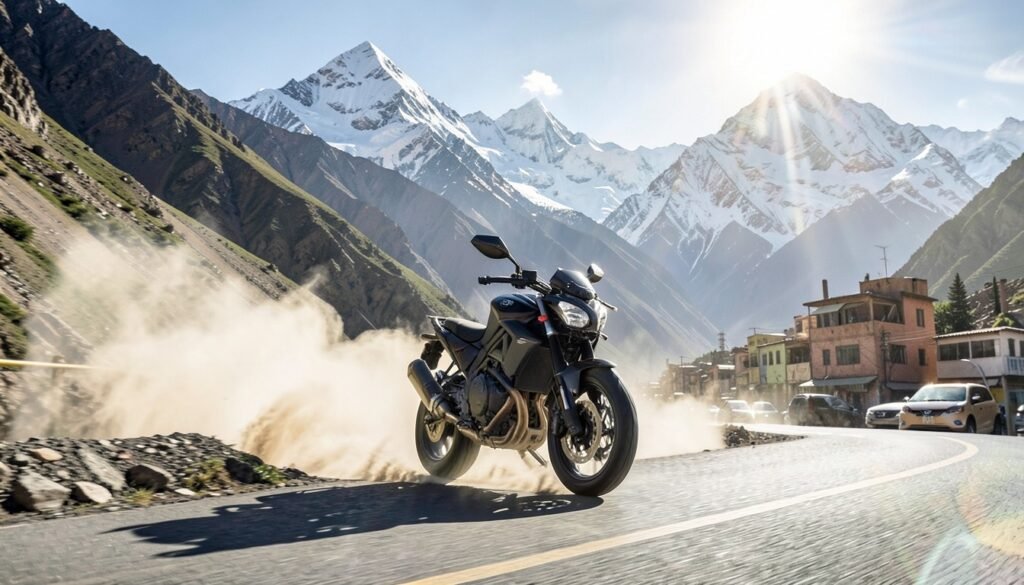
Key takeaways
- The XR300L starts at Rs 1.83 lakh, while the Rally variant is priced at Rs 2.08 lakh (ex-showroom).
- Both bikes feature a 300cc liquid-cooled engine optimized for low-to-mid range torque.
- The Rally version offers better wind protection and a larger fuel tank for touring.
- With 21-inch front wheels, these are genuine dual-sport bikes, not just ‘adventure-styled’ commuters.
Picture this: you’re at your favourite chai point on the outskirts of the city, debating with your riding buddies whether you really need a dedicated trail machine or a mile-muncher that won’t break your back. The Honda XR300 India launch has finally given us an answer to that perennial dilemma. Honda has dropped two distinct variants—the trail-focused XR300L and the touring-ready XR300 Rally—to shake up our dual-sport market.
As confirmed by zigwheels.com, we’re looking at a starting price of Rs 1.83 lakh. While I’m currently testing the latest tech like the Vivo X Fold 6 India Launch: Specs, Price, and Real‑World Verdict, my heart is set on these two. In this breakdown, I’ll help you figure out if the premium is worth it and which of these two machines fits your specific riding style.
The Dual-Sport Duo: Understanding XR300L vs XR300 Rally
So, Honda finally pulled the covers off the XR300 series in India, and it’s a classic case of two bikes, one heart. If you’re confused about which one belongs in your garage, just think about where you spend your Sunday mornings.
The XR300L is your stripped-back, no-nonsense trail machine. It’s light, nimble, and built for riders who want to flick the bike around on dirt tracks without fighting extra plastic. With its smaller fuel tank and minimalist bodywork, it feels like a dedicated dirt bike that just happens to be road-legal.
Then there’s the XR300 Rally. It takes that same 293cc core but dresses it up in Dakar-inspired fairings. Yes, the Rally looks tougher, but those extra panels and the bigger fuel tank do add a bit of heft. It’s designed for the rider who wants to cover 300 kilometers in a day without feeling exhausted. While we wait for official kerb weights, the shift from pure trail-riding to long-distance comfort is obvious. It’s funny how, in a world dominated by The AI Trends That Defined 2023: A Look Back, sometimes the most satisfying tech is just a well-balanced mechanical setup.
Ergonomically, the Rally offers a commanding stance for highway hauls, while the L keeps things slim for better stand-up control. Both share that tall, 21-inch front wheel presence that clearly defines these as serious off-road contenders.
Engine Performance: The 300cc Heart
Pop the seat or just look at that block, and you’re staring at the same 293cc single-cylinder, oil-cooled engine that powers the Honda CB300F. Now, don’t go looking for the same aggressive street tune you’d find on that naked bike. Honda has massaged this unit for the XR300L and the Rally to favor the kind of grunt you need when you’re stuck in deep slush or climbing a rocky incline.
While official power and torque figures are still being kept under wraps by the manufacturer, industry expectations hover around the 24 PS and 24 Nm mark, as noted by indiatoday.in. For a dual-sport machine, top-end speed is just a number. What matters is how that 24 Nm of torque hits the rear wheel. You want a motor that pulls cleanly from the bottom of the rev range, letting you tractor over obstacles without constantly fanning the clutch.
I’ve ridden enough 300cc singles to know that this engine should be quite frugal for the segment. Given the likely gearing changes and the oil-cooling setup, you can realistically expect a real-world fuel efficiency of about 30-32 kmpl in mixed Indian conditions. It’s not going to win any drag races, but for a bike that needs to haul you through trails and then cruise back home on the highway, this engine feels like a sensible, reliable choice that won’t leave you stranded.
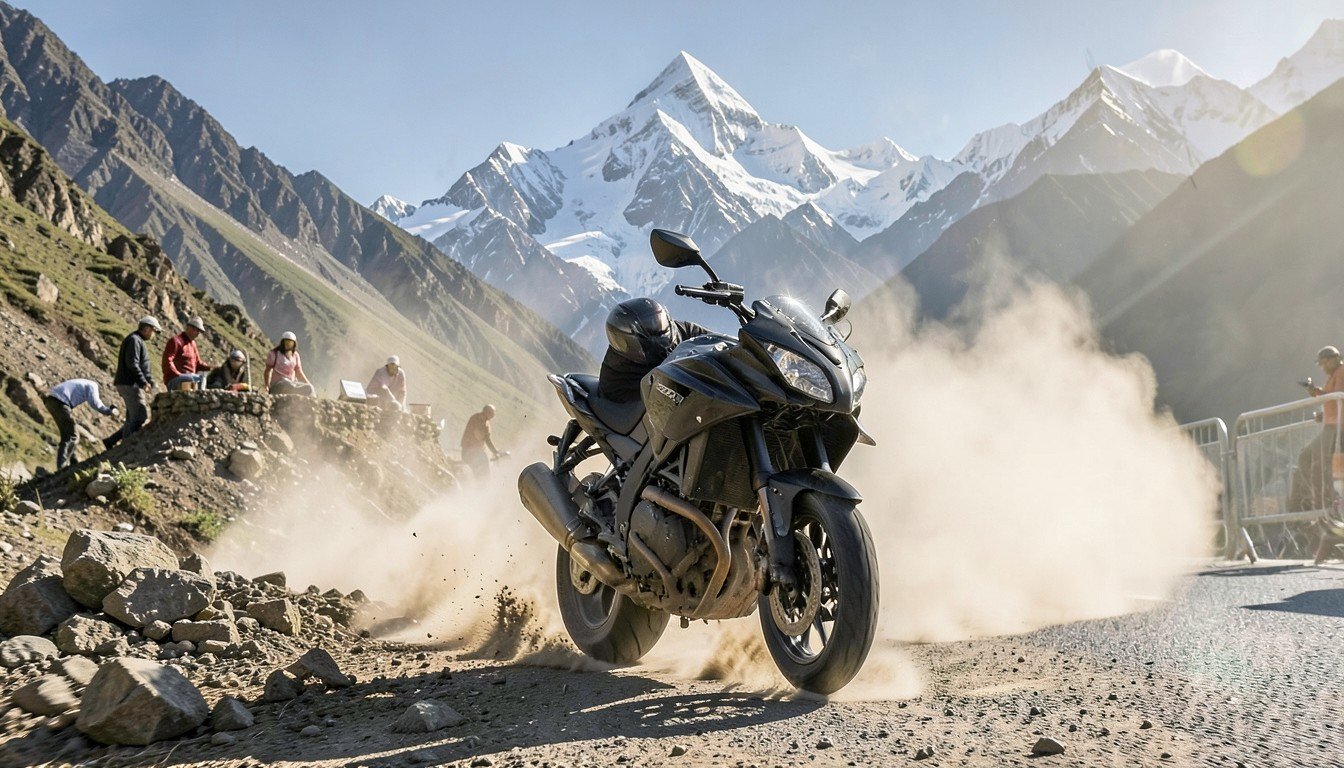
Off‑Road Hardware: Suspension and Braking
Long‑Travel Suspension
Both the XR300 Rally and the XR300 L share the same chassis philosophy: a conventional telescopic fork up front and a single rear monoshock. Honda hasn’t published exact travel figures, but the “long‑travel” claim means you’ll get roughly 200 mm + at the front and 180 mm + at the rear – enough to soak up the jagged potholes of Delhi‑to‑Manali highways without digging the front wheel into the ditch. The rear shock is preload‑adjustable, so you can stiffen it for a loaded tour or soften it for a light‑weight trail day.
Ground Clearance
While the exact clearance numbers are still under wraps, the Rally’s larger fuel tank pushes the seat height a touch higher than the L. In practice, you’ll clear most Indian speed‑breakers (up to 80 mm) with the wheels still in contact. On a rough village road, the bike’s geometry lets the front wheel climb over a sudden curb while the rear stays planted, thanks to that generous travel.
Braking Setup – Dual‑Channel ABS & Switchable Traction
Both models come with dual‑channel ABS, but Honda lets you switch it off for off‑road use. The same switch disables traction control, giving you full control on loose gravel or sand. In city traffic, keep ABS on for confidence; on a forest trail, flip the switch and enjoy a more “raw” feel.
Wheels & Tyres – 21″ × 18″ Advantage
The 21‑inch front wheel rolls over obstacles more easily than a 19‑inch on many rivals, while the 18‑inch rear maintains stability on loose surfaces. Dual‑purpose tyres are fitted stock, offering a decent compromise between on‑road grip and off‑road bite.
Quick tip: When you first hit the trail, back‑press the rear brake a little to settle the bike before tackling a steep incline – the long‑travel suspension will thank you.
For a different tech‑savvy comparison, check out our take on the OnePlus Nord CE4 India Launch (April 2024): Price, Specs and How It Holds Up.
Features and Smart Tech: What You Get
When you’re out on a trail, you don’t want a complex menu system distracting you. Honda seems to understand this perfectly. The XR300 Rally steps up with a modern, crisp TFT console, while the XR300 L sticks to a simpler, highly legible LCD unit. Both displays show the essentials clearly, which is exactly what you need when you’re standing on the pegs mid-trail and need a quick glance at your speed or gear.
The lighting is LED all around. While I haven’t tested them on a pitch-black mountain pass yet, the sharp beam pattern should offer good reach for night riding. One thing I really appreciate is the lack of over-engineered tech. By keeping the electronics focused on the essentials—switchable dual-channel ABS and switchable traction control—the bikes remain manageable and easy to maintain. As noted on rushlane.com, these machines successfully balance modern safety requirements with a rugged, functional soul.
For those planning long hauls, the Rally offers better wind protection and a larger tank for those extra kilometers. Both bikes provide decent grab points for luggage, though the pillion seat is quite slim. If you’re riding two-up, keep the trips short; these are clearly built for the rider’s grin, not passenger luxury.
Price Analysis: Is the Honda Premium Justified?
At Rs 1.83 lakh for the XR300L and Rs 2.08 lakh for the Rally (ex-showroom), Honda is playing a careful game. You’re essentially paying a Rs 25,000 premium for the Rally’s touring-focused upgrades, like that larger fuel tank and beefier bodywork.
Once you factor in RTO, insurance, and road tax, the on-road price climbs significantly. In Delhi, you’re looking at roughly Rs 2.15 lakh for the L and Rs 2.45 lakh for the Rally. If you live in high-tax zones like Bangalore or Mumbai, prepare for a steeper hit, with on-road costs easily crossing Rs 2.35 lakh and Rs 2.65 lakh, respectively.
Is it worth it? Compared to the 200cc–250cc segment, you’re paying for the "Honda badge" peace of mind and a more capable 300cc engine. It’s a clear step up from budget-friendly trail machines, aiming squarely at riders who want long-term reliability. Just as you’d research the Hyundai HE1i SUV: What Indian Buyers Need to Know Before It Arrives before switching to four wheels, consider that Honda’s expansive BigWing service network keeps ownership costs predictable. It’s not just a motorcycle; it’s an investment in fewer service center headaches.
The Rivalry: Honda XR300 vs Hero Xpulse 210 vs KTM 250 Adv
Spec‑to‑Spec Face‑off
| Feature | Honda XR300 L / Rally | Hero Xpulse 210 | KTM 250 Adventure |
|---|---|---|---|
| Engine | 293 cc single, ~24 PS, 24 Nm | 209 cc single, 20 PS, 19 Nm | 248 cc single, 28 PS, 25 Nm |
| Fuel tank | 19 L (Rally) / 18 L (L) | 16 L | 18 L |
| Front suspension | Telescopic 160 mm | Telescopic 140 mm | Telescopic 140 mm |
| Rear | Mono‑shock 140 mm | Mono‑shock 140 mm | Mono‑shock 140 mm |
| Brakes | Dual‑channel ABS, disc both ends | Dual‑channel ABS, disc both ends | Dual‑channel ABS, disc both ends |
| Weight | ~190 kg (Rally) | 171 kg | 170 kg |
The XR300’s larger displacement gives it a smoother throttle and a bit more torque, while the Xpulse stays lighter and the KTM pulls ahead in peak power.
Why KTM Stays Road‑Biased
KTM’s 28 PS makes it feel punchier on highways, and its 248 cc engine is tuned for sustained high‑speed output. The 18‑litre tank keeps it competitive for long rides, and the brand’s global aftermarket support means parts are easy to source even in smaller towns.
Where Honda Wins Reliability
Honda’s proven 300 cc platform has a track record of low maintenance and longevity. The brand’s service network in India is extensive, and spare parts are readily available through BigWing dealerships. The XR300’s switchable traction control and ABS add a safety edge that the Xpulse lacks.
Where Hero Wins on Price
Hero’s Xpulse starts at about Rs 1.47 lakh ex‑showroom, roughly Rs 35,000 cheaper than the XR300 L. For riders on a tight budget who still need off‑road capability, the Xpulse offers a compelling value proposition.
Choosing Between Japanese Refinement and Indian Value
If you’re after smooth power delivery, a reliable chassis, and a brand that promises low upkeep, the XR300 is the clear pick. If budget and a lighter frame are your priorities, the Xpulse gives you more mileage for every rupee. KTM sits in between, offering higher performance but at a price closer to the XR300. zigwheels.com
Maintenance and The Honda Factor
Service cadence
Honda hasn’t published exact service intervals for the XR300L or Rally yet, but the CB300F that shares the same 293 cc oil‑cooled engine calls for a 4,000 km basic check and a 10,000 km major service. Expect the dual‑sport to follow a similar rhythm – a quick oil‑and‑filter change every 4–5 k km, then a full valve‑clearance and coolant check around 10 k km.
Parts & dealership reach
Both models are built at Honda’s Indian plant, so core components – pistons, brake discs, the 21‑inch front wheel – will be stocked at the BigWing network. BigWing dealers outnumber regular Honda showrooms in tier‑2 cities, meaning you can snag a replacement fork seal in Delhi or a rear shock in Coimbatore without waiting months. For niche items like the TFT console (Rally only), you may still need to order from the central hub, but the lead‑time is usually under two weeks.
Resale outlook
Historically, Honda’s dual‑sport bikes hold about 70 % of their original value after three years, outpacing many entry‑level rivals. The XR300’s fresh platform gives a slight premium, but the strong brand cachet and widespread service network keep depreciation modest.
Quick tip: Keep a digital copy of your service booklet on your phone – it speeds up resale negotiations.
For a tech‑savvy side note, check out this related story on the Xiaomi Redmi Note 13 Series Lands in India: What You Need to Know.
The Verdict: Which XR300 Should You Buy?
If your weekends are strictly for chasing trails and carving through mud, the XR300 Rally is the obvious pick. The larger fuel tank and touring-focused setup make it a capable companion for long-distance rides where fuel stations are scarce. However, if you need a machine that handles messy city traffic during the week and still plays hard on dirt come Sunday, the XR300 L is your winner. Its minimalist design makes it feel significantly lighter and more agile, which is perfect for dodging narrow urban streets.
Honda finally bringing these locally manufactured machines to BigWing showrooms is a massive win for us, as detailed by indiatoday.in. It bridges the gap between the budget-friendly Hero Xpulse and the more expensive premium ADVs. By pricing them at Rs 1.83 lakh and Rs 2.08 lakh, Honda has given us a serious, reliable alternative in the sub-300cc space.
Before you head out, do yourself a favor: buy a sturdy metal bash plate and a set of quality handguards immediately. These are non-negotiable for any dual-sport owner in India. A little extra protection for the engine casing will save you a world of pain when you inevitably drop the bike on a rocky trail.
Watch: Honda XR 300L and XR 300 Rally Launched – Price From 1.83 Lakh – All Specs, Features & More Expla…
Frequently Asked Questions
What is the seat height of the Honda XR300 Rally in India?
Honda hasn’t officially shared the exact seat height for the XR300 Rally yet. Given its dual-sport intent and 21-inch front wheel, I expect it to be on the taller side, consistent with other serious off-roaders in this segment. For shorter riders, this might mean a bit of tiptoeing at traffic lights, but we will confirm the precise measurement once the official spec sheet drops.
Is the Honda XR300L road legal for daily commuting?
Absolutely, both the XR300L and the XR300 Rally are fully road-legal for your daily commute. Honda designed these as versatile machines that handle both rugged trails and city traffic with ease. You get essential features like indicators, mirrors, and dual-channel ABS, making them perfectly suited for your office runs or weekend breakfast rides across town without any legal hassles or registration issues.
How does the Honda XR300 compare to the Hero Xpulse 210?
The XR300 brings a significantly larger 293cc, oil-cooled engine to the table compared to the Xpulse’s smaller displacement. While the Xpulse is a fantastic entry-level trail bike known for being lightweight and budget-friendly, the Honda offers more power and a different, more premium ownership experience through BigWing. It is a clear step up for those wanting more highway capability and punchy low-end torque.
Does the Honda XR300 Rally have switchable ABS?
Yes, you get switchable dual-channel ABS on both the XR300L and the XR300 Rally. This is a massive win for off-road enthusiasts who want to lock the rear wheel on loose dirt or gravel tracks. Having this control allows you to slide the bike safely when you are off the tarmac, providing a level of confidence that standard, non-switchable ABS systems simply cannot match.
Picking Your Honda Dual-Sport
So, which one deserves a spot in your garage? If you are a weekend warrior who spends the bulk of your time on trails, the XR300L at Rs 1.83 lakh is the sharper, lighter pick. You get the same punchy 293cc engine without the extra bulk of a touring setup. However, if your rides involve long highway stretches to reach the mountains, the XR300 Rally’s larger fuel tank and TFT screen make the Rs 2.08 lakh price tag feel like money well spent.
Honda’s manufacturing quality is well-known, even if we are still waiting on official power figures. While we watch how Boston Dynamics’ New Robot Hand: What It Means for Indian Factories evolves, it is refreshing to see Honda stick to proven mechanical reliability. My advice? Head to your nearest BigWing dealer, sit on both, and see which ergonomics suit your height. Don’t just read the specs; go feel the balance for yourself.
Sources and further reading
- BREAKING: Honda XR300 Rally & XR300 L Bikes Launched In India — zigwheels.com
- Honda XR300L Launch Price Rs 1.83 Lakh – XR300 Rally Rs 2.08 Lakh — rushlane.com
- Honda XR300L, XR300 Rally launched in India, range starts at Rs 1.83 lakh — indiatoday.in
Discussion