Key takeaways
- The VLF Strada launches at an aggressive ₹1.20 lakh price point.
- The 250km range is a headline figure, but real-world performance will vary based on riding style.
- Prospective buyers should check local service availability before booking.
- The scooter targets budget-conscious buyers looking for high-range electric mobility.
If you’ve been scrolling through social media, you’ve likely seen the bold 250km range claim attached to the new VLF Strada. It’s an eye-catching figure for any commuter, but does it actually hold up on our unpredictable city roads? In this VLF Strada review, we’re cutting through the marketing noise to see if this machine is a genuine daily driver or just a spec-sheet warrior.
At a starting price of ₹1.20 lakh, the Strada enters a crowded market. It is significantly pricier than the ₹89,999 Flycon Empire +, which you can compare head-to-head on zigwheels.com to see how the numbers stack up. If you are looking for something lighter on the wallet, you might also want to look at the e-SPRINTO G1: India’s Cheapest Smart Electric Scooter Revealed. Let’s pull up a chair and break down whether the Strada’s performance, build, and charging setup truly justify that price tag for your daily commute.
Design and Ergonomics
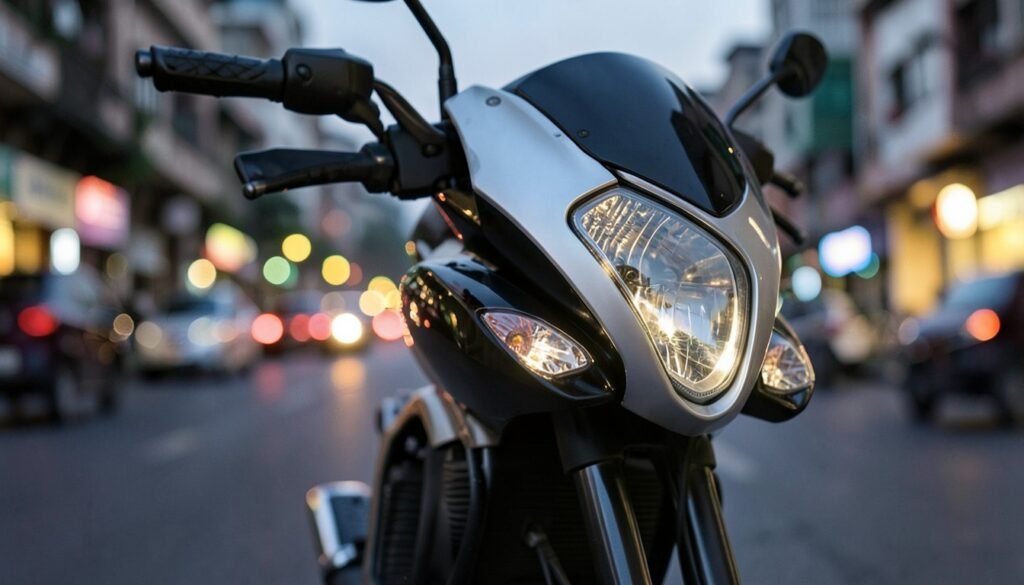
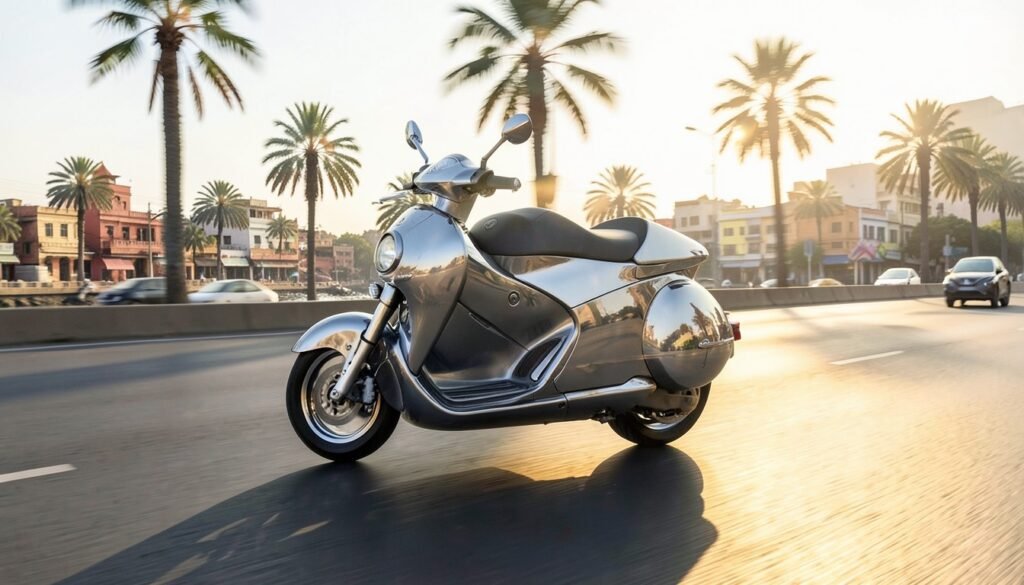
The VLF Strada doesn’t look like your typical daily commuter scooter. It sports sharp, angular bodywork and a tall, transparent windscreen that gives it a distinct, almost maxi-scooter vibe. The build quality feels solid enough to handle our unpredictable Indian road conditions, and the dual-beam LED projector headlights provide a sharp, modern touch that stands out in a sea of generic designs.
Ergonomics are a mixed bag for the average Indian rider. You get a stepped, two-piece seat that feels comfortable for longer hauls, but the 780mm seat height means shorter riders might find it a bit intimidating at traffic signals. While checking out the 5-inch TFT display, I couldn’t help but think about how some digital interfaces struggle with actual usability, much like what we discussed in Meta’s Muse Wonder: What Indian Users Need to Know.
The floorboard space is decent, but my personal take is that the height feels slightly higher than average. If you are on the taller side, your knees might end up in a slightly cramped position during those long commutes. The plastics and switchgear feel adequately finished for a scooter at this price point, though they lack the premium tactile feedback you might find on more expensive machines. It is functional, but don’t expect luxury-grade buttons here.
Powertrain and Performance
The VLF Strada runs on a BLDC hub motor that delivers 4.8 kW of peak power and a solid 34 Nm of peak torque. On paper, those numbers are quite competitive for an urban scooter. According to carandbike.com, these specs allow the scooter to hit a claimed top speed of 85 km/h when you switch to Sport mode.
In real-world city traffic, that torque should make darting through gaps feel effortless. You get three riding modes to manage your power: Eco capped at 45 km/h, City at 65 km/h, and Sport which unlocks the full 85 km/h potential. For the daily office commute, the City mode likely offers the best balance of responsiveness without burning through your battery charge too quickly.
While I have not taken this onto a steep flyover yet, the 34 Nm of torque suggests it should handle inclines with a pillion rider without feeling like it is gasping for air. However, it is worth remembering that these performance figures are based entirely on manufacturer data. We will need to put it through its paces in actual traffic and varied road conditions to see if it sustains that power once the battery capacity drops. For now, it is a promising setup, but do not take the top speed as a guarantee until we have logged some real-world kilometres on our local streets.
The 250km Range Claim: Reality Check
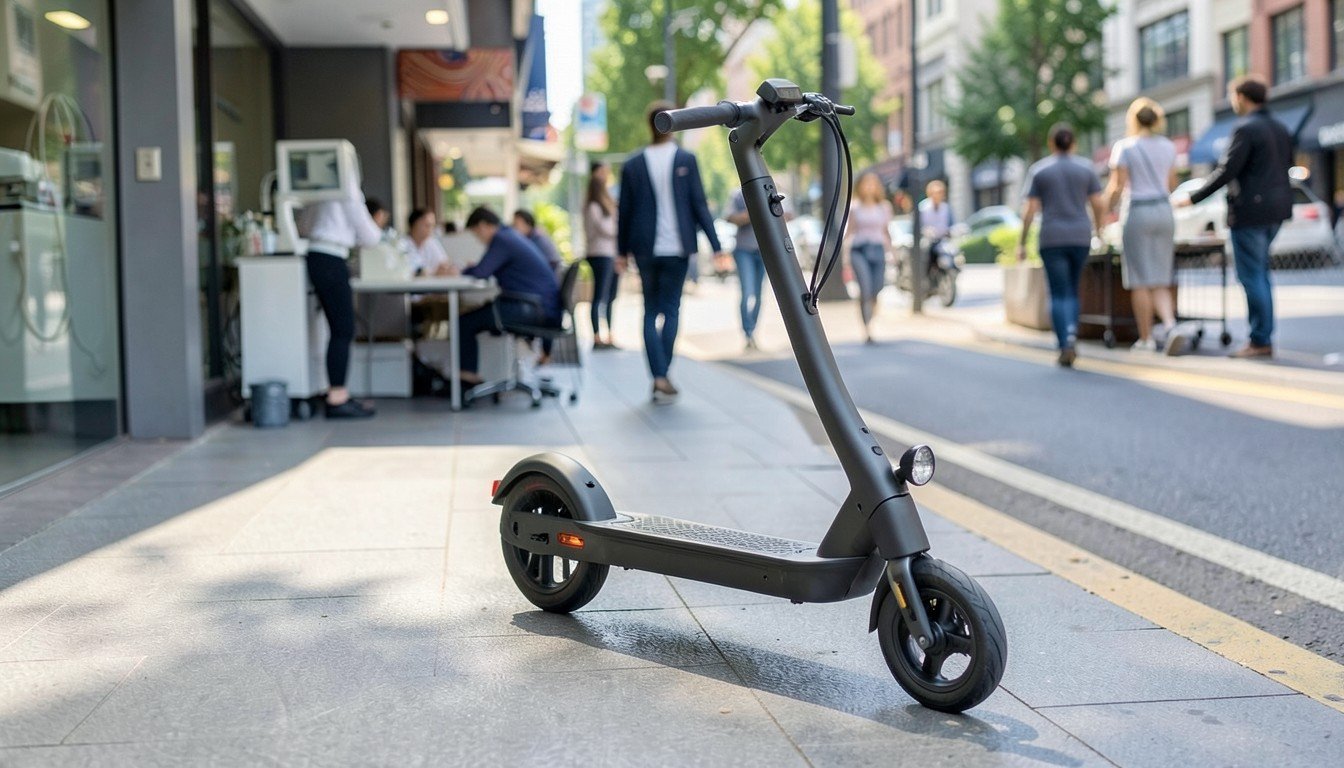
That 250km figure plastered on the VLF Strada Max marketing material? Take it with a generous pinch of salt. That number is based on the Indian Driving Cycle (IDC), a lab simulation that rarely mirrors the chaotic reality of our city roads. When you’re stuck in peak-hour traffic, dealing with constant stop-start conditions, or climbing a flyover, that range will inevitably drop.
The Strada Max hits this range using a 4.32 kWh dual-battery setup. Stick to Eco mode (45 km/h) and you might get close, but switch to Sport mode—topping out at 85 km/h—and you’ll see the percentage vanish much faster. It’s the same logic of performance trade-offs found in mechanical beasts like the one in our Triumph Bonneville T4 India Review: Specs, Price, Rivals & Real‑World Ride. The scooter handles a maximum load of 150 kg, so if you’re riding two-up, expect the efficiency to take a noticeable hit.
Compared to typical electric scooters offering 100-150km, the Strada’s dual-battery advantage is clear. However, keep in mind that the base City variant only carries a single 2.16 kWh pack, which limits its IDC range to 130km.
My advice? Always factor in a 20-30% buffer for your daily commute. If your office is 50km away, don’t bank on the battery lasting five full days. Real-world variables like rider weight, road conditions, and ambient temperature will shrink that 250km promise. Always plan your charging stops based on your actual daily drain, not the brochure’s best-case scenario.
Charging Infrastructure and Battery Tech
The VLF Strada leans on Lithium Iron Phosphate (LFP) battery chemistry, which is a solid choice for Indian weather. LFP packs generally offer better thermal stability and a longer cycle life compared to standard NMC cells, giving you more peace of mind when the mercury hits 40 degrees Celsius during a Delhi summer.
The biggest win here for apartment dwellers is the portability. Both the City and Max variants feature removable battery packs. You aren’t tethered to a garage plug point; just haul the 2.16 kWh pack inside and charge it at your desk or near your bed. According to motorbeam.com, the City variant takes about three hours to fully charge, while the dual-pack Max setup takes six hours using a standard home charger.
If you are wondering about fast charging, official specs provided by the company do not highlight any specific DC fast-charging compatibility. You are essentially looking at standard overnight home charging. While the six-hour mark for the Max version seems long, remember that you are charging 4.32 kWh of total capacity.
My tip: If you live in a high-rise, keep a heavy-duty extension cord handy. Since these packs are removable, you can easily rotate them if you have a tight commute. Just ensure your wall outlet is properly grounded, as LFP batteries, while safer, still demand healthy electrical infrastructure to maintain that promised longevity.
Tech Suite and Digital Interface
The VLF Strada centers its tech experience on a 5-inch TFT display. It’s clean, but in the harsh Indian midday sun, you’ll find yourself squinting to catch the speed readouts, which is a common pain point with many budget-friendly displays. While the interface is functional, it doesn’t quite match the premium visual fidelity you might see on something like the Xiaomi 18 Pro India Review: Dual‑Display Flagship Worth the Hype?.
Beyond the screen, the scooter offers keyless entry, which is a big relief when you’re fumbling for keys in a crowded parking lot. VLF has included both USB Type-A and Type-C ports, so you won’t need to hunt for adapters for your charging cables.
Regarding advanced features like navigation or specific anti-theft app alerts, VLF hasn’t officially confirmed the granular details of their companion app’s capabilities or the presence of OTA (Over-The-Air) update support. As it stands, these features remain unconfirmed. If you value software-heavy ecosystems where you get constant feature drops, the current lack of transparency on OTA support is something to keep in mind.
The inclusion of a reverse mode is a practical touch for tight residential lanes, and the dynamic turn indicators add a modern flair. Just don’t expect a fully integrated map navigation system on the console itself until the manufacturer provides more clarity on their connectivity software. For now, it’s a standard, no-nonsense setup that prioritizes basic convenience.
Pricing and Value Proposition
At ₹1.20 lakh for the base City variant, the VLF Strada enters a crowded room. You’re looking at a price point that puts it right in the crosshairs of established heavyweights like Ather and Ola. When you stack this against budget-conscious options like the Flycon Empire +, which starts at ₹89,999, the VLF clearly commands a premium for its performance hardware zigwheels.com.
Does it justify the cost? If you are a daily city commuter, that 130km IDC range is solid, but you will face stiff competition from Ola or Ather in terms of software ecosystem and widespread service networks. The real value play here is the Max variant at ₹1.55 lakh. While it is pricier, the massive 250km claimed range is a huge draw for those who suffer from genuine range anxiety.
Regarding subsidies, keep in mind that official state-level incentives or specific government benefits for the Strada remain unconfirmed as of now. You should verify the final on-road price with your local dealership before putting down that ₹999 booking amount, as taxes vary significantly by state.
The good news is that the price includes the charger. You aren’t forced to pay extra for a plug, which is a relief. However, remember that the six-hour charging time for the Max variant requires some patience. If you’re looking for a "value for money" pick, the City variant is your entry point, but the Max is clearly built for riders who refuse to stop for a top-up mid-day.
Maintenance and After-Sales Support
When you’re looking at a brand-new entrant like VLF, the shiny specs on paper only tell half the story. The real test is how they treat you after you’ve handed over your ₹1.20 lakh. Right now, VLF’s service network footprint across India is essentially a blank slate. If you’re living in a major metro, you might get lucky, but if you’re planning to take this into tier-2 or tier-3 cities, you should definitely hold your horses and wait for their service centers to actually populate the map.
Regarding the warranty terms for the battery and the motor, official details are currently unconfirmed. Before signing that cheque, ask the dealer specifically about the replacement policy and degradation thresholds for those LFP battery packs. Given that this is a fresh launch, the long-term availability of spare parts is also an unconfirmed variable. It’s always smart to compare this level of uncertainty with established brands or even upcoming ICE launches, much like how we often track news about the Kawasaki Z300 India: Expected Price, Specs, and Launch Details to see how they plan to handle service scaling.
Periodic service costs for the Strada remain a mystery for now. Since it uses a BLDC hub motor, you’ll likely save on oil changes and complex drivetrain maintenance, but software updates and proprietary electronics are where things could get tricky. A brand is only as good as its commitment to keeping you on the road. Until VLF proves they have the logistics to stock spares locally, treat them as an early-adopter gamble rather than a safe, established daily workhorse.
Watch: VLF Strada Electric Scooter Review: 16-inch Wheels and Swappable Battery! Is It Worth Buying?
Frequently Asked Questions
What is the ex-showroom price of the VLF Strada?
The VLF Strada is available in two variants with different price points. The entry-level City variant starts at ₹1,19,999, while the long-range Max variant is priced at ₹1,55,500 ex-showroom prices from Motorbeam. Remember, these are ex-showroom figures, so expect to pay more once you add insurance, RTO registration, and other state-specific levies at your local dealership.
Is the 250km range claim for the VLF Strada realistic for daily commuting?
The 250km figure for the Max variant is based on the Indian Driving Cycle (IDC), which rarely mirrors real-world city riding. In heavy traffic, you will likely see lower numbers. If your daily commute is under 60km, the City variant’s 130km range is plenty. Don’t base your purchase solely on the "Max" marketing claim without considering your actual riding style.
How does the VLF Strada compare to the Ola S1 Pro in terms of features?
While I cannot provide a direct, verified spec-sheet comparison against the Ola S1 Pro, the Strada does bring a unique kit to the table. You get a 5-inch TFT display, keyless entry, and distinctive 16-inch front wheels. Whether it outclasses the competition depends entirely on your personal priority—whether you value physical build styling or software-heavy integrated features.
Does the VLF Strada have a removable battery pack for home charging?
Yes, the VLF Strada features swappable battery technology. The City variant uses a single 2.16 kWh pack, while the Max uses two. You can charge these packs either while installed on the scooter or remove them to charge indoors as noted by Motorbeam. This is a massive convenience if you live in an apartment complex without dedicated parking charging points.
Keeping the Strada on the Road
While the 250km range on the Max variant sounds fantastic for long-distance commuters, remember that a new brand like VLF needs to prove its after-sales footprint. Since the company is just starting, check if your city has a dedicated service center before putting down that ₹999 booking amount. Unlike established players, you aren’t just buying a scooter; you’re betting on the company’s ability to support you long-term.
If you want something purely for the thrill of the ride, maybe look at the Triumph Bonneville T40 India Review: Specs, Price, Rivals & Real‑World Ride to see how the petrol-powered world still feels. But for a daily runabout, the ₹1.20 lakh entry price for the City variant is competitive if you prioritize range over brand history. My advice? Take a long test ride and check the service network in your neighborhood first.
Sources and further reading
- Flycon Empire + vs VLF Strada — zigwheels.com
- VLF Strada Launched In India, Priced From Rs. 1.20 Lakh — motorbeam.com
- VLF Strada Launched At Rs 1.20 Lakh; Claims 250km Range — carandbike.com