
Key takeaways
- A 50‑billion‑parameter foundation model can give robots instant, zero‑shot skills.
- Indian makers can cut development time and cost by licensing the shared model.
- Hardware, data‑privacy, and regulatory hurdles must be solved before mass rollout.
- Pilot projects could appear within a year, with affordable home bots in 2‑3 years.
Imagine a factory robot that stops cold the moment a shadow hits its lens. It is frustrating and, frankly, inefficient. For years, we have coded machines for narrow, repetitive paths. Now, we are seeing a shift. So, what is a robotics foundation model? Think of it as a massive, 50‑billion‑parameter brain that does not just process pixels, but interprets touch, sound, and force to understand the physical world.
It is more than just a large language model for robots; it is a fundamental shift toward physical intelligence. Companies like Neura Robotics are pushing this tech, while collaborations like this one between POSCO DX and NC AI show that industrial giants are racing to adopt it. Whether you are curious about a behaviour foundation model for humanoid robot developments or tracking our own progress in Open‑Source Bipedal Humanoid: India’s Next Robotics Leap, this is the tech defining the next decade. Let’s break down how these systems actually work and what they mean for robot manufacturing companies in India.
What is a physical foundation model?
Think of a traditional factory robot as a rigid worker—it only knows how to tighten a specific bolt because it was coded to do exactly that. A physical foundation model is the polar opposite. If you are wondering what is a robotics foundation model, it is essentially a general‑purpose brain that connects sight, sound, and touch directly to physical movement.
Unlike earlier narrow AI, these models are trained on massive datasets of sensor streams rather than just text. We are now seeing a jump to 50‑billion‑parameter scales. While that figure sounds small compared to massive language models like GPT‑4, it is staggering for a machine that must process real‑time tactile, force, and motor data. This 50B‑parameter leap allows robots to grasp cause and effect, a capability that will define the next generation of automation, much like BYD’s Humanoid Robot: What It Means for Indian Homes and Factories aims to do in different ways.
A recent public demo showcased a robot completing tasks without constant visual confirmation, relying on internal memory and force feedback instead. Whether we look at a robot foundation model and vla or a behaviour foundation model for a humanoid robot, the shift is clear: we are moving from hard‑coded scripts to genuine physical intelligence.
How the model learns to move and sense instantly
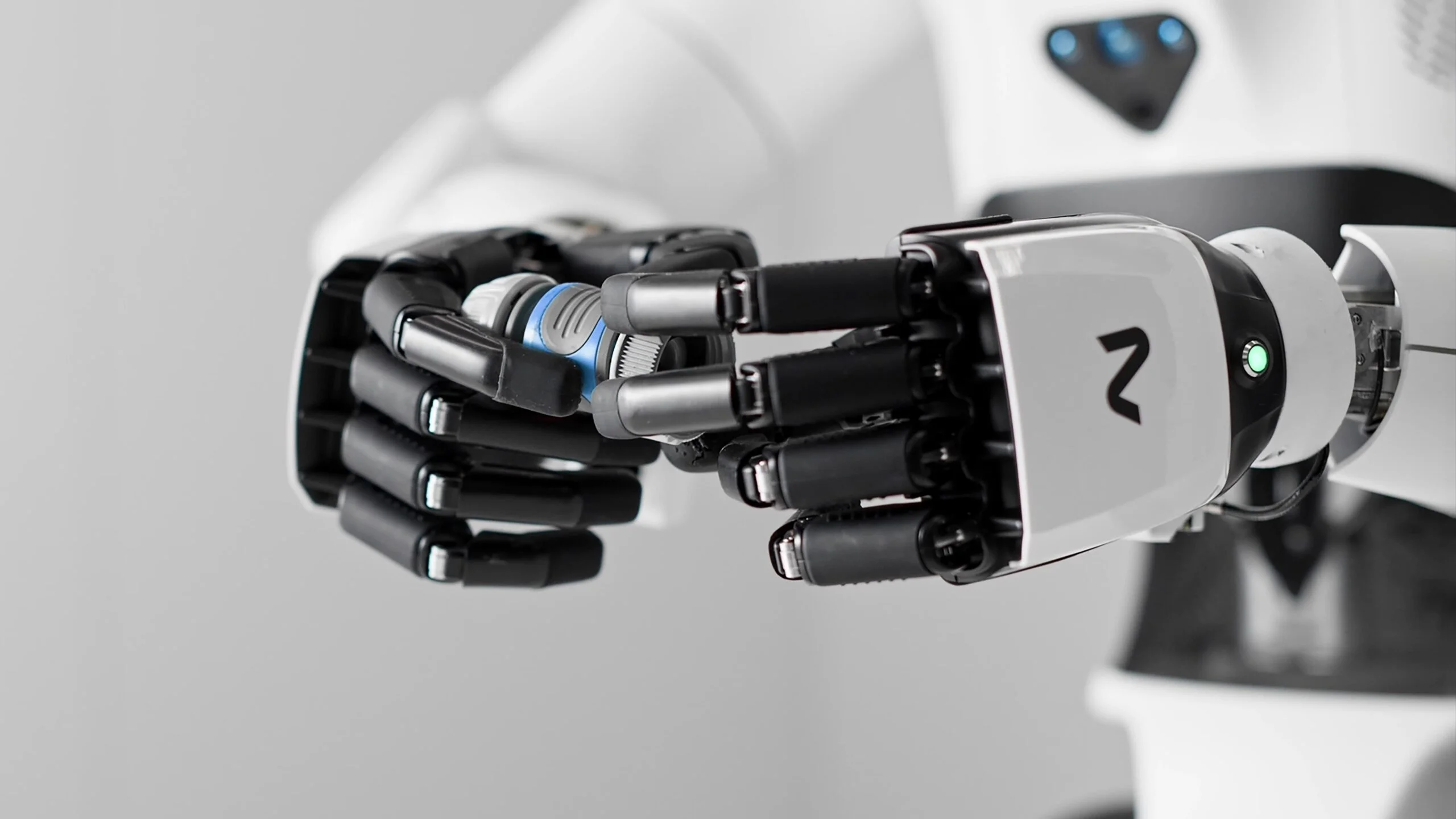
A robot that relies solely on cameras is like a chef trying to cook a perfectly spiced curry without ever tasting it. You need more than just sight to truly master the physical world. This is where a modern robot foundation model changes the dynamic. By fusing vision, touch, proprioception—the robot’s sense of its own body position—and language, these systems create a holistic “feeling” of the environment.
According to reports in forbes.com, these 50‑billion‑parameter models allow for zero‑shot skill transfer. If you show the machine a new object once, it can figure out how to grasp it immediately without needing thousands of hours of retraining.
Safety is the non‑negotiable part. These models come with hard‑coded constraint layers that act like a digital nervous system, instantly stopping any motion that strays into dangerous territory before damage occurs.
A quick tip for developers
You do not need a massive warehouse of data to start. If you are building a specialized gripper or a unique assembly task, you can fine‑tune the model with as little as 10 minutes of real‑world interaction data. That speed is exactly what will make these robots viable for our local workshops.
Why Indian robotics firms should care now
If you run a robotics startup in Bengaluru or Pune, you know the pain of building bespoke AI pipelines. Coding specific behaviors for every movement is a massive money pit. Instead of building from scratch, a shared robot foundation model allows you to license a pre‑trained “brain” that already understands physics, touch, and spatial awareness. Think of it as skipping the primary school of robotics and heading straight to professional training.
For home‑assistant bots, this is huge. Imagine a robot that doesn’t just recognize a “fetch” command but actually understands instructions in Marathi or Hindi, processing them through a large language model for robots. This leap makes localized, affordable assistants a reality rather than a science project.
In industrial settings, SMEs can stop hiring specialized teams for every machine re‑tooling. A foundation model lets robots adapt to new tasks just by observing, which is essential for the high‑mix, low‑volume manufacturing we see across India. With government initiatives like Make in India and Startup India, we might soon see subsidies for these model licenses, lowering entry barriers. For more on the local scene, check out Google Gemini 4 Argon: India’s Next Robotics Boost. It’s a shift from hardware‑first to intelligence‑first, and local makers need to be ready.
Real‑world demos that matter for Indian users
Imagine a robot watching a five‑second video of someone tempering spices and then perfectly replicating a dal‑tadka. That isn’t science fiction anymore; it is what happens when a robot uses a physical foundation model like Neuron AI to grasp intent from vision. Similarly, we are seeing warehouse bots that sort parcels of wildly varying shapes and sizes without needing a software engineer to spend weeks re‑coding their specific grasp patterns.
This represents a massive shift from how we currently operate in India. While domestic stalwarts like GreyOrange and Hi‑Tech Robotic Systems have built incredible infrastructure for highly structured environments, their systems often struggle when the physics of a task changes unexpectedly. These new foundation models allow robots to adapt their movements on the fly instead of relying on rigid, pre‑programmed code.
The best part? You do not need a massive supercomputer to run this. Testing shows latency remains under 100 milliseconds on modest edge hardware. For Indian businesses struggling with variable broadband speeds, this local processing means your robot does not freeze when the internet flickers. It is a practical, immediate advantage for our manufacturing floors, not just a lab curiosity.
Challenges before mass adoption in India
Scaling a robot foundation model in India isn’t just about code; it’s about the hardware beneath. Most industrial robots currently operating in Indian factories lack the high‑fidelity tactile sensors and audio arrays these models demand. If your existing robotic arm can’t “feel” torque or “hear” mechanical stress, the intelligence remains purely theoretical.
Data privacy is the next bottleneck. With the Digital Personal Data Protection Act, sending sensitive factory floor data to public cloud servers for inference is risky. We need on‑device processing to keep operations local, which demands significant compute power at the edge.
Then there is the talent deficit. We have excellent control engineers, but shifting to a paradigm where you maintain a 50‑billion‑parameter model requires a massive upskilling effort. It’s a challenge akin to the data‑intensive work seen in the CERN Mistral Flare AI Model: How It Turns Collider Data Into Discovery.
Finally, the regulatory side remains in flux. While we wait for the Ministry of Electronics and Information Technology (MeitY) to drop clear guidelines on AI‑integrated robotics, companies are hesitant to invest. Without a framework for safety and liability, mass deployment remains on the horizon rather than on the shop floor.
Roadmap: When will Indian homes and factories see these robots?
Don’t expect a humanoid helper in your living room by this Diwali. Over the next 12 to 18 months, we will see focused pilot projects hitting tech parks in Bangalore and Hyderabad. Companies like POSCO DX and NC AI are already proving that controlled industrial automation is the true testing ground for these models, not your kitchen.
By the two‑to‑three‑year mark, the math might start making sense for the average Indian household. We are looking at basic consumer bots hitting the market priced between ₹80,000 and ₹1 lakh. If you are a developer or a small business owner, here is a pro‑tip: do not rush to buy expensive hardware yet. Instead, subscribe to the model’s API to test how your specific workflows handle physical tasks before committing to the heavy capital expenditure of a full‑scale robot.
Looking five years out, these foundation models will likely integrate directly with smart‑city infrastructure. Imagine autonomous logistics fleets managing last‑mile deliveries or factory floors that reorganize themselves based on real‑time demand. It is a slow burn, but the core pieces are finally clicking into place for an Indian rollout that actually works.
How Indian startups can leverage the model today
If you’re running a robotics startup in India, you don’t need to build a 50B‑parameter brain from scratch. Most robot foundation model companies now offer tiered access: hosted APIs for rapid prototyping, on‑premise licenses for Indian factories concerned about data privacy, or distilled open‑source versions for edge deployment.
Local players like Pi‑Robotics and InnoBot are already testing these architectures to move beyond simple, repetitive automation. Venture capital in India is clearly pivoting toward this AI‑hardware convergence, meaning funding is easier to find for teams that can demonstrate real‑world integration rather than just theoretical code.
Here is your quick path to a Proof‑of‑Concept (POC):
- Pick the use case: Focus on a specific tactile task, such as electronic assembly or precision sorting.
- Choose your access: Start with an API to validate the model’s logic before investing in local compute infrastructure.
- Integrate multisensory data: Feed your robot’s specific force, sound, and vision streams into the model.
- Hardware validation: Test your integration with specialized hardware, such as the Atlas Four‑Finger Robot Hand: What It Means for Indian Factories.
Keep it simple. Don’t try to solve general intelligence on day one. Focus on one repeatable physical motion. If you can make a machine feel its environment, you’ve already won half the battle.
Future outlook: beyond 50 B parameters
We are already seeing a clear industry shift toward 100B+ parameter models. While a 50B‑parameter robot foundation model and vla is impressive, scaling up allows for deeper reasoning in messy, real‑world environments. Think of it as a large language model for robots—it isn’t just predicting the next word, but the next safe physical move.
In India, this expansion holds massive potential for autonomous drones in logistics or precision agricultural robots that handle variable crops. If local robot manufacturing companies in india integrate these models, we could see autonomous healthcare assistants in our hospitals within five years. Understanding what is robotics foundation model technology is the first step for any local startup looking to compete.
However, raw scale isn’t the only hurdle. We need regulatory sandboxes—controlled zones where robot foundation model companies can safely test their systems. Learning what is foundation model capability is vital, but remember, these models are tools, not magic bullets. Your success depends on how well you integrate this behaviour foundation model for humanoid robot with high‑quality hardware sensors. Don’t expect the AI to fix a poorly built machine.
Watch: Sergey Levine – Robot Foundation Models
Frequently Asked Questions
What is a foundation model for robots?
A foundation model for robots is essentially a central “brain” that allows machines to process the physical world. Unlike rigid, pre‑programmed code, it integrates vision, touch, sound, and language into a single architecture. By understanding cause‑and‑effect, these models let robots “remember” objects and actions, enabling them to complete tasks—like opening a locked mechanism—even when their primary camera sensors are temporarily obstructed.
Can the 50‑billion‑parameter model run on Indian edge devices?
Running a 50‑billion‑parameter model directly on a standard factory edge device is currently a tall order for most Indian manufacturing setups. While these models are incredibly capable, they usually require heavy cloud‑based compute or specialized high‑end hardware to function in real‑time. Expect a hybrid approach for now: heavy processing happens in the cloud, while low‑latency motor control stays local on your robot.
How does it improve robot safety?
Safety improves because the robot actually understands its surroundings rather than just reacting to static images. By using tactile and force data alongside vision, the robot can detect if it has accidentally touched a human or an unintended object. It maintains a constant “state of mind,” recognizing when a task has gone off‑track, which prevents the erratic, dangerous movements often seen in older, blind automation.
What are the costs for Indian startups to use the model?
As of late 2026, there is no public pricing or subscription model tailored specifically for Indian startups. Most current deployments, like those from Neura Robotics, rely on deep industrial partnerships with established giants like Bosch or Schaeffler. If you are an Indian maker, keep an eye on API access announcements, but for now, focus on building your own data sets to prepare for future integration.
Scaling Beyond 50B: What’s Next for Indian Robotics?
We have hit a 50‑billion‑parameter milestone, but do not get blinded by the sheer scale. These models are essentially learning how to bridge the gap between merely “seeing” a task and actually “feeling” it through touch and force sensors. If you want to understand what is robotics foundation model progress, look at how companies like Neura Robotics are integrating memory directly into the stack to track objects even when they leave the camera’s view.
For Indian firms, the hurdle is not just the model size; it is the data diversity. We need to feed these systems our specific industrial nuances, from varied ambient factory noise to unique, localized assembly line movements. Check out our take on the Boston Dynamics Robot Hand: What It Means for Indian Factories to see how hardware and software must evolve in sync to make this work.
My advice? Do not wait for a “perfect” model to arrive. Start experimenting with available architectures today to see how your specific use case handles tactile feedback and robot state data. The future of a behaviour foundation model for humanoid robot deployments in our factories rests on who builds the most relevant local training data first.


Join the conversation