Key takeaways
- Apple is shifting its focus toward mobile home robotics to extend its ecosystem beyond stationary smart home devices.
- The company’s strategy emphasizes privacy and on-device processing, differentiating it from cloud-dependent competitors.
- Initial designs prioritize specific, high-utility tasks like communication and home management over general-purpose humanoid labor.
- The success of domestic robotics hinges on balancing hardware capability, price, and user trust in private spaces.
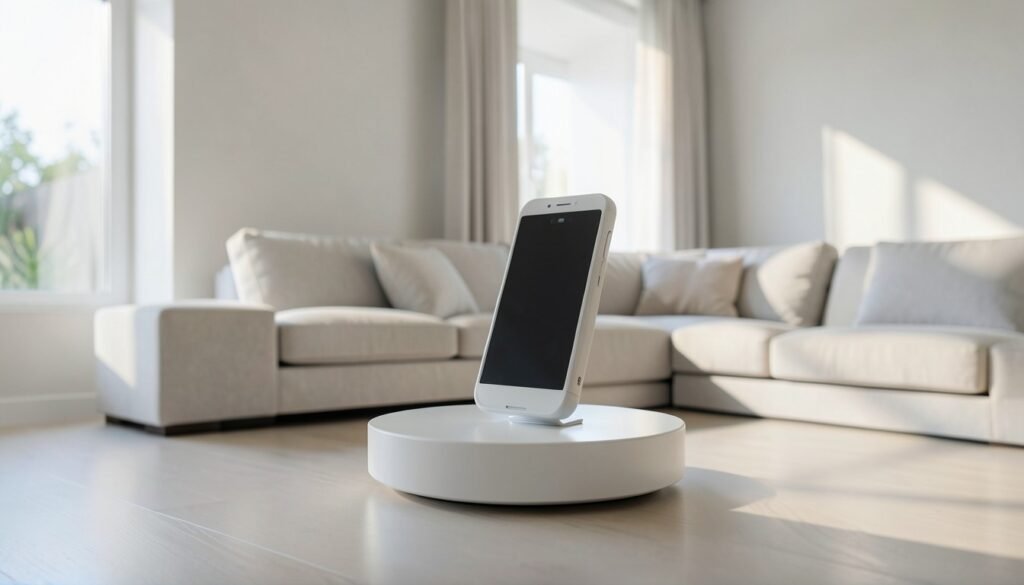
Imagine a device that tracks your face during a FaceTime call and then dims your living room lights once you step away. While companies like Meta are pouring resources into bipedal humanoids that won’t reach our living rooms for years, according to msn.com, Apple is taking a quieter, more practical path. They are reportedly developing a $1,000 AI robot for home use, with a projected launch in 2027.
This isn’t another sci-fi fantasy about a butler doing your laundry. Instead, it is a focused piece of Apple robotics that leans into how we already use technology. We will break down why this shift matters, how it fits into your existing setup, and why it is a massive departure from the warehouse-focused machines we see in Understanding Agility Robotics: The Reality of Humanoid Logistics. Grab your chai; let’s talk about what this really means for your house.
The Evolution of Apple’s Hardware Ecosystem
Apple’s trajectory from the pocket-sized iPhone to a sprawling smart home ecosystem feels like a deliberate march toward physical space. For years, Cupertino focused on software-centric smart home development, relying on the Home app and Siri to anchor your living room. But the walls are closing in; software alone cannot bridge the gap between a simple digital command and a physical chore.
The shift toward an ai robot for home use is a strategic necessity. To keep the ecosystem relevant, Apple must move beyond screens and speakers. Unlike traditional industrial manufacturers—who prioritize raw strength and factory-grade repetitive motion—Apple’s design philosophy hinges on accessibility and aesthetics. They are not building a factory worker; they are refining a companion.
Consider the progression of their hardware:
- Mobile: The iPhone defined the personal interface.
- Wearables: The Apple Watch brought health monitoring to the skin.
- Robotics: The next phase aims to bring intelligence into the physical architecture of the house.
While companies like Meta are tinkering with humanoid designs, Apple is taking a distinct path, focusing on specialized, privacy-first devices. It is about how how does apple home automation work when the system can actually reach out and flip a light switch. This transition from virtual assistant to physical agent is the company’s biggest hardware gamble in years. They are not just selling a tool; they are trying to cement their presence in your home’s actual footprint.
Technical Challenges in Domestic Environments
Moving a machine from a factory floor to your living room is a massive leap. In a factory, you have predictable paths, clear markers, and consistent lighting. A home, however, is inherently chaotic. You have shifted furniture, stray shoes, and pets that do not follow a programmed path. This unpredictability is the primary hurdle for any ai robot for home use.
To succeed, these machines require sophisticated computer vision and spatial awareness. They cannot just be blind movers; they must map a room in real-time while accounting for dynamic obstacles. This is where Apple robotics faces a steep climb. Unlike a static smart hub, a mobile unit must reconcile its sensor data with the "fuzziness" of a real house—where a shadow might look like an object and a rug transition might look like a ledge.
Hardware constraints further complicate the design. You want a robot for the house to be light and quiet, yet it needs enough battery life to handle tasks without tethering to a wall constantly. Packing high-end processors, depth sensors, and actuators into a consumer-friendly frame is a delicate engineering tightrope. According to reports cited by techstory.in, we might see a $1,000 device by 2027, but hitting that price point while maintaining reliable performance is a major challenge. If the machine cannot reliably navigate your hallway, the most advanced software in the world simply won’t save it.

Privacy-First Robotics: The Apple Differentiator
Apple is taking a different path with its potential ai robot for home. While others rely on massive cloud-based models that ship your living room video data to remote servers, Apple is leaning into its signature on-device processing.
This approach is key for Apple robotics. By keeping sensor data local, the device maintains security without sacrificing speed. However, it’s a technical balancing act. Local processing limits the raw compute power compared to massive cloud arrays, making it harder to handle complex reasoning.
Most competitors treat data as a commodity to improve their AI models. Apple, conversely, views privacy as a product feature. If you are worried about who sees your home footage, this is a massive differentiator.
Trust is the biggest hurdle for any robot for the house. If a device is constantly watching you, people need to know their data isn’t being sold or leaked. As we’ve seen in How AI Regulation Impacts Semiconductor Supply Chains, the hardware architecture often dictates how these policies are enforced. Consumers want a robot for home use that acts like a private assistant, not a surveillance tool. This shift from "data-hungry" to "privacy-first" might just be the pivot that makes domestic robotics finally acceptable to the average household.
Integration with the Existing Smart Home
If you’re already invested in the Apple ecosystem, you know how Apple home automation work centers on the HomePod or Apple TV. Adding an AI robot for home use isn’t just about giving your vacuum legs; it’s about making your smart home proactive. Instead of shouting across the room at a speaker, a mobile robot acts as a roaming hub, moving to where you actually are.
This shifts the "robot for the house" from a novelty into a functional controller. As noted on forbes.com, the future of robotics involves devices that handle digital tasks alongside physical ones. Imagine a device that follows you to the kitchen, manages your lighting, and checks your security cameras while maintaining a video call.
Apple’s strength lies in its hand-off technology. You might start a FaceTime session on your iPhone while walking through the door and seamlessly transfer the audio and video feed to the robot as you settle onto the couch. By bridging the gap between static devices and mobile assistance, Apple robotics could finally make what is smart home automation feel truly helpful rather than just another remote control.
The Economics of Consumer Robotics
Building a capable ai robot for home use isn’t just about clever code; it’s about the brutal math of mass production. If Apple is indeed targeting a $1,000 price point for its rumored 2027 home device, they are aiming for that "sweet spot" where consumer electronics cross from novelty into standard household utility. Anything more expensive, and you’re looking at a niche luxury item; anything less, and you’re likely cutting corners on build quality, battery safety, or local processing power.
Manufacturing a robot for the house at scale is significantly different from assembling an iPhone. You are dealing with specialized motors, actuators, and sensor arrays that must be reliable enough to operate in unpredictable, messy human environments. This is why we often see a stark contrast between controlled factory settings and domestic chaos, as detailed in our analysis of Industrial Robots Safety and Risks: Beyond the Sci‑Fi Tropes. Apple’s engineering challenge is balancing the high cost of premium silicon with the physical hardware required for basic mobility or interaction.
To hit that $1,000 threshold, Apple will likely prioritize software integration—specifically how the device fits into existing Apple robotics and smart home ecosystems—over raw physical strength. If the robot acts primarily as an intelligent FaceTime hub that can navigate a living room, it avoids the astronomical costs associated with heavy-duty mechanical limbs. For the average user, paying a grand for a mobile smart display is a significant investment, but as an entry point into advanced home automation, it hits the target.
Global Market Impact and Competition
When a company like Apple steps into the robotics arena, the entire industry stops experimenting with hobbyist projects and starts chasing mass-market viability. Apple robotics aims to shift the narrative from specialized vacuums to a central, interactive node for the house. While competitors like Meta are pouring resources into advanced humanoids like the Max 2, they admit that a viable product for the home remains far off, as reported by msn.com.
This pressure forces existing smart home manufacturers to rethink their hardware. If you’ve ever wondered what is smart home automation, it is currently a fragmented mess of sensors and speakers. Apple’s potential $1,000 price point forces rivals to justify their costs through better utility rather than just gimmicky connectivity. Consumers are beginning to expect more than a remote-controlled mop; they want a machine that understands context.
To compete, manufacturers are aggressively refining two critical areas:
- Sensor Miniaturization: Shrinking lidar and depth-sensing arrays to fit compact, non-intimidating designs.
- Battery Density: Increasing runtimes so your AI robot for home isn’t tethered to a wall outlet for half the day.
The race is no longer about who can build the most complex bipedal walker. It is about who can deliver the most helpful, secure assistant that actually integrates with the Apple home ecosystem you already use.
Real-World Utility vs. Sci-Fi Expectations
If you are waiting for a metallic butler to fold your laundry, you will likely be waiting for a long time. The current industry trend leans heavily into humanoid hype, but for a typical living room, a robot for home use does not need two legs or a face. In fact, How Embodied AI Robots Are Learning to Walk in the Real World shows that simply balancing on two feet remains a massive technical hurdle.
Instead, think about what makes a house truly livable. A device that functions as a mobile FaceTime station or controls your smart home automation is far more practical than a humanoid that might trip over a rug. Safety is paramount here; if you have pets or small children, you do not want a heavy, fast-moving machine cruising through the hallway.
Apple’s reported strategy of focusing on a $1,000 device for communication and basic environment control represents a sensible, pragmatic start for Apple robotics. By limiting the scope, they reduce the risks associated with complex mechanical interactions. When we ask what is smart home automation, we usually mean turning on lights or adjusting thermostats, not having a robot perform heavy labor. By mastering these small, daily tasks, this AI robot for home utility can actually earn its place on your shelf. It is not a sci-fi dream—it is just a smarter way to manage the house.
Watch: Apple Is Developing a Tabletop Robot for the Home
Frequently Asked Questions
What is the primary function of the reported Apple home robot?
Current reports suggest this device is designed to act as a centralized hub for your household. Think of it as a specialized, mobile ai robot for home use that facilitates FaceTime calls while managing your smart home automation tasks. Rather than replacing human labor, it focuses on communication and controlling connected systems like lighting, serving as a companion for daily digital interactions.
How does Apple’s approach to robotics differ from Tesla or Boston Dynamics?
Apple appears to be avoiding the pursuit of general-purpose humanoid robots favored by firms like Tesla or Boston Dynamics. Instead, they are prioritizing a specialized, privacy-focused approach. By leaning into their existing ecosystem, Apple is targeting specific home utility roles. Their strategy centers on data protection and tighter integration with the devices you already trust, keeping the hardware focused on practical, manageable domestic tasks.
Will the Apple home robot be able to perform complex household chores?
If you are hoping for a robot for the house that folds laundry or scrubs floors, you might want to adjust your expectations. Current information indicates the focus is on communication and home management rather than heavy physical labor. Apple’s design philosophy seems to emphasize convenience and smart home control, leaving the complex, dexterous physical chores to other, more specialized industrial machines.
When can consumers expect to see Apple’s robotics hardware in the market?
While rumors have been swirling for years, official outlets indicate that a consumer launch for this Apple robotics project is tentatively slated for 2027. With a reported price point around $1,000, it represents a significant investment. Given the complexity of hardware development, it is wise to view these timelines as estimates rather than guaranteed release dates, especially as Apple refines its manufacturing processes.
Beyond the Sci-Fi Mirage
Expectations for a general-purpose humanoid that folds laundry remain firmly in the realm of science fiction. The reality of Apple’s reported $1,000 device is likely far more pragmatic: a specialized hub that connects your existing smart home rather than a mechanical butler. While researchers continue to push boundaries with tools like Anthropic and Addgene: Best AI Tools for Biological Research, your AI robot for home use in 2027 will likely focus on consistent FaceTime performance and basic automation triggers.
Don’t wait for a miracle machine. If you want to improve your space today, focus on building a stable foundation with devices that work with Apple Home now. A reliable smart bridge or a well-placed sensor provides more immediate value than waiting for a future hardware promise. Invest in infrastructure, not just the newest gadget, to ensure your home remains ready for whatever comes next.
Sources and further reading
- Meta is already working on its second-gen humanoid robot, but don’t expect it to land in homes anytime soon — msn.com
- Your Humanoid Robot Might Also Be Your Smart Home Hub: Disembodied Neo Head From 1X — forbes.com
- Apple Home Robot: AI-Powered FaceTime Device Could Launch in 2027 at $1,000 — techstory.in


Join the conversation