Key takeaways
- Simulation training alone is insufficient; real‑world human feedback is now essential.
- ‘Robot‑dog walkers’ illustrate the limits of current autonomous navigation in public spaces.
- Manufacturers are moving from research prototypes to limited‑scale production.
- Foundation models are enabling robots to reason about tasks in real time.
Walking through a city park, you might spot a tall, sleek robot pausing to observe pedestrians. It isn’t a scene from a sci‑fi movie; it’s the current, messy reality of embodied AI. These machines have no emotions—they are data‑driven systems trying to make sense of unpredictable streets. As we explore recent developments, the focus is on how robots move from controlled labs to sidewalks.
Beyond the Simulation: Why Real‑World Training Matters
Teaching a robot to walk entirely inside a computer is like learning to swim by watching a video. Virtual environments provide a clean baseline, but they can’t reproduce the friction of a concrete slab or the sudden splash of a puddle. When a robot trained in simulation encounters an uneven tile, it often stumbles.
The “sim‑to‑real” gap remains a core challenge. Simulators can map trajectories, but they can’t capture the noisy, chaotic conditions of a city street. Physical exposure is now mandatory for training, and companies are beginning to test robots on real sidewalks to gather data that no virtual model can provide.
The New Gig Economy: Human‑in‑the‑Loop Training
A growing side‑hustle has emerged: people are hired to walk alongside autonomous machines, stepping in when the robot hesitates. This human‑in‑the‑loop approach supplies high‑quality data about edge cases—uneven pavement, sudden crowds, unexpected obstacles—that are too costly to program exhaustively.
The ethical tension is clear. Workers are effectively training the systems that could eventually replace similar jobs. While the robots themselves lack feelings, the act of “babysitting” them blurs the line between tool and social agent, a phenomenon noted in recent academic studies on human‑robot interaction.

Production Milestones: From Prototype to Limited‑Scale Manufacturing
Recent announcements from a major automotive manufacturer indicate the start of limited‑scale production of humanoid robots in a California facility. This isn’t a consumer launch; the units are intended for internal testing and controlled deployments.
The company’s vertical integration—building the brain, body, and software in‑house—helps tighten the feedback loop between hardware design and real‑world performance. This approach contrasts with firms that rely on a fragmented supply chain, highlighting the trade‑offs between speed of iteration and supply‑chain stability.
The Robot Brain: Foundation Models for Real‑Time Reasoning
Historically, robots followed hard‑coded scripts. New foundation models now enable robots to interpret visual data and make decisions on the fly. For example, a robot encountering a spilled drink can identify the liquid, adjust its grip, and continue its task without a software update.
These models don’t grant consciousness, but they allow machines to adapt to novel situations, reducing the need for exhaustive pre‑programming.
Traditional Automakers Join the Humanoid Race
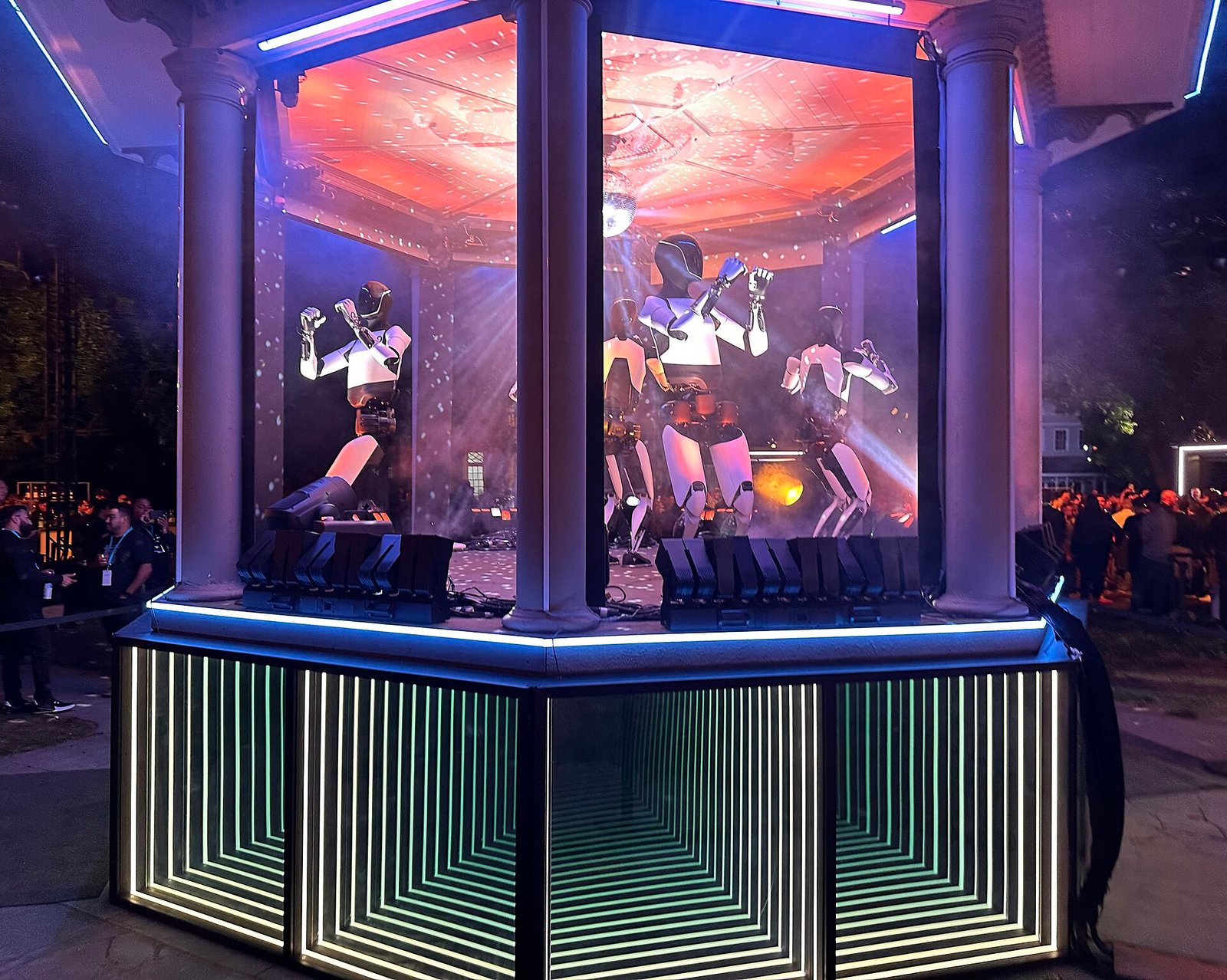
Legacy automotive manufacturers are now entering the humanoid arena, leveraging decades of precision engineering and supply‑chain expertise. Their focus on reliability and standardized production offers a counterpoint to fast‑moving startups that prioritize software agility.
As competition intensifies, component costs for actuators and sensors are gradually decreasing, which could improve accessibility over the next few years.
Public Spaces and the ‘Babysitter’ Robot
Robots deployed in public parks gather continuous sensor data to improve navigation algorithms. While they don’t possess feelings, their presence raises privacy concerns: constant recording turns streets into large training datasets.
Public reaction is mixed. Some view these machines as efficient helpers; others worry about surveillance and safety. Clear guidelines on data handling and transparent communication are essential to building trust.

Security, Ethics, and Regulation
The rapid deployment of embodied AI robots outpaces existing regulatory frameworks. Concerns include data ownership, potential misuse, and national‑security implications of imported technology. Policymakers are urged to develop enforceable standards that address privacy, safety, and accountability before widespread adoption.
The Long Road to Home Integration
Domestic use of humanoid robots remains a future prospect. Industrial settings and controlled logistics environments are the primary testing grounds because they offer predictable conditions.
Key hurdles include battery density, cost reduction, and rigorous safety certifications. Until these challenges are addressed, household adoption will likely remain several years away.
What to Expect Through 2028
- 2024‑2025: Industrial pilot programs and limited service roles.
- 2025‑2027: Refinement of safety sensors and improvements in energy efficiency.
- Post‑2027: Early commercial prototypes for specific domestic tasks.
Frequently Asked Questions
Are humanoid robots currently available for purchase for home use?
As of now, humanoid robots are confined to pilot programs and industrial testing. Consumer‑grade units are not yet on the market.
Why do robots need humans to walk them in public spaces?
Real‑world environments present unpredictable variables that current algorithms struggle to handle. Human guides provide the nuanced data needed to improve autonomous navigation.
How does a robot ‘learn’ to walk using AI?
Robots typically start in high‑fidelity simulations where movement patterns are refined. Once stable, they transition to physical trials, where machine‑learning models adjust gait in response to real‑world forces.
What are the main safety risks of autonomous robots in public parks?
Key risks include collision with pedestrians or pets and the potential for unexpected behavior in crowded settings. Robust perception systems and clear safety protocols are essential.
Sources and further reading
- Seeing Beats Remembering: What Makes a Robot Feel Socially Present — bioengineer.org
- NIST publications on robotics standards — nist.gov



Join the conversation