Key takeaways
- VW plans two India‑made EVs by 2028, likely a compact SUV and a hatchback.
- Projected pricing sits around ₹12‑15 lakh, positioning VW between Tata‑MG and Hyundai.
- Local battery partnerships aim for 70 % parts localisation, cutting costs and improving service.
- Standard ADAS and VW’s Car.Software platform will bring premium tech to the mid‑segment.
- Urban professionals and fleet operators are the primary target buyers.
For years, Volkswagen has watched from the sidelines while competitors grabbed the early lead in the Indian EV market. It’s a bit like showing up late to a dinner party; you have to bring something exceptional to catch everyone’s attention. Now, the brand is finally moving with a strategic manufacturing reset, aiming to bring a Volkswagen India EV to our roads by 2028.
According to reports on msn.com, the company plans to introduce two new models through a proposed 51:49 alliance with the JSW Group. This isn’t just about importing luxury units; it is about local assembly and deep manufacturing roots. Much like when we saw Audi’s First Made‑in‑India EV: What It Means for Indian Buyers, this shift signals a serious commitment to our specific market needs. In this piece, we will break down what this 2028 roadmap means for your garage, the expected price bracket, and whether you should wait or look elsewhere.
Why Volkswagen is eyeing local EV production
Volkswagen has been playing a cautious game in India, but the shift towards local production is now unavoidable. Globally, the brand is aggressive about electrification, but here, they have lagged behind for years. Why the change now? It is about chasing the massive potential of the Indian middle class while keeping costs firmly grounded. By shifting to a local manufacturing model—specifically the proposed 51:49 joint venture with JSW—they are finally looking to capture the volume segment rather than just observing from the sidelines.
Tax benefits are a massive motivator. Between the 5% GST on electric vehicles and various production-linked incentives, manufacturing locally is the only way to avoid the heavy import duties that would make a Volkswagen electric car completely unaffordable for the average buyer. While luxury players like Mercedes—whose Mercedes‑Benz GLC Electric in India: Demand, Price & Buying Guide highlights a different market segment—can absorb higher costs, mass-market success in India requires a "made-in-India" badge to keep prices within reach.
Look at the competition. Tata Motors and Mahindra have already built their local supply chains from the ground up, pushing the needle on price-to-range ratios. If Volkswagen wants to compete, they cannot just ship kits; they need the scale and cost efficiency that only local assembly provides. It is a smart, necessary reset.
The two models on VW’s radar
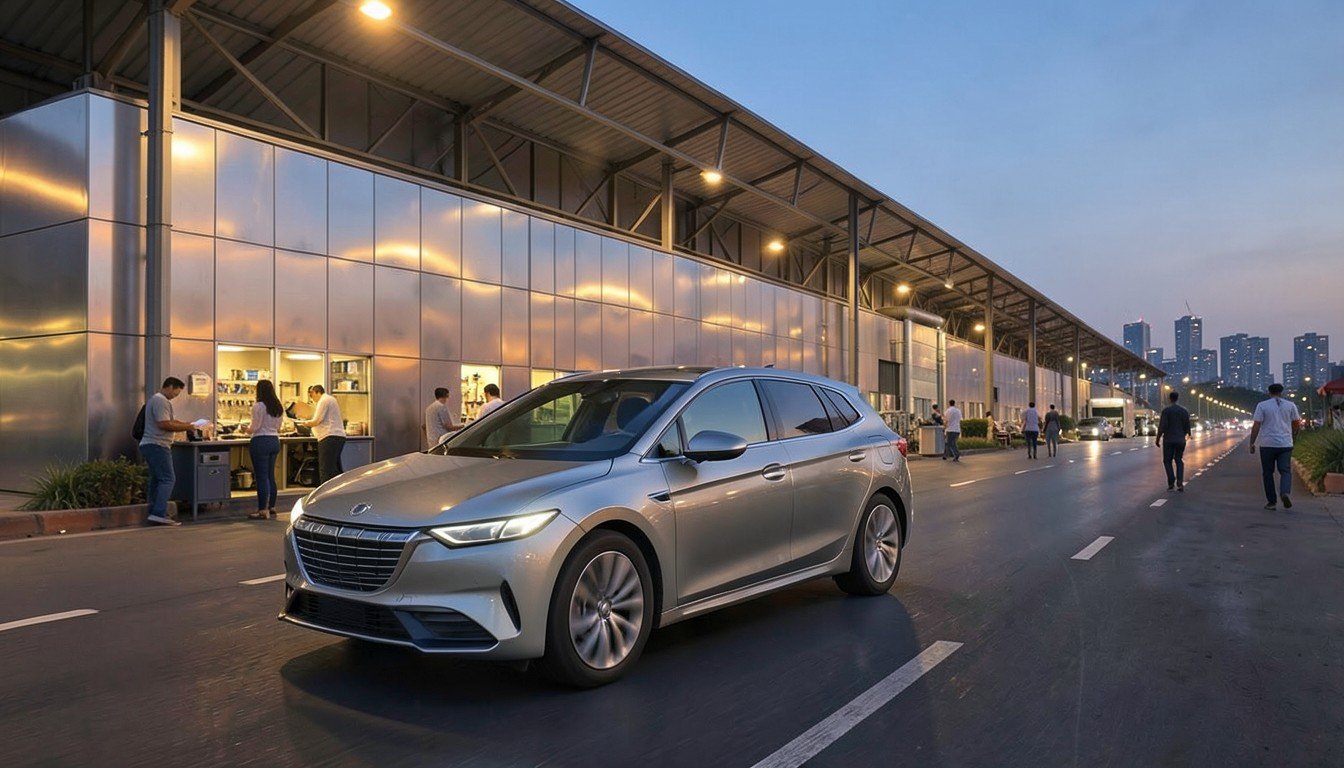
If you’re keeping an eye on the German giant, word on the street suggests we’re looking at a compact SUV and a practical hatchback. These won’t just be imports; they’re designed to be built right here. Think of them as the Indian descendants of the global ID. series, adapted to handle our chaotic traffic and unpredictable road surfaces.
Under the skin, these EVs are expected to sit on the MEB platform. It’s the same architecture providing the building blocks for the battery cells powering Mahindra’s upcoming BE 6 and XEV 9e moneycontrol.com. You can anticipate battery capacities landing in the 45 kWh to 62 kWh range, which hits that sweet spot between city range and highway capability.
But hardware is only half the battle. I expect Volkswagen to bake in India-specific necessities, like a high-output dual-mode AC system to combat our scorching summers. The infotainment will also likely see a major overhaul, moving away from generic global software to a localized setup that actually understands local route planning, streaming needs, and voice commands in Indian English. If they get the cooling and the software interface right, these could finally be the daily drivers we’ve been waiting for.
Confirmed pricing signals and affordability
If you have been tracking Volkswagen’s global lineup, you know the ID.4 and ID.3 are impressive but expensive imports. Bringing those here as complete units would price them well out of reach for most Indian families. However, the pivot toward a JSW alliance changes the math entirely. We are hearing strong signals that Volkswagen’s locally manufactured EVs will target the ₹12-15 lakh price bracket.
This is a smart play. At this price point, Volkswagen is taking a direct swing at the Tata Nexon EV, which currently dominates the mid-range segment. While the MG ZS EV sits slightly higher and the Hyundai Kona struggles for market relevance, a localized Volkswagen EV could offer that signature German build quality at a mass-market price. If you’re considering alternatives, it’s worth noting that manufacturers like Hyundai are still adjusting their local roadmaps, as seen in the Hyundai Bayon India Launch: Specs, Price, and Buying Verdict.
Volkswagen’s strategy is clear: strip away the heavy import duties and leverage local manufacturing to bring their technology to the masses. If they hit that ₹12-15 lakh sweet spot with a respectable range, they might force the competition to rethink their pricing strategy. Keep a close eye on the localisation depth; that’s exactly where the real consumer savings will happen.
Supply‑chain partners and localisation depth
Let’s talk about the hardware. If VW wants to compete in India, they simply cannot rely on imported kits. That is why the proposed manufacturing reset with JSW is so crucial for their long-term viability. According to reports on urbanacres.in, the manufacturer is targeting a 70% localisation rate by 2028.
That is a bold target, but it changes the math for you. Localising components is not just about "Make in India" branding; it is about keeping your service bills from hitting the roof. For batteries, the industry is watching for potential tie-ups with domestic leaders like Exicom or Tata Power EV. If VW manages to source cells locally rather than shipping them from Europe, we are looking at a significantly more competitive entry price for their upcoming electric models.
Beyond the initial sticker price, this depth of localisation ensures that when you need a replacement part three years down the line, you won’t be waiting months for a shipment from Germany. A deeper supply chain means a more reliable dealer network and, frankly, a vehicle better suited for Indian road conditions. If they nail these logistics, they could finally bridge the gap between premium engineering and mid-market affordability.
Technology stack: ADAS, infotainment and AI assistants
Volkswagen’s global MEB platform is tech-heavy, but we have to be realistic about what reaches our shores. You can reasonably expect a standard ADAS suite—think adaptive cruise control and lane-keep assist—given the current arms race in the Indian SUV segment. These are no longer luxury perks; they are baseline expectations for any EV launching around 2028.
The real test lies in Volkswagen’s Car.Software platform. Adapting this for India requires deep integration with local telecom infrastructure to ensure stable connectivity for over-the-air updates. While global models boast sophisticated AI assistants, we haven’t seen a confirmed roadmap for how these will be localized for Indian dialects or regional data latency.
It’s easy to get swept up in the marketing hype, but keep in mind that the JSW partnership is still in the evaluation phase. No specific ADAS hardware or software architecture has been locked in for these made-in-India units. While you wait for official announcements, you might find that tracking broader shifts—like Standard Chartered Bitcoin Trading: What Indian Investors Need—is a more certain way to watch how global tech impacts your wallet. Until the 51:49 joint venture gets the final green light, most feature lists remain purely speculative.
Who should consider a VW India‑made EV
If you are a city professional who has spent years admiring the build quality of a Polo or a Virtus, these upcoming EVs are squarely for you. You are likely tired of the "plasticky" feel found in many budget electric cars and want that solid German-engineered sense of security at a mid-range price point.
Then there are the fleet operators. If your business relies on uptime, you will be looking closely at Volkswagen’s service guarantees and the durability of their localized components. As reported by msn.com, the shift toward local manufacturing aims to balance operational costs, which should help keep maintenance predictable for commercial users.
Finally, if you are a first-time EV buyer, VW presents a compelling middle ground. You might be hesitant about switching away from petrol, but the brand’s legacy of safety and long-term reliability helps lower the psychological barrier. You aren’t just buying a battery on wheels; you are buying into a mature service network that understands Indian road conditions.
Challenges VW may face
Even with a local manufacturing boost, Volkswagen faces a steep climb in India. First, the charging infrastructure in our Tier-2 and Tier-3 cities remains patchy at best. While you might manage in a metro, taking a long-distance road trip in an EV still requires a fair bit of "range anxiety" planning compared to a petrol car.
Then there’s the competition. Tata and Mahindra have been aggressively capturing the entry-to-mid-range segment for years. VW needs to offer something truly unique to break that hold. If you’re looking at the premium end, it’s worth checking out Volvo EX90 vs ES90: Which Premium EV fits Indian buyers? to understand how established luxury players are dealing with similar market hurdles.
Lastly, the regulatory climate is a moving target. New mandates regarding battery recycling and potential shifts in GST slabs for EVs keep every manufacturer on their toes. If the government tightens the rules on raw material sourcing or disposal, costs could spike unexpectedly. For Volkswagen, success won’t just be about building a good car; it’ll be about surviving the unpredictable Indian policy environment while keeping prices accessible for the common buyer.
Timeline to launch and what to watch for next
We are currently looking at a 2028 horizon for these India-made EVs to hit the showrooms. Watch for prototype reveals in the 18 months leading up to the launch, as these will provide our first real look at the final cabin tech and true-world range capabilities.
Keep a close eye on how the JSW joint venture progresses, as the specific manufacturing footprint will dictate actual production capacity. As detailed in reports on moneycontrol.com, Volkswagen is balancing this new potential with existing supply agreements, so pay attention to any official announcements regarding new battery cell sourcing for these local models.
Homologation usually happens about six to nine months before the cars reach dealerships. If you are serious about being an early adopter, track the official brand channels for "expression of interest" campaigns, which often open a few weeks before formal bookings.
My advice? Don’t rush into waiting lists before seeing a production-spec test drive report. Follow journalists who get early access to prototypes; they will tell you if the software interface actually holds up to our dusty, high-heat Indian road conditions.
Watch: Meet Volkswagen’s FIRST EV for India, coming end-2024! | VW ID.4 First Look
Frequently Asked Questions
When will Volkswagen start selling locally built EVs in India?
Based on current industry reports, Volkswagen is aiming to introduce locally manufactured EVs in India around 2028. While they have previously delayed their electric entry by over two years to focus on operational profitability, the ongoing discussions with JSW signal a more concrete roadmap. Keep an eye on official announcements, as timelines in our market often shift based on the final manufacturing setup.
What price can I expect for a VW electric SUV made in India?
Volkswagen hasn’t confirmed specific price tags yet, so don’t believe the rumors floating around online. Given the mid-range segment they are targeting, you should expect competitive pricing meant to challenge established rivals. Until they finalize the 51:49 joint venture with JSW and start local production, any number you hear is speculative. Stay patient; realistic pricing will surface much closer to the launch date.
Which Indian battery maker is partnering with Volkswagen?
As of now, there is no official confirmation regarding a specific Indian battery maker partnering with Volkswagen for their local EV project. While VW is already supplying unified battery cells to Mahindra for their INGLO platform, the potential JSW joint venture focuses on broader manufacturing. We will need to wait for further details on their local supply chain strategy and future battery sourcing plans.
Will the VW EVs have Indian‑specific safety features?
There is no official word on specific safety features tailored for the Indian market yet. However, since Volkswagen is looking at deep localization through the JSW alliance, it is reasonable to expect their EVs to comply with local safety standards and crash-test requirements. I suggest waiting for the prototype reveals, where they will likely detail how they plan to adapt their global tech for Indian roads.
Is the Wait for a VW EV Worth It?
So, who is the target buyer here? If you are currently driving a VW Polo or Taigun and love that solid, grounded feel but want to go electric, these upcoming models are exactly what you should watch. Waiting until 2028 is a long haul, but it might be worth it for that specific German driving dynamic tuned for Indian roads.
However, VW has a tightrope to walk. Balancing their component supply deal with Mahindra while scaling a new manufacturing joint venture with JSW is complex. You will want to see how these two separate tracks influence final vehicle pricing. While we track these developments, look at JSW Motors’ First SUV: A New Contender in India’s Mid‑Segment to understand the manufacturing muscle JSW brings to the table.
My tip? Don’t rush into a purchase today if you are a brand loyalist. Set a reminder for late 2027 to see if official specs finally drop.
Sources and further reading
- Volkswagen plans two India EV launches under JSW alliance – report — msn.com
- Volkswagen India Strategy Gets a Manufacturing Reset With JSW — urbanacres.in
- Why Mahindra isn’t worried about Volkswagen’s proposed alliance with JSW — moneycontrol.com