Key takeaways
- AI face scanning uses computer vision to detect physiological markers invisible to the human eye.
- This technology is intended for clinical screening and must be validated by a doctor, not used for self-diagnosis.
- In India, this research could significantly lower the barrier to early health screenings for rural populations.
- Data privacy and clinical validation remain the two most critical hurdles for widespread adoption.
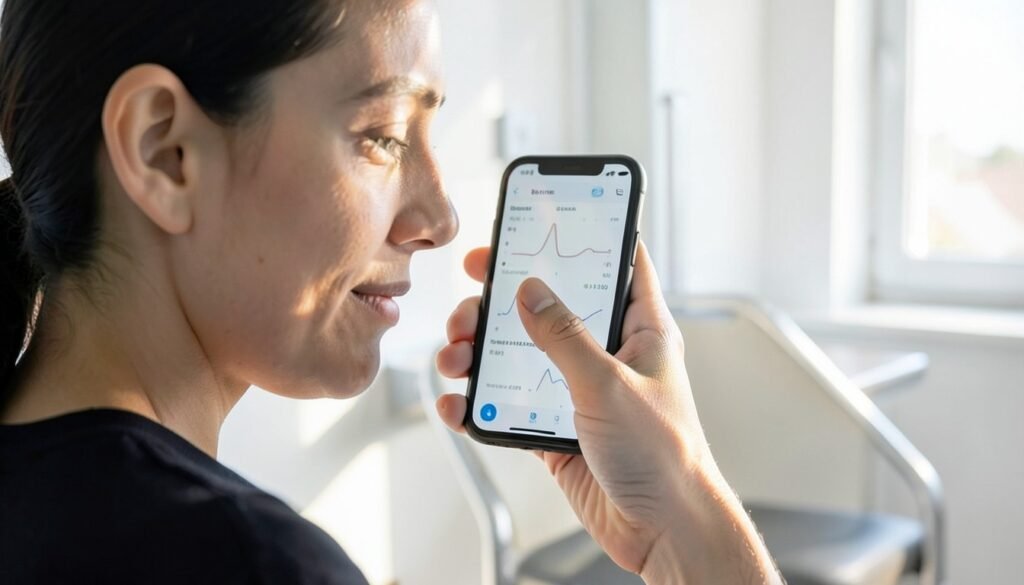
Imagine you’re sitting in a village clinic in rural Telangana, waiting hours just for a basic vitals check. Now, picture that same check taking seconds with just a smartphone camera. That’s the promise of an ai face scan to detect health. Researchers are now finding that a simple image can reveal startling details, like your biological age or even your likelihood of surviving cancer, as noted in recent reports from msn.com. While we have seen rapid advancements in AI in DNA Analysis: What Hugging Face’s DNA Model Means for Gene Therapy, this shift toward facial diagnostics is uniquely accessible. In this piece, I’ll break down how medical diagnostic AI is moving from research labs into our pockets. We’ll look at whether an ai face scanning app can truly replace a stethoscope and what this means for the future of healthcare in India.
The Science: How AI Interprets Facial Features
When you use an ai face scan to detect health, you aren’t just taking a standard selfie. Under the hood, these systems utilize deep learning—specifically convolutional neural networks—to scan for physiological markers that remain invisible to the human eye. Think of it as a specialized diagnostic filter that identifies blood flow patterns or skin texture anomalies rather than your identity.
The model breaks down your face into millions of pixel-level variations. It tracks how light reflects off your skin, detecting micro-fluctuations in blood volume that correlate with heart rate or oxygen saturation. While your brain sees a face, the AI interprets a complex map of physiological data. It is vital to clarify: this is pure pattern recognition for clinical symptoms, not facial recognition meant to identify who you are.
However, your phone’s camera isn’t automatically a diagnostic machine. Accuracy depends heavily on environmental consistency. Standard RGB images are sensitive to shadows, skin tone variations, and ambient lighting shifts. Just as you need a proper seal to get decent audio—if your Earbuds Sound Thin? Do This 2-Minute Fit Test—these models require specific angles and controlled lighting to function reliably. Without a stable, well-lit environment, the data becomes noisy and useless. This ai driven face scan technology relies on strict capture protocols, ensuring that every scan provides a reliable medical metric rather than just a grainy, inconsistent photo.
Beyond the Surface: What Conditions Can Be Detected?
You might wonder how a simple camera captures medical data. The secret lies in transdermal optical imaging, a process that tracks subtle shifts in facial blood flow—a phenomenon known as photoplethysmography (PPG). Every time your heart beats, the tiny blood vessels in your face expand and contract, causing microscopic changes in skin color that are invisible to the naked eye but clear to an AI.
Hyderabad-based startup Aciana has already started deploying this tech to track health vitals like heart rate and oxygen saturation. Beyond basic metrics, researchers are currently testing this medical diagnostic AI to identify:
- Cardiovascular markers: Detecting irregular rhythms or high blood pressure before they trigger a crisis.
- Neurological tremors: Identifying subtle facial muscle patterns associated with conditions like Parkinson’s disease.
- Stress and fatigue: Measuring heart rate variability to gauge autonomic nervous system health.
It is critical to distinguish between ‘screening’ and ‘diagnostic’ capabilities. An ai face scan to detect health is a screening tool; it identifies potential red flags that warrant a follow-up visit to a doctor. It isn’t a replacement for a clinical diagnosis. However, in rural regions where the nearest clinic might be hours away, this technology acts as an essential filter. Catching hypertension or an irregular heartbeat early allows a patient to seek care before a minor issue becomes a life-altering medical emergency. When you have limited resources, knowing exactly when to travel for help is a massive advantage.

The Accuracy Gap: Clinical Validation vs. Consumer Apps
There is a world of difference between a casual ai face scanning app you download for curiosity and a medical diagnostic AI built by institutions like Mass General Brigham. The latter relies on rigorous clinical trials and peer-reviewed data to prove that an ai driven face scan provides actual clinical value. While consumer apps might guess your "stress level" based on generic pixel patterns, clinical models are trained on thousands of verified patient images to ensure the output is rooted in biology, not just lighting tricks.
Accuracy is the biggest hurdle in this field. These clinical models are specifically engineered to handle variations in skin tone and ambient lighting, ensuring that a person in a dimly lit village in Odisha gets the same reliable reading as someone in a brightly lit clinic in Delhi. Unlike a simple face detection using ai script that might struggle with shadows, these systems account for subtle physiological markers that do not fluctuate with a bad camera angle.
Without clinical oversight, you risk false positives that cause unnecessary anxiety. Medical-grade tools require human verification to interpret findings correctly, rather than relying on an automated black box. If you are ever worried about the integrity of your tech, think of it like hardware; even a faulty USB-C Cable Checklist: Charge, Data, and When to Replace needs verification, and so does your diagnostic software. Always look for tools validated by peer-reviewed research, not just bold marketing claims. When it comes to understanding what is ai driven face scan technology, peer-reviewed validation is the only real guardrail against misinformation.
Privacy and Data Ethics in Medical Imaging
When your face becomes your medical record, privacy isn’t just a checkbox—it is the foundation of trust. Whether you are using an ai face scanning app or an ai face scanning machine, you need to know exactly where your biometric data goes. Ideally, medical diagnostic AI should prioritize local, on-device processing. This means the analytical math happens right on your phone’s processor, and your raw image never leaves your device. If an app sends images to the cloud for analysis, look for end-to-end encryption and clear, simple policies on data deletion.
In India, the Digital Personal Data Protection (DPDP) Act sets the rules for how these sensitive biometric inputs are handled. Companies are now required to be explicit about why they need your image and how long they store it. As noted in bizpacreview.com, the potential for predictive health analysis is significant, but it requires ironclad security.
Before you start, check these boxes:
- Does the app have a privacy policy explicitly mentioning healthcare data standards?
- Does it offer an "opt-out" or "delete my data" feature?
- Look for third-party security certifications like ISO 27001, which indicate a higher standard of data safety.
The Indian Context: Bridging the Rural-Urban Diagnostic Divide
In rural India, the commute to a district hospital often costs a farmer half a day’s wages and hours of travel. If an ASHA worker could perform an ai driven face scan during a routine home visit, we could flag potential health risks early without forcing that arduous trip. This shift doesn’t just save time; it saves lives by prioritizing which patients actually require an immediate, specialized clinic visit.
The real hurdle is hardware accessibility. Many rural residents rely on budget smartphones with modest camera sensors. For this to work, developers must optimize their models to run on lower-resolution sensors, ensuring that face detection using ai doesn’t crash on devices with limited processing power or RAM. If you are curious about the underlying hardware shift happening across the country, check out our guide on Building India’s AI Backbone: Guide to AI Infrastructure Companies.
| Feature | Traditional Lab Test | AI Face Scan |
|---|---|---|
| Cost | ₹500 – ₹2000 | Minimal/Free |
| Wait Time | 24-48 hours | Seconds |
| Accessibility | Urban Labs | Rural/Home |
Compared to blood panels or imaging scans, which remain expensive and logistically complex, an ai face scanning app offers a fraction of the cost. While it will never replace a doctor’s clinical judgment, it acts as a vital triage filter. If the scan flags an anomaly, the patient knows exactly when to seek professional help, efficiently using our limited public healthcare resources. This isn’t about replacing human care; it is about bringing essential diagnostic capability to the people who currently have the least access to it.
How to Use These Tools Safely
Getting a reliable scan starts with how you capture the image. To ensure your ai face scan to detect health is useful, follow these simple steps:
- Stand in a well-lit area, preferably facing a window for even light.
- Keep your expression neutral; don’t smile or frown.
- Remove hair from your forehead and take off glasses to ensure clear features.
- Hold the phone steady to avoid motion blur, which can heavily skew the data.
Remember, these tools are for screening, not final diagnosis. Think of them like a thermometer; they tell you your temperature, but they cannot diagnose the underlying infection. Always keep a doctor-in-the-loop. If an app suggests a high-risk score, treat it as a prompt to book an appointment with a local clinic rather than a medical verdict. Self-diagnosis is risky, especially when symptoms are subtle or complex.
Be cautious when picking an app. If an "ai face scanning app" claims to cure diseases or lacks published clinical validation, walk away. Look for clear documentation on how they handle your private biometric data. In India, check if the developer is registered with the CDSCO or mentions partnerships with established hospitals. If the app asks for permissions unrelated to the camera, that is a massive red flag. Your biometric data is sensitive; keep it away from platforms that feel like "get healthy quick" schemes. If a result feels wrong, trust your intuition and consult a medical professional immediately.
Limitations and Future Research Directions
Even if you find an ai face scanning app impressive, it is not perfect. Current technology struggles with external interference. A thick beard, heavy foundation, or even uneven lighting can distort the data, making it difficult for an algorithm to pick up subtle skin color variations or micro-movements. If the lighting in your local clinic isn’t consistent, the accuracy drops significantly.
Researchers are now moving toward multi-modal diagnostics to fix this. Instead of relying solely on your selfie, future tools will likely combine facial data with voice analysis to cross-check vitals. This approach is similar to how we track AI Anti-Ageing Research: How We Can Eliminate ‘Zombie Cells’ by looking at cellular markers alongside physical metrics.
The biggest hurdle remains data diversity. Most models are trained on narrow datasets that do not represent the full spectrum of Indian skin tones or genetic profiles. To ensure equity, we need large-scale, representative datasets that reflect diverse populations, not just those from clinical trials in Western countries. Without this, these tools might fail our rural communities.
As for when this will reach your local pharmacy or hospital, wide-scale clinical availability is still likely years away. While startups like Hyderabad-based Aciana are pushing ahead, clinical-grade validation takes time. Expect to see these tools in controlled pilot programs through 2027 or 2028 before they become a standard part of your routine checkup. Don’t throw away your thermometer just yet; the technology is promising but still in its growing pains.
The Role of Mass General Brigham in Global Health
Mass General Brigham is pushing for open-science, effectively sharing their medical AI frameworks so researchers worldwide don’t have to reinvent the wheel. For Indian hospitals, this is a significant advantage. By adopting these shared research protocols, local institutions can refine an ai driven face scan to work for our specific demographics, rather than relying on software trained solely on Western populations.
Global standardization is the next critical hurdle. When we talk about medical diagnostic AI, we need benchmarks that account for genetic and environmental diversity. If Mass General Brigham collaborates with Indian counterparts, we can ensure that an ai face scanning app provides consistent results across different skin tones and health conditions. This type of cross-border partnership is exactly what we need to move from experimental tech to standard clinical practice, similar to the advancements seen with local innovators like the one highlighted by the Times of India.
Looking ahead, the institution is moving toward larger, multi-site clinical validation studies. They aren’t just looking for accuracy; they want to see how face detection using ai functions in high-volume, resource-constrained environments. Think of it as a stress test for the future of digital medicine. As these validation trials expand, the goal is to create a framework that works just as well in a Boston clinic as it does in a rural district center.
Frequently Asked Questions
Is this AI face scanning technology available for public use yet?
Not entirely. While research-level tools are being tested in clinical settings—like the work at Mass General Brigham—public access is limited. In India, local firms like Hyderabad-based Aciana are rolling out solutions to capture vitals, but these are generally restricted to controlled environments. You won’t find a universal ai face scanning app on the Play Store that offers reliable, doctor-level diagnostic results just yet.
Can a smartphone camera really replace a doctor’s physical examination?
Absolutely not. A camera is a tool, not a physician. While medical diagnostic AI can highlight potential issues by analyzing blood flow or skin changes, it cannot replace a clinical physical exam. In rural India, these tools can help triage patients and decide who needs to travel to a city hospital, but they remain supplementary to professional medical judgment and expertise.
How does the AI handle different skin tones and lighting conditions?
This is a significant hurdle. Early versions of face detection using ai often struggled with diverse skin tones, leading to inconsistent accuracy. Developers are now training models on broader datasets to ensure the ai driven face scan works correctly regardless of lighting or complexion. If you are using one, remember that extreme low-light environments can still skew the results significantly for most current sensors.
Is my health data safe when using these AI diagnostic apps?
That depends on the provider. When you use an ai face scan to detect health, you are sharing sensitive biometric data. Always check if the app complies with India’s Digital Personal Data Protection (DPDP) Act or international HIPAA standards. If an app does not clarify how it stores or deletes your facial images, it is safer to avoid uploading your private health information.
The Reality Check: Beyond the Selfie-Diagnostic Hype
We have seen how tools like those from Hyderabad-based Aciana are attempting to turn a simple selfie into a basic health report. While the promise of an ai face scan to detect health is genuinely exciting for remote villages where doctors are often hundreds of kilometers away, we are not at the stage where these tools replace a physician. Using an ai face scanning app is fundamentally different from a blood test or a physical examination by a trained medical professional.
Before we rely on this technology, we must remember that these systems are only as accurate as the clinical data they were trained on. If you are curious about how high-tech diagnostics function in the field, read our report on AI to Read CT Scans: How New Models Detect Hidden Diseases in India. It provides a clearer picture of where medical diagnostic AI currently stands in terms of reliability.
My advice? Treat these tools as a supplementary screening aid, not a definitive replacement for your local clinic. If you feel unwell, do not rely on an ai driven face scan to diagnose yourself. Always prioritize professional medical advice, especially when managing chronic conditions. Keep your expectations grounded, stay curious, and always keep that physical health check-up on your calendar.
Sources and further reading
- AI now may predict your biological age and if you’ll survive cancer — with a face scan — msn.com
- AI now predicts your biological age and if you’ll survive cancer — with a face scan — bizpacreview.com
- Hyderabad startup launches AI face scan for health vitals — timesofindia.indiatimes.com



Join the conversation