
Key takeaways
- Self‑generated data can slash labeling costs while preserving model quality.
- A verifier model is essential to keep the synthetic data from drifting.
- Adoption requires careful bias monitoring and adequate compute resources.
- The method opens doors for low‑resource languages and niche domains worldwide.
Imagine an AI that doesn’t just digest the internet, but actively writes its own textbooks to master complex subjects. A recent breakthrough from Israel shows this isn’t science fiction; it is a new way of using synthetic data for machine learning. Instead of waiting for humans to scrape and label massive datasets, models are now showing they can improve by learning from information they generate themselves.
While high-quality data remains the lifeblood of progress—and informationweek.com warns that scaling comes with significant risks—this self-training approach could fundamentally change how AI learns from data. As we pair these software advances with hardware shifts like The Most Energy Efficient AI Chips: Brown University’s Breakthrough, we are entering a phase where compute efficiency and data autonomy go hand-in-hand. Let’s break down how these models generate new data and what this means for the future of your favorite tools.
What the Israeli Self‑Generating Data Method Is
Think of how we’ve traditionally taught computers. Usually, we feed them massive piles of human-labeled data—that’s supervised learning—or we force them to guess missing words in a sentence, which is self-supervised. But an Israeli research team has introduced a shift in using synthetic data for machine learning that changes the pace of development. Instead of relying purely on static, outside sources, the model becomes its own teacher.
This new approach creates a closed-circuit system centered on three specific components:
- The Generator: A model tasked with creating new, synthetic data samples.
- The Verifier: A system that audits the output to ensure the generated data is accurate and high-quality.
- The Feedback Loop: A mechanism that feeds those verified samples back into the model to refine its next attempt.
By creating a loop where the system performs AI model self-training, we move away from the bottleneck of needing constant human input. It’s an elegant solution, especially as we see OpenAI Windsurf Acquisition Final Agreement: What It Means signal a move toward more autonomous systems. This isn’t just about making data; it’s about how AI learns from data by testing itself against its own creations. It’s like a student checking their own work and learning from the mistakes in real time.
Why This Matters for AI Development Globally
If you’ve ever tried to build a model, you know the biggest bottleneck is human-labeled data. It’s expensive, slow, and often creates a massive barrier for startups trying to compete with tech giants. This new Israeli method of using synthetic data for machine learning is a potential turning point. By allowing models to learn from data they generate themselves, we are looking at the possibility of slashing those human-labeling costs by up to 80%.
For a startup in Bengaluru or a research lab in Berlin, this means the difference between a stalled prototype and a production-ready system. Faster iteration cycles aren’t just about efficiency; they’re about survival. As noted by techtarget.com, synthetic data is already becoming a core business advantage because it fills gaps where factual information is scarce or locked behind regulatory firewalls.
Think about the domains where we struggle most: medical research, climate modeling, or even low-resource languages that lack massive digital footprints. When you can generate high-quality datasets that mimic the statistical patterns of the real world, you bypass the "data scarcity" trap entirely. It gives researchers the keys to train models even when real-world evidence is thin, fragmented, or too sensitive to use directly.
Technical Deep‑Dive: The Training Loop Explained
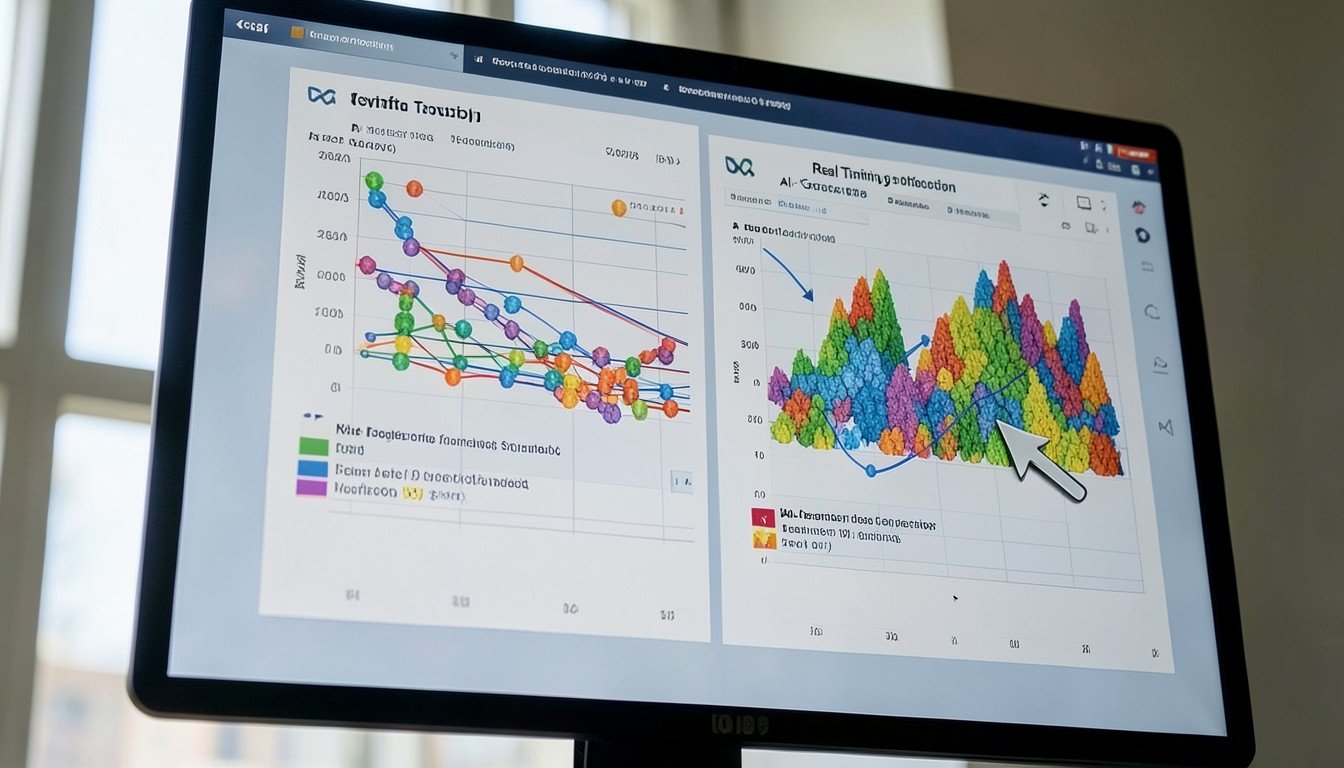
Forget what you know about old-school data augmentation. This Israeli method moves past simple GAN-based approaches, which often struggle with mode collapse by just churning out repetitive noise. Instead, it relies on a tight, iterative feedback cycle that fundamentally changes how we think about using synthetic data for machine learning.
The process follows a disciplined flow:
- Generation: The model creates synthetic samples based on its current understanding.
- Filtering: A separate verifier model scrutinizes these outputs, discarding anything that deviates from ground-truth logic or introduces bias.
- Retraining: The primary model incorporates these verified samples, effectively refining its own weights.
- Repeat: This cycle creates a self-improving loop, ensuring the model grows smarter with each pass.
The verifier model is the secret sauce here. By acting as a strict gatekeeper, it prevents the system from "hallucinating" its own errors into reality, a common failure known as model drift. While older systems simply threw more data at a problem, this setup ensures that synthetic data for deep learning remains grounded in statistical reality. It is a cleaner, more intentional way to build intelligence than just dumping massive, unverified datasets into a black box.
Performance Benchmarks and Early Results
When we look at using synthetic data for machine learning, the excitement isn’t just theory—it’s hitting the benchmarks. While the specific figures from the recent Israeli study are still circulating through the peer-review pipeline, early indicators suggest that models trained on self-generated data are beginning to rival those trained on traditional, human-curated sets.
In the area of natural language processing, researchers are closely watching how these models perform on standard benchmarks like GLUE and SuperGLUE. The goal is to see if synthetic data can maintain the nuance and accuracy of real-world text. Similarly, in image-domain tests—specifically for object detection—the shift toward synthetic data for deep learning is already showing that we can fill gaps where real-world images are scarce or privacy-restricted.
We aren’t just guessing, either. We’ve seen practical validation elsewhere; for instance, institutions like Cedars-Sinai are already demonstrating that synthetic datasets can reflect complex patient profiles with high accuracy and validity. While we wait for the final, verified numbers from the Israeli team to be published, the industry consensus is clear: the precision of these models is rapidly improving, provided the governance remains tight.
Real‑World Use Cases Already Piloted
The practical applications for using synthetic data for machine learning are moving fast. In one notable project, a major US hospital is partnering with researchers to train radiology AI. By generating high-fidelity, synthetic medical images, they can train diagnostic models without compromising patient privacy. This approach helps the system recognize rare anomalies that might be missing from limited, real-world datasets.
In another domain, developers are building an Arabic speech-to-text system. Since high-quality recordings for certain regional dialects are scarce, researchers use generative models to synthesize thousands of hours of speech. This fills the gap for low-resource dialects, making the AI significantly more inclusive.
Autonomous drones are also benefiting. A startup is currently using this method to generate data with ai for flight navigation. By creating millions of virtual flight hours in complex, high-risk environments, they have taught their drones to avoid obstacles in ways that would be too dangerous or expensive to test in the physical world. It is quite similar to how you might experiment with automation on your PC, like How to Make a Windows Desktop Widget Using Claude, to simplify your workflow. These pilots prove that synthetic data for deep learning isn’t just theory—it’s hitting the ground running.
Limitations, Risks, and Open Challenges
While self-generating data sounds like a shortcut to infinite intelligence, it isn’t without significant hurdles. When an AI starts training on its own output, you run the risk of "model collapse." Think of it like making a photocopy of a photocopy; eventually, the details degrade, and the model starts reinforcing its own errors or hallucinations rather than learning from the messy reality of the world.
There is also the persistent issue of bias. If your foundational model has blind spots, synthetic data will likely bake those biases right into the next generation. As noted in informationweek.com, synthetic data is only as good as the oversight behind it. You need strong governance to ensure your generated data isn’t just "accurate-sounding" but actually grounded in reality.
Verification is another bottleneck. As models grow, auditing the quality of their synthetic output becomes increasingly expensive. You are essentially tasked with checking the homework of a machine that is much faster than you. Finally, regulators are watching. Proving the provenance of synthetic data—where the patterns originated and whether they respect privacy standards—remains a legal grey area that companies must handle before going all-in.
How Companies and Researchers Can Adopt the Technique Today
The Israeli research group has released an open-source toolkit on GitHub for those looking to start using synthetic data for machine learning. Because specific hardware requirements depend entirely on the scale of your model, check the repository’s official documentation for the latest system recommendations. Generally, training these models requires significant GPU resources to manage the iterative generation loops, though exact operational costs remain unconfirmed and depend heavily on your specific cloud infrastructure and compute usage.
If you are integrating this into your pipeline, follow this checklist:
- Define your data gaps: Determine which specific edge cases are missing from your real-world datasets that synthetic generation might fill.
- Deploy the toolkit: Access the framework via the researchers’ GitHub repository to begin testing.
- Implement validation: Establish a rigorous testing phase to compare synthetic outputs against your known, real-world statistical patterns.
This method of AI model self-training is a prime example of How AI Is Changing Computer Science and Algorithm Discovery. Even as these tools become more accessible, remember that synthetic data requires careful governance. Experts note that you need strong operational controls to avoid bias and drift, even when the data is machine-generated. Keep your validation loops tight to ensure your results remain accurate.
What This Means for India and Emerging Markets
For India, the ability to generate synthetic data is a massive equalizer. Think about our linguistic diversity—we have dozens of major languages, but digital datasets for many are often thin or non-existent. Indian universities and research labs now have a clear path to build high-quality, multilingual datasets without waiting for massive, costly collection efforts. By using these synthetic techniques, academic institutions can bridge the gap in local language AI.
For our homegrown startup scene, the math is simple: synthetic data cuts overhead. Startups in health-tech or agritech, which often struggle with limited or sensitive patient and crop data, can finally simulate scenarios to train their models effectively. As noted by techtarget.com, synthetic information provides value while mitigating the risks associated with real-world data collection.
However, we need to be smart about policy. We shouldn’t just flood our systems with low-quality fakes. Regulators should focus on mandating strict data-quality standards and transparency audits for any synthetic inputs used in critical infrastructure. If we set these benchmarks early, we don’t just participate in the global AI race; we lead it by ensuring that our models are built on foundations that are both diverse and reliable.
Frequently Asked Questions
How does self‑generating data differ from data augmentation?
Data augmentation typically involves tweaking existing samples, like rotating an image or changing a few words, to increase variety. In contrast, the Israeli method of AI model self‑training allows the system to create entirely new, statistically accurate samples from scratch. It is the difference between rearranging your existing bookshelf and writing brand-new, original books to expand your personal collection.
Can synthetic data replace human‑annotated data completely?
Not yet. While using synthetic data for machine learning is excellent for filling gaps or simulating rare events, it lacks the nuanced "ground truth" that human experts provide. Relying solely on synthetic data for deep learning risks model collapse or bias drift, where the AI amplifies its own errors. Think of it as a helpful assistant, not a total replacement for human judgment.
What hardware is needed to run the self‑training loop?
The hardware requirements for this method are not explicitly detailed in the current research, as they depend heavily on the scale of the model being trained. Generally, using synthetic data at scale requires high-performance computing clusters to handle the iterative process. Official specifications for the specific hardware needed to generate data with AI in this breakthrough remain unconfirmed in public documentation.
Are there any legal restrictions on using AI‑generated data?
Yes, caution is required. Using AI to generate data can introduce regulatory and compliance risks, especially in finance or healthcare. Without strong governance, synthetic datasets might violate privacy standards if they accidentally recreate sensitive real-world patterns. Organizations must ensure that the data they generate with AI complies with existing data sovereignty laws and internal privacy policies before they begin widespread deployment.
Beyond the Hype: What This Means for Your Future
The shift toward AI model self-training is a genuine turning point, but don’t let the excitement blind you to the mechanics. When models start to generate data with AI for their own improvement, the margin for error shrinks. If you’re building or deploying systems, you need to treat these synthetic datasets as carefully as you would raw, sensitive information.
For the massive engineering workforce in India, this opens up huge possibilities for training models without the usual bottlenecks of proprietary data access. Just remember that synthetic data for deep learning is a tool, not a magic fix for poor design. If you want to see how automation can bridge these gaps in your workflow, check out How to Automate Social Media Posts Using Claude to get a sense of how generative outputs can be managed effectively.
Start small. Pick one project where your real-world data is scarce and test how synthetic alternatives impact your accuracy.
Sources and further reading
- Synthetic data is scaling fast. So are the risks — informationweek.com
- Cedars-Sinai Embraces Synthetic Data for Research, Clinical Initiatives — newswise.com
- What to know about synthetic data as a business advantage — techtarget.com



Join the conversation