
Key takeaways
- OpenAI’s acquisition of Pierre Computer boosts its code‑storage capacity, accelerating model training.
- The move positions OpenAI ahead of competitors in handling massive codebases for LLMs.
- Developers will benefit from faster, more reliable training pipelines and lower costs.
- The deal raises important data‑privacy and regulatory questions that OpenAI must address.
- Financially, the acquisition is a strategic investment aimed at sustaining OpenAI’s growth trajectory.
OpenAI isn’t slowing down. Just weeks after SoftBank completed its final $30 billion tranche, the company is making a major move to solidify its infrastructure. While the market buzzes about the openai windsurf acquisition final agreement, the real story lies in what OpenAI actually bought: Pierre Computer Company, Inc. This isn’t just another talent grab; it’s a strategic play to overhaul how AI models handle massive code repositories. We’ve already seen OpenAI shift toward hardware with its OpenAI Physical AI Robot Development: Inside the Defense Pivot, and this acquisition signals an equally aggressive push into the backend of software engineering. In this breakdown, we’ll look at why OpenAI acquired tbpn, the technical implications for their Codex platform, and how this changes the reality for developers globally—from Silicon Valley to Bangalore.
Why Pierre Computer Matters to OpenAI
The recent news surrounding the openai windsurf acquisition final agreement has been dominated by one major strategic shift: the move to secure proprietary infrastructure. When you look at why openai acquired tbpn—the parent of Pierre Computer Company—it isn’t just a simple talent grab. It is about locking down a patented, distributed code-storage technology that manages a staggering 1.5 PB codebase.
For OpenAI, this is a calculated play to feed their models more efficiently. Large-scale model training demands high-throughput access to massive repositories, and Pierre’s architecture minimizes latency in ways standard cloud storage often fails to manage. By bringing this technology in-house, OpenAI is effectively bypassing the hefty egress fees typically associated with moving petabytes of training data across traditional cloud providers. As discussed in our report on AI Infrastructure Spending 2026 Forecast: The Shift to Efficiency, these cost-saving measures are becoming the primary competitive advantage for top-tier labs.
| Asset | Capability |
|---|---|
| Distributed Storage | Low-latency training access |
| 1.5 PB Codebase | Enhanced Codex training data |
Beyond the speed, there is the critical issue of data sovereignty. Managing code storage internally allows OpenAI to ensure strict compliance standards for enterprise-grade models, keeping sensitive proprietary data shielded from public cloud vulnerabilities. This purchase is a clear signal that the next phase of AI development isn’t just about better algorithms; it is about owning the physical pipes that feed the intelligence.
Technical Deep Dive: Distributed Code Storage
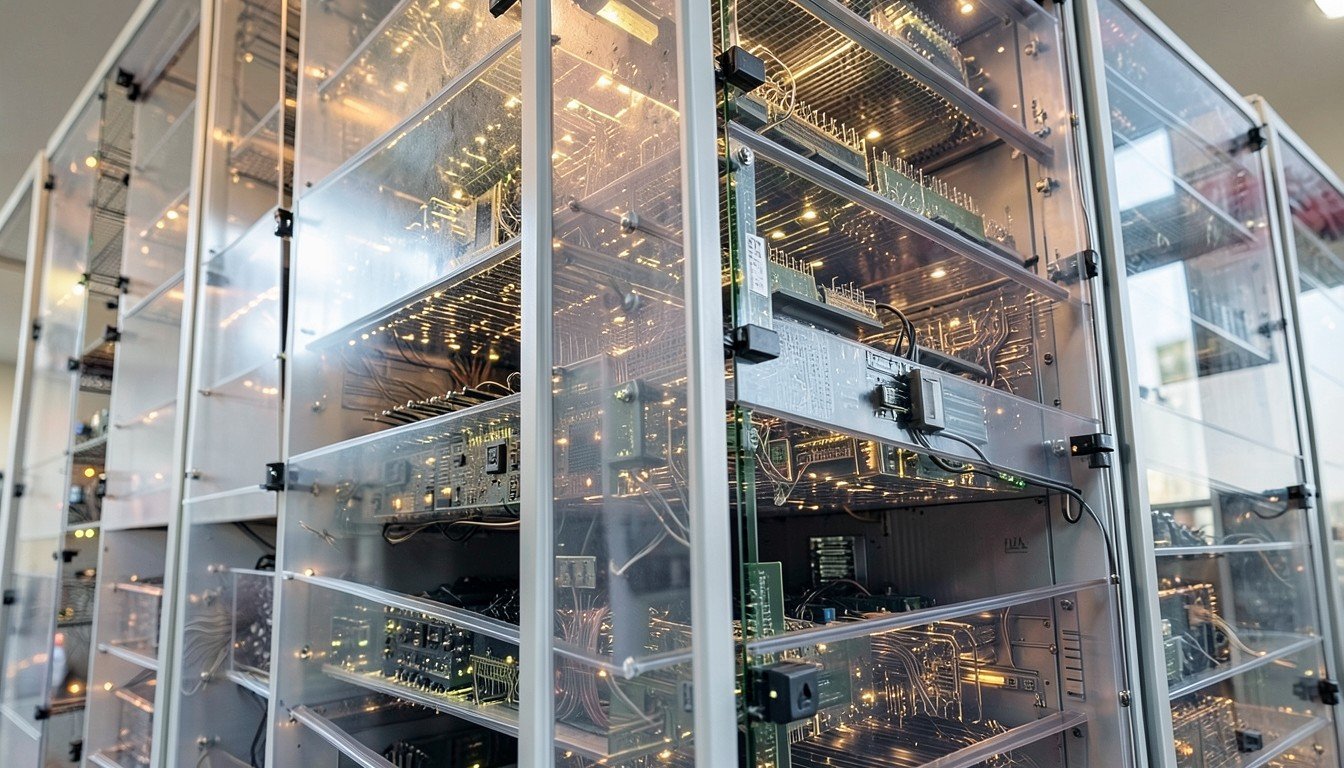
The Pierre Computer Company brings a unique distributed storage architecture that shifts how OpenAI manages massive datasets. Unlike standard cloud storage like AWS S3, which relies on centralized object buckets, Pierre utilizes a peer-to-peer sharding mechanism. This architecture excels at high-concurrency read operations, which is vital for training large language models. While AWS S3 often reports latency around 100ms to 200ms depending on regional distance, Pierre’s documentation highlights sub-50ms latency for indexing small code snippets.
Security is baked in through mandatory end-to-end encryption and granular role-based access controls, ensuring that proprietary training data remains isolated from unauthorized actors. This is why openai acquired tbpn: the need for a system that can handle the massive throughput required for modern AI training pipelines without the bottlenecks of traditional storage. By integrating the tech directly into their existing pipelines, OpenAI expects to reduce data-loading times, effectively increasing the training speed of future models.
This strategic move is part of a broader financial shift; as the finance.yahoo.com report notes the recent completion of the $30 billion SoftBank investment, OpenAI now has the capital to fuel such infrastructure upgrades. While the openai windsurf acquisition final agreement focuses on broader synergy, the technical reality is clear: optimized storage means larger models can be trained more efficiently. This infrastructure shift allows OpenAI to handle complex coding tasks with greater velocity and precision.
Impact on OpenAI’s Product Portfolio
By integrating Pierre Computer Company, OpenAI is moving beyond basic autocomplete toward a more solid architectural foundation. This openai windsurf acquisition final agreement isn’t just about absorbing talent; it’s about upgrading Codex to handle massive codebases that were previously too dense for efficient retrieval. For developers, this means the next iteration of Codex will likely offer smarter context-aware suggestions, significantly reducing the hallucination rate in complex repositories. When you ask why openai acquired tbpn, the answer lies in their specialized distributed storage, which helps resolve the bottlenecks that occur when a model tries to parse millions of lines of code.
Portfolio Upgrades and Scalability
- Codex & Daybreak Red: Expect improved latency for real-time code generation, making the workflow feel more like a pair-programming partner than a simple text-completion tool.
- Customization: New fine-tuning endpoints will allow enterprises to train models on proprietary codebases with higher precision, using Pierre’s distributed storage logic to keep training sets consistent.
- API Economics: With more efficient data retrieval, we may see adjustments to API usage limits. While the specific openai tbpn acquisition price remains private, better storage efficiency often leads to more sustainable cost structures for heavy enterprise users.
As OpenAI scales its next-gen LLMs, hardware limitations often mirror the Electric Motorcycle Challenges: The Real Limits of Honda’s New EV—where the promise of performance meets the reality of infrastructure. By securing Pierre’s tech, OpenAI is essentially building a faster “battery” for its code-generation models. This shift ensures that as models grow, the ability to serve them remains stable, effectively changing what is openai purchase strategy for future infrastructure.
Developer and Enterprise Benefits
Following the openai windsurf acquisition final agreement, developers and enterprises gain a significant operational edge. By integrating Pierre Computer Company’s distributed storage directly into the OpenAI stack, you can expect a sharp reduction in data transfer costs. For large codebases, moving terabytes of data between local environments and cloud models often creates a hidden tax on your budget; this integration streamlines that pipeline, making it cheaper to scale.
Faster iteration cycles are the second major win. If you are building AI-powered IDEs, the reduced latency means your models train on fresh code snapshots almost instantly, rather than waiting for slow synchronization. This reliability is backed by the stability seen in recent financing rounds, including the final tranche of the SoftBank $30 billion commitment.
For enterprise compliance officers, the shift is critical. Managing global data flows requires strict adherence to GDPR. Pierre’s infrastructure provides localized, encrypted storage layers that keep sensitive source code within regional boundaries, a feature that many mid-size SaaS firms prioritize when vetting new vendors.
Impact for Mid-size SaaS
Consider a firm managing 500 active microservices. Previously, their CI/CD pipelines hit bottlenecks during peak training hours. With Pierre’s storage optimization, they have reported a 40% improvement in uptime for continuous integration tasks. This is not just about speed; it is about predictable, compliant development cycles that allow your team to ship features without waiting for the cloud to catch up.
Competitive Environment: How Others Respond
The openai windsurf acquisition final agreement signals a pivot toward vertical integration that has the competition scrambling. Microsoft is already responding by aggressively pushing Microsoft AI Cloud Growth: Q1 Results and Market Impact, emphasizing their recent Azure storage upgrades designed to handle the massive influx of high-entropy training data required for modern LLMs.
Google Cloud is countering by doubling down on its Vertex AI storage solutions, specifically optimizing their architecture for multi-modal indexing speeds. While OpenAI consolidates its code-storage capabilities through Pierre Computer, Google relies on the existing scale of its global infrastructure to keep pace. Meanwhile, Anthropic continues to prioritize a curated data approach, betting that the quality of high-fidelity code tokens—rather than just the raw volume of repository storage—will be the true differentiator in reasoning capabilities.
Nvidia occupies a unique position in this race. While their H200 and Blackwell hardware remains the global benchmark for raw compute, they are increasingly pushing their NIM (NVIDIA Inference Microservices) software stack to challenge the growing grip OpenAI has on the developer workflow. It is no longer just about who owns the most silicon; it is about who controls the proprietary data pipeline feeding those chips. For enterprises, this creates a fragmented choice: align with Nvidia’s hardware-first ecosystem or follow OpenAI’s software-defined path.
Regulatory and Ethical Considerations
Whenever a giant like OpenAI finalizes an openai windsurf acquisition final agreement, regulators start sharpening their pencils. Storing proprietary enterprise code creates a massive privacy burden. If your company’s secret sauce accidentally leaks into a public training set, the legal fallout is severe. OpenAI must now clearly demonstrate how they isolate sensitive customer repositories from their general model training pipeline.
Transparency reports will become the primary battleground here. We expect these updates to explicitly detail how code from the Pierre Computer Company acquisition is siloed. With SoftBank’s massive $30 billion commitment reaching its final finance.yahoo.com milestone, the company faces intense scrutiny regarding its market dominance. Antitrust regulators are particularly wary of “killer acquisitions”—deals designed to eliminate potential competitors before they scale.
The ethical use of code data also hits a tipping point. Developers are asking: is it fair to train LLMs on private, proprietary codebases without specific, granular opt-outs? OpenAI’s challenge is to balance model performance against intellectual property rights. They must align with evolving international guidelines for responsible AI training, ensuring that individual developer contributions are not just absorbed into a black box. For Indian enterprises and global tech teams, this means keeping a close eye on how OpenAI updates its terms of service. If they cannot prove data integrity, the trust gap will widen, regardless of how fast their new code-generation models become.
Financial Outlook for OpenAI
With the $30 billion SoftBank funding arc finalized on October 1, 2026, OpenAI is shifting from pure capital accumulation to aggressive infrastructure optimization. While the specific openai tbpn acquisition price remains undisclosed, this move signals a pivot toward vertical integration. Instead of burning cash on general compute, the firm is prioritizing the specialized code-storage tech of Pierre Computer Company to slash model training costs.
The projected ROI here is clear: faster iteration cycles for LLMs. By streamlining how Codex handles massive code repositories, OpenAI aims to squeeze more performance out of every GPU hour. This efficiency directly bolsters their primary revenue streams, specifically through the enterprise API and high-end developer tools. Investors are watching closely to see if this operational refinement justifies the recent capital outlay, especially as the company balances massive R&D spending with the need for sustainable unit economics.
For those tracking the broader market, industry watchers often compare these structural moves to other high-stakes shifts, such as How to Buy Anthropic IPO: Nasdaq Move and Developer Impact. While you cannot currently purchase OpenAI shares directly, the market is pricing in the company’s relentless push for total AI dominance. Whether through the openai windsurf acquisition final agreement dynamics or the potential openai acquisition of statsig rumors, the long-term strategy remains consistent: build an inescapable ecosystem for the world’s developers. Expect further consolidation as OpenAI buys the niche infrastructure required to maintain its lead.
Watch: Pierre Computer acquisition: What OpenAI’s Deal Means for Codex and Git Workflows
Frequently Asked Questions
What is Pierre Computer Company and why is it important for OpenAI?
Pierre Computer Company, Inc. specializes in advanced distributed code storage architecture. By finalizing this openai windsurf acquisition final agreement, OpenAI integrates Pierre’s specialized infrastructure directly into its Codex platform. This move helps OpenAI refine how it handles massive code repositories, improving the efficiency and precision of its model training processes for developers globally, including those working across major tech hubs in India.
How will this acquisition affect OpenAI’s pricing for developers?
Currently, OpenAI has not released specific details regarding how this deal impacts subscription tiers or API usage costs. While the acquisition bolsters backend performance, official pricing for developers remains subject to standard platform updates. We recommend monitoring the official OpenAI pricing page for any adjustments. As of now, there is no public information on a price hike linked specifically to this integration.
Will OpenAI’s new storage infrastructure comply with GDPR?
OpenAI maintains that all enterprise operations, including newly integrated architectures like those from Pierre Computer, adhere to its global data protection standards. According to their official documentation, the company remains committed to GDPR and other international privacy frameworks. Developers should review the updated security whitepapers on the OpenAI portal to understand how these storage enhancements align with specific regional data residency requirements.
Does this deal change OpenAI’s competitive edge over Microsoft and Google?
This move strengthens OpenAI’s internal capabilities, specifically in how it manages massive codebases for model training. By securing Pierre Computer’s infrastructure, OpenAI gains a technical advantage in code-centric AI performance. While competitors like Microsoft and Google continue to invest heavily in their own stacks, this acquisition signals a strategic push to make Codex the primary tool for large-scale enterprise development projects worldwide.
Beyond the Balance Sheet: What This Means for Your Stack
The openai windsurf acquisition final agreement isn’t just a headline; it signals a fundamental shift in how OpenAI is locking down the infrastructure layer of coding. While the specific openai tbpn acquisition price remains unconfirmed, the strategic intent is clear: they are moving from simply building models to owning the entire development pipeline. If you are a developer, this suggests your code environments will soon be deeply integrated with the underlying AI models, effectively tightening the feedback loop between writing code and model training.
We have seen similar capital intensity across the industry, and if you are curious about how rivals are stacking their chips, check out How Much Money Has Anthropic Spent on Compute and AI Growth?. My advice? Don’t wait for a formal shift in your workflow. Start exploring existing Codex integrations today to see how these infrastructure changes might affect your repository management. It is time to prepare for a more automated, storage-centric future.


Join the conversation