Key takeaways
- AI-driven address resolution significantly reduces delivery failures and operational costs for Indian e-commerce.
- Standardizing messy, landmark-based addresses is critical for scaling operations in Bharat.
- Small businesses should focus on data quality and security compliance when adopting AI logistics tools.
- Predictive analytics, powered by clean address data, allows for more efficient routing and faster delivery times.
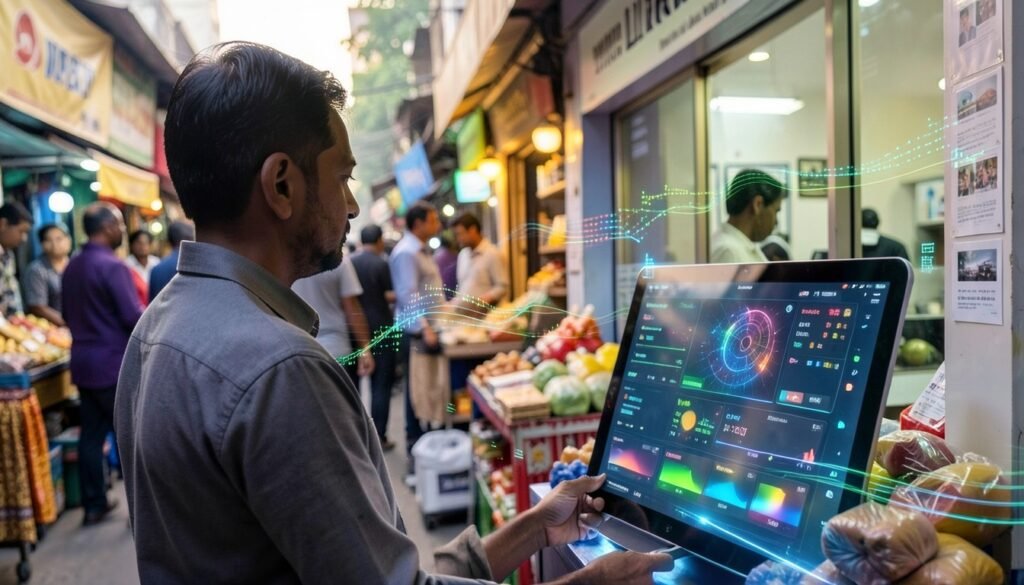
Imagine a delivery rider in a crowded lane in Bengaluru, staring at a phone screen that just says "Near the blue gate, behind the big banyan tree." For years, this was the standard hurdle for Indian e-commerce. But now, we are seeing a shift. AI logistics India is finally moving from buzzword to utility, helping companies make sense of these complex, unstructured addresses.
According to analyticsinsight.net, software is no longer just for record-keeping; it is now the brain behind route planning and shipment visibility. In this piece, we will look at how firms like Snapdeal use AI to turn vague descriptions into precise coordinates. It is not just about fancy tech—it is about efficiency that reaches Bharat. If you want a different kind of speed, check out this BMW F 450 RR India Preview: Specs, Price, and Rivals, but here, we are focusing on how smart routing saves your bottom line.
The Cost of Messy Addresses in Indian Logistics
If you’ve ever tried explaining your location to a delivery partner in India, you know the drill: "Take a left at the blue gate, go past the old banyan tree, and look for the house with the green roof." Our addresses aren’t just strings of data; they are creative, landmark-based descriptions that defy standard international formats. Trying to process this manually across thousands of orders isn’t just inefficient—it’s a business-killer.
When an address is ambiguous or a PIN code has a single typo, your shipment doesn’t just arrive late. It often bounces back to the warehouse, racking up return shipping costs and eroding your margins. For a small business owner, that one digit error can delay a delivery by three to four days, turning a happy customer into a cancellation.
Manual verification simply cannot keep up with the volume of modern Indian retail. As operations grow, companies are turning to How Indian SMEs are Using Voice AI to Cut Costs and Grow Sales to handle the surge. You need systems that understand regional nuances, not just rigid templates that break the moment they encounter a local script or a vague landmark.
How AI Models Interpret Unstructured Data
In India, an address is rarely a simple line of text; it’s often a narrative. "Third house after the big banyan tree, near the green gate" is a classic delivery nightmare for any logistics manager. Natural Language Processing (NLP) models now ingest these fragmented, unstructured strings to identify key entities—like PIN codes, building names, or local landmarks—and standardize them into a usable format.
Once the AI parses the raw text, machine learning models get to work. They compare this input against massive, verified geospatial databases. If a customer types "Sector 15, Gurgaon" but omits the specific building number, the system cross-references historical delivery success data to suggest the most likely coordinate match. It essentially converts vague, human-centric descriptions into precise latitude and longitude markers that a delivery rider’s app can actually plot. As we look at how we build our infrastructure, these digital layers are becoming just as critical as the physical roads themselves.
For you as a founder, the best way to help your engine is to fix the mess before it starts:
- Implement auto-complete: Use location APIs at the checkout page to force address validation.
- Incentivize precision: Offer small loyalty points or discounts if a user selects a verified location from a map pin.
Prioritizing clean data entry at the point of sale isn’t just about efficiency; it saves your team the significant headache of manual rerouting later.

Beyond Logistics: AI in Customer Experience
Ever wonder why your customer support team is drowning in "Where is my order?" queries? In India, an address is often a set of directions rather than a precise location—"near the blue gate, behind the tea shop." When AI resolves these messy, unstructured inputs into precise coordinates, it does more than just help a delivery rider; it kills the WISMO ticket before it’s even born.
By proactively correcting addresses before a parcel leaves the warehouse, you aren’t just saving on fuel. You’re building a foundation of reliability. When a package arrives exactly when promised, the customer’s trust spikes. This isn’t just theory; it’s how you turn a one-time buyer into a loyal patron. For companies looking to scale, adopting a ServiceNow AI Workflow Factory: Real ROI for Indian Enterprises can help manage these automated interactions, ensuring your team focuses on high-value problems rather than status updates.
AI-driven delivery updates are the new baseline for customer experience. Instead of static tracking links that rarely update, customers now receive real-time, context-aware notifications. This level of transparency is essential in a market as competitive as ours. When you remove the friction of the "last mile," you’re not just delivering a product; you’re delivering a superior brand promise. In a country where every rupee of acquisition cost matters, that loyalty is exactly what keeps your business growing.
Building for Bharat: Language and Context
Building for Bharat isn’t just about translation; it’s about understanding the chaotic beauty of an Indian address. In smaller towns, you won’t find standardized street naming. Instead, you get landmarks—a tea stall, a temple, or a specific gate color. If your AI model only understands English, it’s effectively blind in these markets.
True address resolution requires models trained on local naming conventions and dialects. When a customer writes "opp. SBI ATM" or "near PWD office," the system must know exactly what that means in that specific PIN code. This contextual intelligence is becoming a priority for e-commerce, especially as voice AI gains momentum. As noted in a recent report, firms are already seeing significant cost reductions by deploying multilingual voice agents, and the same logic applies to logistics data. By recognizing regional abbreviations—like "rd" for road or local suffixes for apartment blocks—AI can turn an unstructured, messy string of text into a precise geo-coordinate.
Don’t just trust the training data your vendor provides. Before you go full-scale, take a weekend to test your address resolution tool with real-world inputs from your target region. If you’re targeting tier-2 cities in Maharashtra, feed it addresses written in Marathi or with local Marathi-English transliterations. If the AI can’t resolve a local landmark that every rickshaw driver knows, it isn’t ready for Bharat.
The ROI of Smarter Routing
In Indian logistics, every kilometer saved is money kept in your pocket. When AI systems clean up messy address data, the primary win is route optimization. Instead of a driver circling a neighbourhood looking for a house that does not exist on the map, precise coordinates allow for direct, fuel-efficient paths. It is simple math: less time spent idling in traffic means lower fuel consumption and more successful deliveries per shift.
Then there is the Return to Origin (RTO) problem. Every time a package bounces back, you are effectively eating the shipping cost twice. By verifying addresses before the shipment even leaves the warehouse, you slash these failed attempts. While some might wonder if we are ready for How Indians Might React to Humanoid Robots in Public Spaces, the current ROI for AI address verification is already crystal clear. You are not just paying for software; you are paying to stop bleeding cash on logistics errors.
Consider a small business shipping 1,000 orders a month. If 5% fail due to bad address data, that is 50 RTOs. If each failed delivery costs you ₹200 in logistics overhead, you are losing ₹10,000 monthly. Implementing an AI-based verification tool that costs, say, ₹2,000 a month pays for itself five times over. Manual intervention, where staff spends hours calling customers to clarify addresses, is a hidden tax on your growth that you simply cannot afford.
Security and Data Privacy for SMEs
When you start plugging AI into your logistics, you’re handling more than just coordinates—you’re managing your customers’ private home addresses. For an SME, this data is your gold, but it’s also a significant liability. As firms lean into analyticsinsight.net for smarter route planning, you must ensure your third-party AI partners aren’t treating your customer database as a training playground.
First, prioritize local data residency. If your AI vendor stores data on servers outside India, you could be asking for regulatory trouble. Always ask: "Where is the data being processed?" If it isn’t compliant with Indian data protection regulations, walk away. You don’t need the legal headache or the risk of a breach.
When you start fine-tuning your own address models, bake privacy into the foundation. Use synthetic data for testing so your actual customer records remain untouched. This "privacy by design" approach keeps your proprietary insights safe while the model learns the specific nuances of local delivery patterns.
Vendor Audit Checklist
Before you sign any agreement, ask these three questions to protect your business:
- Do you delete customer-specific location data immediately after the delivery is confirmed?
- Are you using my data to train your base models without my explicit, written consent?
- Can you provide a SOC2 or equivalent security certification for your data handling?
If a vendor gets twitchy when you ask these, they aren’t the partner you need. Trust your gut—and your compliance officer.
Future-Proofing Your Supply Chain
Most logistics firms still fix problems after they happen. You need to stop reacting to delayed shipments and start predicting them. By feeding historical delivery logs into AI models, you can spot patterns—like which routes in Bangalore consistently fail during monsoon season—before the first rain hits. It is about turning static records into live intelligence.
Predictive systems do not just look at history; they ingest live variables. If a localized protest in a Tier-2 city or an unexpected road closure pops up, your AI should suggest a reroute before your driver even hits the traffic. This is the difference between a satisfied customer and a lost order.
You do not have to build every tool from scratch. Partnering with platforms that provide deep geospatial data or established AI infrastructure is often smarter than going solo. Accessing public data layers or specialized mapping APIs helps you bridge the gap between "good enough" and "precision delivery."
Don’t try a massive, expensive system overhaul. Start small. Pick one bottleneck—like address parsing or final-mile routing—and run a pilot. If you are curious about broader automation, How Voice AI is Moving Indian Companies from Pilot to Profit shows how phased adoption minimizes risk. A focused pilot lets you measure the ROI on a few thousand shipments before you scale to your entire network. It keeps your cash flow safe and your team focused.
Implementation Roadmap for Small Businesses
You don’t need a massive tech budget to start cleaning up your delivery data. If you’re running a small operation, start by integrating an address verification API directly into your checkout page. First, pick a provider that actually understands Indian geography—standard global tools often fail here. You specifically need systems that map to local PIN codes and recognize landmarks, not just street names.
Here is your quick integration path:
- Audit your current checkout form for common address entry errors.
- Select an API that offers autocomplete specifically for Indian addresses.
- Run a pilot test for 100 orders to see if the system correctly identifies those "behind the blue gate" or "near the old temple" type instructions.
Once you go live, track these three metrics to see if your investment is paying off:
- Reduction in delivery errors: Are significantly fewer packages returning to origin?
- Support ticket volume: Are customers complaining less about missed delivery attempts?
- Average time-to-delivery: Is your logistics speed improving for those specific PIN codes?
If you want your AI tools to actually work, you must fix your data at the source. Don’t just rely on software to patch mistakes; train your staff to prioritize accurate input from day one. As discussed in msn.com, building modern infrastructure requires a human-centric approach. Garbage in, garbage out—no matter how smart your algorithm is, it can’t fix bad data. Keep it clean, keep it simple, and watch your logistics costs drop.
Watch: Episode 29 – How AI is Transforming Logistics in India | Real Use Cases, AI Agents & Optimization
Frequently Asked Questions
What is AI address resolution and why does it matter for Indian businesses?
AI address resolution transforms vague, non-standard Indian addresses into precise geocoordinates using machine learning. In a country where road names often change and house numbers are inconsistent, this is a lifesaver for efficiency. By cleaning data, businesses minimize delivery failures and speed up routing. As noted in this Analytics Insight report, these tools are no longer optional—they are essential for modern supply chains.
How does AI handle landmark-based addresses common in India?
AI models are trained on billions of location pings to recognize local context, like "near the old banyan tree" or specific building landmarks. Platforms like Delhivery use data from over 4 billion deliveries across 18,800+ PIN codes to map these non-standard descriptions to real coordinates. It’s about teaching software to think like a local delivery rider who knows the neighborhood inside out.
Can small businesses afford to implement AI-based logistics tools?
You don’t need a massive R&D budget to start. Many firms now use hybrid models—partnering with tech providers or using existing APIs to plug into their own systems. According to a Nasscom-Krisp report, 61% of firms reported cost reductions exceeding 20% by using AI tools. Start small by automating one piece of your workflow before scaling across your entire operation.
What are the privacy risks of using AI for customer address data?
When you process customer locations, you are handling sensitive personal data. The biggest risk is improper data storage or unauthorized access during API calls. Using government-backed platforms like ULIP, which connects 142 APIs across central ministries, provides a more structured and secure way to exchange shipment data. Always ensure your tech partners follow strict encryption standards and data protection protocols to keep customer information safe.
Your Path to Logistics Efficiency
You don’t need a massive R&D budget to benefit from smarter logistics. Start by auditing your current "failed delivery" rate; if it’s above 5%, your address resolution process is likely costing you more in re-delivery fees than a subscription to a location intelligence API would.
Think of this shift like the auto industry’s move toward local manufacturing. Just as Audi’s First Made‑in‑India EV: What It Means for Indian Buyers signals a shift in premium efficiency, your supply chain needs to adapt to the reality of Indian PIN codes.
My advice? Start small. Don’t try to build a proprietary AI engine from scratch. Instead, integrate existing government APIs like ULIP or partner with logistics providers that offer plug-and-play address verification tools. Improving your data quality today is the cheapest way to boost your bottom line tomorrow.
Sources and further reading
- How AI and Digital Tools are Changing Logistics Operations in India — analyticsinsight.net
- Voice AI Gains Momentum In India As 61% Of Firms Report Over 20% Cost Reduction, Says Nasscom-Krisp Report — freepressjournal.in
- Why India Needs More Young Infrastructure Leaders In The AI Age — msn.com