

Key takeaways
- The new platform offers a fully open‑source hardware‑software stack, cutting entry cost to under ₹ 2 million.
- Indian makers can source most components locally, reducing lead times and import duties.
- Academic labs can use the robot for cutting‑edge gait research without licensing hurdles.
- Startups can build niche service robots faster and cheaper than buying proprietary units.
- Community support and Indian‑specific tutorials are emerging, making adoption easier.
Imagine standing at a booth at IROS 2026, watching a stranger walk up and deliberately kick a humanoid robot in the shin. Instead of toppling over, the machine just absorbs the force, catches its balance, and remains upright. This isn’t a high-budget movie effect; it’s the reality of the RP1, a new open source humanoid robot from RoboParty that was recently unveiled to the global community.
For Indian researchers and startups, this shift is a massive deal. We are finally moving away from closed-box proprietary systems that drain budgets without offering flexibility. In this piece, I will break down how the RP1’s hardware and software stack actually functions. We’ll also discuss what this means for our local labs and whether these tools might influence how India’s AI regulation will shape jobs, ethics and gender equality. Grab a cup of chai, because we are getting into the real nuts and bolts.
What the robot is and why it matters
Imagine standing in a lab, shoving a humanoid robot, and watching it stumble but stay upright instead of crashing into a heap. That is the reality RoboParty just showed off at IROS 2026 with their new RP1 biped. It is a full-stack open-source machine, meaning the mechanical hardware, Romomo actuators, and the PartyOS software stack are all accessible for you to study or modify. While we do not have confirmed dimensions on its exact height or maximum payload capacity yet, the 160 Nm peak joint torque suggests it is built to handle dynamic, real-world movement.
Why does this matter for you? For years, high-end robotics felt like a gated community. If you are a researcher at an IIT or a startup founder in Bengaluru, paying for proprietary black-box licenses is a massive financial hurdle. By releasing the RP1 under permissive licenses, RoboParty is handing the keys to the kingdom to anyone with a set of tools and some coding skills. It is a stark contrast to closed systems like Boston Dynamics’ New Robot Hand: What It Means for Indian Factories, which are impressive but remain locked behind corporate walls. This shift toward open-source bipedal hardware is the exact kind of transparency we need to kickstart serious robotics work in India.
Hardware deep‑dive: actuators, sensors and chassis
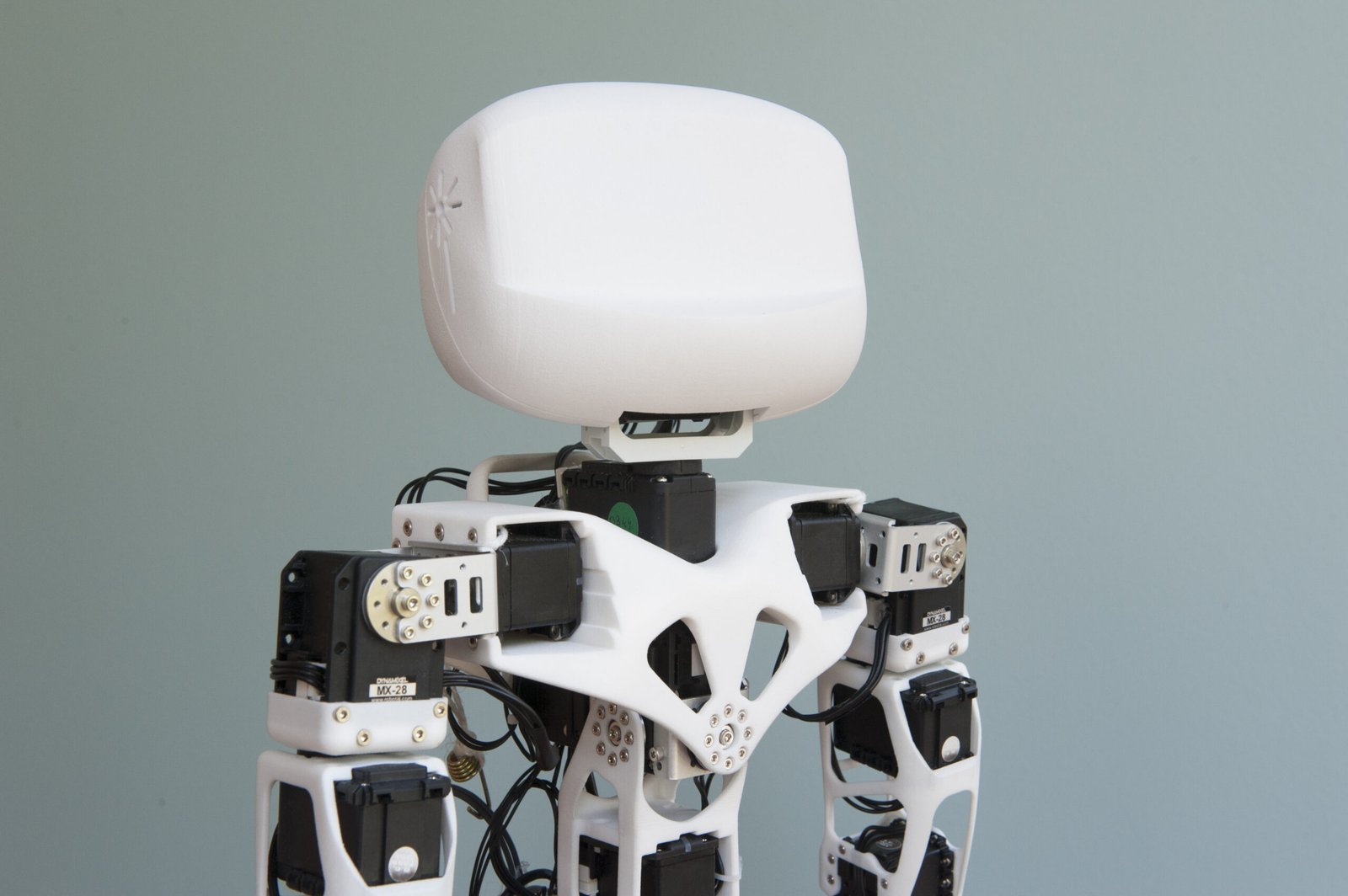
The RP1 is a beast under the hood. Unlike the proprietary black boxes we see from Boston Dynamics, this platform is built to be taken apart. At its heart lie the Romomo actuator modules, which are essentially high-torque brushless DC motors built specifically for dynamic bipedal movement. Packing a peak joint torque of 160 Nm, these actuators are the secret sauce behind the robot’s ability to recover from a physical shove.
As reported by streetinsider.com, the system relies on a capable sensor suite. You get a high-frequency IMU for spatial awareness, force-torque sensors in the feet for ground contact, and high-resolution joint encoders. While LiDAR isn’t integrated into the core chassis, the open frame design—utilizing a mix of aluminium extrusions and 3D-printed modular components—makes adding external sensors a breeze.
For a DIY enthusiast in India, sourcing these parts is the real hurdle. If you were to replicate this build using similar high-end components, you’d likely be looking at a cost well north of ₹15-20 lakh, depending on the controller hardware. That’s still a fraction of the cost of a commercial Atlas, and you actually get the schematics to fix it yourself over a weekend.
Software stack: from perception to control
The brain behind the RP1 isn’t just one piece of code; it’s a full-stack architecture built on PartyOS. This system leverages ROS 2 for its middleware, which is excellent news for anyone already familiar with standard robotics development. If you want to dig into the guts of the machine, you can pull the locomotion algorithms directly from their GitHub repository. The next frontier for AI is the physical world.
The core of the movement logic is the UFO framework, an unsupervised reinforcement learning engine that handles everything from skill transitions to recovering from a nasty shove. Unlike rigid, pre-programmed paths, this approach lets the robot learn how to balance dynamically. For those of us in India, you don’t need a massive workstation to get started. You can flash the firmware or update your robot’s movement policies using just a standard mid-range laptop—most modern machines running Ubuntu or a WSL2 environment will handle the task over a simple USB-C connection.
Community contributors are already pushing modules for vision and manipulation, so you aren’t stuck reinventing the wheel. Whether you are tuning balance parameters or adding a new sensor to the stack, the barrier to entry is finally dropping for local makers.
Getting started: building your first prototype in India
If you’re looking to bring the RP1 to life in your workshop, the barrier to entry is lower than you think. Since the design is open-source, you can source your structural components locally. Start by downloading the chassis files from electronicsforu.com and sending them to a local 3D printing service like Printo. For smaller brackets and custom mounts, check the active Indian maker community on platforms like Thingiverse.
Before you power up, follow this assembly checklist:
- Verify every Romomo actuator joint moves freely without mechanical binding.
- Secure all internal cabling with zip ties to prevent snags during dynamic movement.
- Double-check your ground connections to avoid static interference with the sensors.
For your initial power tests, don’t jump straight to expensive, high-discharge Li-ion packs. Instead, use a cheap 12V lead-acid battery. It provides a stable, forgiving current that won’t fry your circuits if you make a wiring mistake. When you run your first calibration routine, watch the joint feedback closely; if the motors whine or jitter, stop immediately. Beginners often overlook heat dissipation, so ensure your control board has adequate airflow. Once your motion loops are stable, then transition to more compact power solutions. Take your time—a stable robot is built on patience, not just code.
Academic and research use‑cases
Imagine a lab at IIT Madras where researchers are finally moving past simulations to test real-world gait stability on the RP1. By using this open-source platform, the team can dig into the Romomo actuators’ 160 Nm torque to study how robots recover from unexpected stumbles—a massive leap from the rigid, pre-programmed gait patterns we have been stuck with for years.
Beyond just walking, this hardware opens doors for:
- Dynamic balancing and fall recovery studies.
- Dexterous object manipulation using the integrated RP Hand.
- Human-robot interaction trials that look at how machines react to social cues.
For funding, Indian labs can leverage DST SERB grants specifically aimed at advanced robotics, or partner with domestic startups for industry-academia projects. Crucially, the open-source nature removes the licensing headache that usually stalls academic publishing. You do not need to worry about proprietary black boxes when you are trying to share your findings. It is worth noting that biases can creep into these systems too, much like Why Female AI Agents Earn Less – New Research Explained, so having an open, transparent stack is vital for anyone auditing the underlying logic before it hits a public paper.
Startup opportunities and commercial angles
The RP1, recently highlighted on msn.com, changes the entry barrier for Indian startups. If you’re looking to build service robots for hospitality or healthcare, the base platform offers a massive shortcut. Imagine a concierge bot in a Bangalore co-working space that actually handles stairs or uneven surfaces, not just flat office floors.
The economics shift drastically here. While proprietary imported units can run you ₹10-12 million, an RP1-based setup could cost roughly ₹2-3 million. That’s a massive saving for a bootstrapped team. However, keep your paperwork ready. You must manage BIS safety standards for electrical components and DGFT import regulations for specific actuator modules.
Here is a quick look at the financial edge:
| Platform | Estimated Cost |
|---|---|
| Proprietary Humanoid | ₹10-12 Million |
| Open-Source RP1 Setup | ₹2-3 Million |
By focusing on software layers—like specialized AI for bedside assistance or retail inventory scanning—startups can differentiate without reinventing the mechanical wheel. Just remember, once you move from a lab demo to a commercial lobby, you’ll need to handle the compliance side of things early to avoid expensive redesigns later.
Challenges and the road ahead for Indian adoption
Getting the RP1 running in an Indian lab isn’t just about hardware; it’s about logistics. We face a significant supply-chain gap for the specific high-torque servos and low-latency controllers that make this bipedal machine stable. Without easy access to these components locally, importing parts often feels like a gamble. Beyond hardware, we need localized technical documentation and Hindi-language tutorials to lower the barrier for engineering students across tier-two cities.
The project’s roadmap looks promising, with plans for higher payload capacities, modular hands, and cloud-based simulation. This shift toward cloud tools might remind you of how we currently Build Browser Games with AI Prompts: A Practical Guide for Indian Creators, where digital abstraction handles the heavy lifting.
If you are planning to build, don’t try to solve every kernel panic alone. My best advice? Join the official global Discord community immediately. It is the fastest way to get real-time help from developers who have already hit those same build-time errors. Relying on this community-driven knowledge base is crucial when official support channels are halfway across the world.
How the open‑source model could reshape India’s robotics ecosystem
The open-source nature of platforms like the RP1 is the jolt Indian engineering needs. Instead of relying on expensive, proprietary imports from abroad, our colleges can finally get their hands on a full-stack system to train the next generation of roboticists. By studying the architecture detailed at streetinsider.com, students can transition from theoretical simulations to building real, walking machines.
This shift aligns perfectly with "Make-in-India." If we start manufacturing custom actuator modules domestically, we move from being mere assembly points to high-tech exporters. Imagine a local startup designing a specialized vision-based navigation module for the RP1; that is where the real value lies. Our software talent is world-class, and linking that expertise with open-source hardware creates a clear path to commercializing humanoid tech.
If we play this right, we stop playing catch-up. We could see a home-grown humanoid industry emerge that doesn’t just adapt foreign tech but exports its own innovations globally. It is not just about building robots; it is about owning the entire stack—from the low-level torque control to the high-level perception algorithms. That is how we turn our massive engineering talent pool into a global competitive advantage.
Watch: ROBOTO Origin: Fully Open-Source Bipedal Humanoid Robot
Frequently Asked Questions
What is the price of the open-source bipedal robot in India?
Right now, there isn’t a confirmed price tag for the RP1 in India. RoboParty hasn’t released an official INR figure for the hardware kit yet. Because it is an open-source platform, the total cost will likely depend on whether you source components locally or import the Romomo actuator modules directly. Keep an eye on their official development portal for pricing updates.
Can I use the robot for commercial services without paying royalties?
The RP1 is marketed as a full-stack open-source platform, which usually encourages wider adoption. However, "open source" does not always mean free for commercial use. You will need to check the specific license attached to the PartyOS and the hardware schematics before launching a service. Always verify if the license requires you to contribute your own improvements back to the community project.
What are the minimum technical skills needed to assemble the robot?
Building the RP1 isn’t like assembling a basic hobby drone. You need a solid grasp of mechanical engineering to handle the Romomo actuators, plus experience with real-time motion control systems. Since the software runs on PartyOS using the UFO framework, being comfortable with reinforcement learning and Linux-based robotics development is essential. It is a serious project for experienced engineers or researchers.
How does the robot’s performance compare with Boston Dynamics Atlas?
Comparing the RP1 to the Boston Dynamics Atlas is like comparing a lab prototype to a production-grade machine. Atlas is an industry-hardened platform with decades of R&D, while the RP1 is designed for researchers to experiment with embodied AI and dynamic recovery. Its 160 Nm peak torque is impressive for a dev platform, but it is meant for innovation, not industrial automation tasks.
Scaling Bipedal Robotics in India
The RP1 isn’t just another shiny prototype; it is a shift in how we approach bipedal hardware. By making the full stack open-source, RoboParty is effectively handing the keys to Indian startups and university labs that have been priced out of proprietary platforms for years. However, the real hurdle here isn’t just the software—it’s the manufacturing logistics. Sourcing high-torque actuators locally remains a significant pain point, though we have seen how quickly tech hardware adoption moves here, much like how the OnePlus Nord CE4 Launches in India: Faster Charging and Sleek Design became a staple for local enthusiasts by balancing specs and cost.
If you are a developer, stop waiting for a commercial unit to land in your inbox. Download the PartyOS documentation, join the community forums, and start simulating your first movement policies today. This is how you build an ecosystem from the ground up.
Sources and further reading
- New RP1 humanoid for open-source robotics research unveiled by RoboParty — msn.com
- RoboParty RP1 Targets Open Humanoid Robotics With AI — electronicsforu.com
- RoboParty Unveils RP1, a High-Performance Full-Stack Open-Source Humanoid Robot at IROS — streetinsider.com
Discussion