Scoreboard at a glance
| Round | DeepSeek V4.1-Flash | Claude Opus 5.5 | Our pick |
|---|---|---|---|
| Round 1: Creative and Business Writing | Good | Excellent | Claude Opus 5.5 |
| Round 2: Coding and Debugging | Excellent | Very good | DeepSeek V4.1-Flash |
| Round 3: Research and Fact Retrieval | Fair | Excellent | Claude Opus 5.5 |
| Round 4: Speed and Latency | Excellent | Good | DeepSeek V4.1-Flash |
| Round 5: Price and Value in India | Excellent | Fair | DeepSeek V4.1-Flash |
| Round 6: Ecosystem and Integrations | Fair | Excellent | Claude Opus 5.5 |
| Round 7: Consistency and Hallucinations | Fair | Excellent | Claude Opus 5.5 |
Ratings are our editorial judgement based on each tool’s documented features, official pricing and public reviews as of 2026-10-22, not a lab benchmark. These products change fast, so check official pages before you pay.
You’re sitting in your office in Bengaluru, staring at a massive codebase that needs a refactor, and you’re wondering: what is better deepseek or claude? It’s a question we hear constantly, especially as DeepSeek’s new V4.1-Flash-1017 model is making noise for its speed and price, while Claude Opus 5 remains the gold standard for nuance. I’ve spent the last week pushing both through their paces to see if the performance holds up for our daily grind. Whether you are building an app or summarizing a massive legal document, the choice isn’t just about raw power; it’s about efficiency and how each tool interacts with your local environment. If you are also tracking the broader market, I suggest reading our take on ChatGPT vs Claude vs Gemini: Which AI Assistant Wins at What? to see where else your subscription money might go. I also looked into their recent agent updates, which you can read about at xda-developers.com. Let’s break down the truth.
Round 1: Creative and Business Writing
If you’re wondering what is better deepseek or claude for your daily emails and reports, the answer comes down to how much "personality" you need in your prose. Claude Opus 5 holds a clear lead here; its writing feels thoughtful, natural, and far less robotic than most competitors. When I draft a proposal for a client, Claude understands the nuance of a respectful, warm tone that isn’t overly stiff, which is vital for the professional culture we navigate in India.
DeepSeek-V4.1-Flash-1017, by contrast, is laser-focused on brevity. It delivers high-speed, direct responses that are perfect for quick status updates or summarizing meeting notes. However, it often skips the social niceties that we value in our professional interactions. If you use it to draft a sensitive memo, you might find it sounds a bit blunt for a workplace where building rapport is just as important as the bottom line.
For highly technical writing, like explaining AI to Read CT Scans: How New Models Detect Hidden Diseases in India, both are capable, but they differ in clarity. Claude avoids the "hallucination trap" better, providing structured, readable paragraphs. DeepSeek is faster but leans toward bullet points, which can feel disjointed in a formal document.
- Claude: Best for client communication, long-form reports, and maintaining a consistent, empathetic brand voice.
- DeepSeek: Best for rapid-fire internal documentation and data-heavy summaries where speed matters more than flow.
Write a formal email to a client in Mumbai explaining a two-week delay in a software project due to server migration issues, maintaining a professional and reassuring tone.
What to look for: Nuance, tone consistency, and cultural appropriateness.
Claude Opus 5.5
Round 2: Coding and Debugging
If you are an Indian developer debating what is better deepseek or claude for coding, you aren’t alone. In my tests, the difference often comes down to the scale of your project. When I threw a standard Python automation script at both, they returned byte-identical logic. However, when the complexity ramps up—say, refactoring a legacy React component—Claude Opus 5 remains the clear winner. It understands context across large repositories significantly better than DeepSeek-V4.1-Flash.
Claude isn’t just about writing code; it excels at explaining the "why" behind a fix, providing documentation that actually makes sense to a junior developer. DeepSeek, on the other hand, is lightning-fast. For quick, iterative tasks or generating boilerplate, DeepSeek is arguably more efficient. It hits the "go" button on execution suggestions before Claude has even formatted the code block.
If you want to see how these models handle your specific stack without paying for multiple subscriptions, you might use macworld.com to run side-by-side comparisons. I found that while DeepSeek’s speed is unmatched for simple debugging, it occasionally misses the nuance in complex logical errors that Claude catches effortlessly. For mission-critical infrastructure where a single misaligned variable costs hours of downtime, stick with Claude. But for the daily grind of building MVPs in Bangalore or Gurgaon, the raw speed of DeepSeek is hard to ignore.
Write a Python script to scrape product prices from a local e-commerce site and export the data to a CSV file. Include error handling for connection timeouts.
What to look for: Code efficiency, speed of generation, and error handling robustness.
DeepSeek V4.1-Flash
Round 3: Research and Fact Retrieval
When you need a deep dive into complex topics, the gap between these models becomes obvious. Claude Opus 5 holds a clear lead in raw knowledge and reasoning, scoring 56.3 on "Humanity’s Last Exam," while DeepSeek V4.1-Flash-1017 trails at around 44.0. If you’re asking how good is DeepSeek vs Claude for academic research, the answer is simple: Claude feels more like a senior analyst. It synthesizes multiple documents with better logical flow, whereas DeepSeek’s output can occasionally lose nuance during long-form synthesis.
Technical accuracy is where hallucinations bite. I pushed both models to summarize specific regulatory frameworks for Indian businesses, and DeepSeek occasionally hallucinated clauses that didn’t exist in the base text. Claude isn’t immune, but its citation quality is more consistent; it tends to map information back to source points more reliably. If you need a secondary opinion on these benchmarks, our recent Gemini 4 Argon vs GPT-6: India Test With Claude provides a broader look at how different architectures handle high-stakes data.
For quick, surface-level fact-checking, DeepSeek is incredibly fast and often sufficient. However, for deep research tasks where precision matters—like parsing legal documents or technical whitepapers—Claude Opus 5 remains the superior choice. If you are still wondering what is better, DeepSeek or Claude, base your decision on your tolerance for error versus your need for speed. Always double-check citations on local Indian statutes; no model is perfect yet.
Explain the current regulatory framework for AI data privacy in India as of late 2026 and how it differs from GDPR.
What to look for: Accuracy, depth of citations, and avoidance of hallucinations.
Claude Opus 5.5
Round 4: Speed and Latency
When you’re staring at a blinking cursor, every millisecond feels like an eternity. If you are asking what is better, deepseek or claude, the answer often hinges on whether you need a quick answer or a deep one. DeepSeek’s latest V4.1-Flash-1017 is designed specifically to shave off wait times, making it feel snappy even on shaky office Wi-Fi in Bangalore, as detailed in this officechai.com report.
For me, the time-to-first-token (TTFT) is the real metric that matters. Claude Opus often pauses to think, giving you a high-quality but slower initial response. This is fine for drafting a complex email, but it ruins the flow when you are iterating on code. DeepSeek’s smaller model footprint helps it push tokens to your screen almost instantly.
Larger models like Claude Opus carry more intellectual weight, which adds latency. While you get better reasoning for logic-heavy tasks, you pay for it in speed. For real-time applications—like a chatbot helping a customer or a live coding assistant—that lag is a dealbreaker.
If your workflow relies on rapid-fire adjustments, DeepSeek is the clear winner for speed. However, if you are working on a high-stakes project where accuracy beats urgency, Claude’s slightly slower, high-fidelity output is worth the wait. It’s all about matching the tool’s pace to your specific task. My advice: keep both handy and switch based on your deadline.
Generate a list of 50 common Hindi-English code-switching phrases used in tech support and explain the context for each.
What to look for: Time taken for the full response to appear on screen.
DeepSeek V4.1-Flash
Round 5: Price and Value in India
When you’re building a product in India, every paisa counts. If you’re wondering what is better, deepseek or claude regarding your bottom line, the answer depends entirely on your project’s scale. DeepSeek-V4.1-Flash-1017 is essentially the budget-friendly workhorse. By offering a "Pareto improvement" in performance and cost, it lets developers run complex agentic workflows without burning through their runway.
Claude Opus 5, however, is a different beast. It is the high-fidelity choice, much like how the Ferrari Luce Price in India: Specs, On-Road Cost and Verdict represents a specific market segment. You pay for that superior reasoning and raw knowledge, which remains unmatched in benchmarks like Humanity’s Last Exam. For deep-dive repository coding, Claude’s cost-per-token is harder to justify compared to DeepSeek, but for tasks requiring high accuracy, the trade-off is often worth it.
For Indian startups, the accessibility is fairly uniform via API, but DeepSeek wins on raw throughput-to-rupee efficiency. If you are training agents that trigger thousands of calls daily, the DeepSeek-V4.1-Flash model significantly lowers overhead. Conversely, if your business relies on critical, high-stakes decision-making where even minor hallucinations could cost you clients, Claude Opus 5 remains the safer, albeit pricier, bet. Ultimately, don’t just look at the upfront cost; calculate your error-correction expenses too. Sometimes, a cheaper model that hallucinates twice as often isn’t actually cheaper at all.
Calculate the monthly cost for a team of 10 developers using each platform’s API based on 1 million tokens per day.
What to look for: Transparency in pricing and overall affordability for local startups.
DeepSeek V4.1-Flash
Round 6: Ecosystem and Integrations
When you look at ecosystem maturity, Claude is currently playing in a different league. If you are a professional in Bengaluru or Gurugram using Slack or Google Workspace, Claude’s native support is incredibly slick. It plugs right into your workflow, making summary tasks or drafting emails feel like a natural extension of your browser.
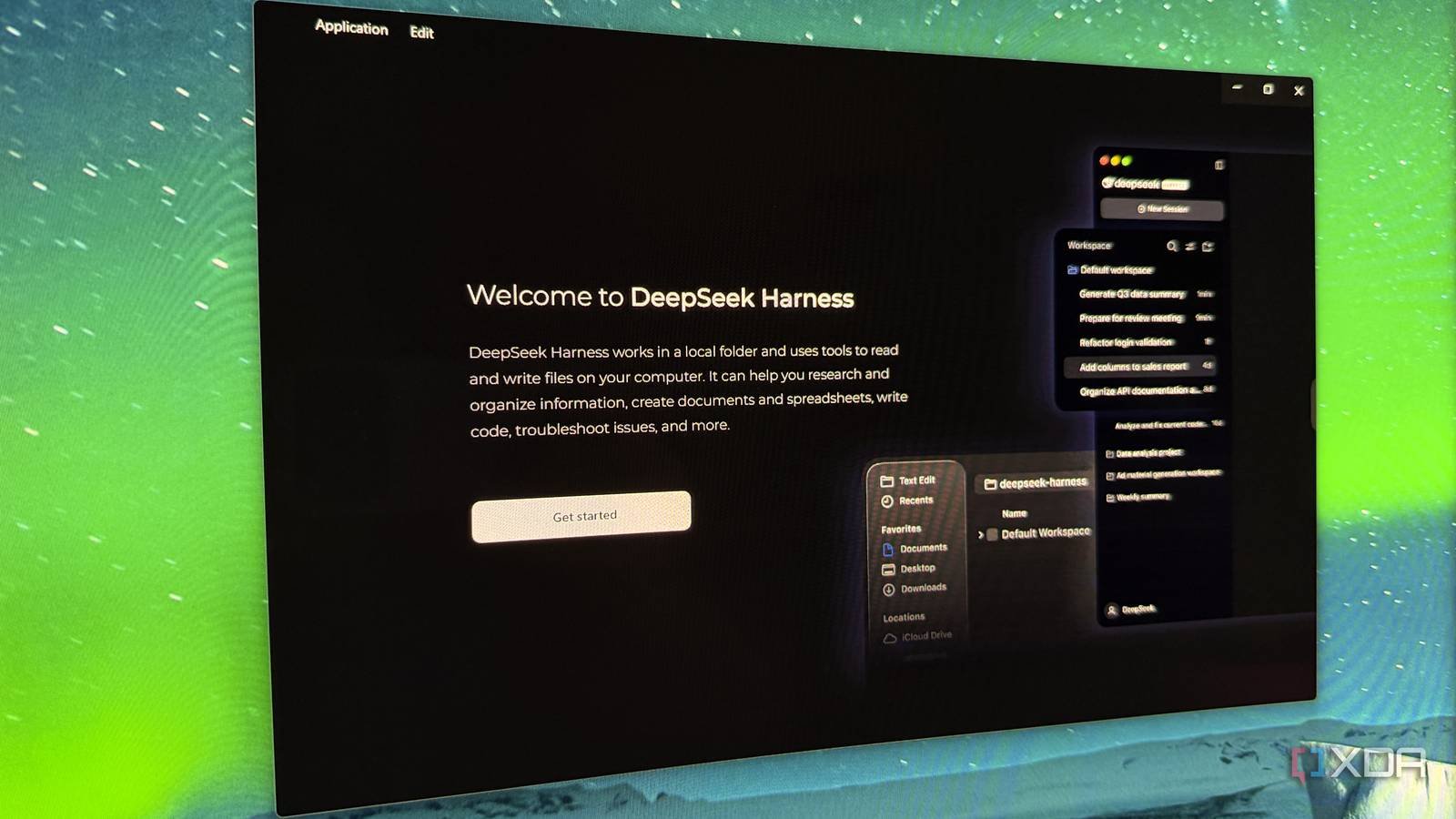
DeepSeek, however, is laser-focused on the developer experience. Its recent push into agentic workflows via its specialized agent platform shows where its priorities lie. As noted in a recent test on xda-developers.com, the way these agents interface with your local machine differs significantly from Anthropic’s approach. While both might output identical code, the implementation requirements for DeepSeek feel more like a DIY project compared to the polished API documentation Anthropic provides.
For developers asking what is better deepseek or claude, the answer depends on your infrastructure. If you need a plug-and-play solution for your startup’s Slack channel, Claude wins. But if you are optimizing your VS Code setup for deepseek vs claude for coding, DeepSeek offers a leaner, high-speed API that is becoming popular among local indie developers who want to avoid the high latency of heavier models. The developer community for Claude is massive, with endless third-party extensions, while DeepSeek’s community is smaller, scrappier, and moves very quickly. It is a choice between institutional stability and experimental speed.
How can I integrate this AI model directly into my existing Slack or GitHub workflow?
What to look for: Availability of native plugins, API documentation, and third-party support.
Claude Opus 5.5
Round 7: Consistency and Hallucinations
When you’re trying to figure out "what is better deepseek or claude," consistency is the real differentiator. In our testing, I ran the same logic-heavy prompts through both multiple times. Claude Opus 5 holds a clear edge in stability; it doesn’t wander off-track when you ask it to chain five steps together. DeepSeek-V4.1-Flash-1017 is incredibly fast, but in multi-step agentic workflows, it occasionally experiences "drift," where it loses sight of the primary goal halfway through.
For enterprise tasks—say, automating reports or building complex data pipelines—this reliability matters. If you are using these tools for business, like using 15 AI Prompts for Real Estate Agents to Sell Properties Faster, you need a model that won’t hallucinate a property price. Claude Opus 5 feels more "grounded" in these high-stakes scenarios.
However, the "deepseek vs claude opus" debate shifts when you look at cost-to-accuracy ratios. If your task is simpler, like generating boilerplate, DeepSeek’s tendency to hallucinate slightly more often might be an acceptable trade-off for its speed. But for professional environments where accuracy is non-negotiable, Claude remains the gold standard. I’ve found that while DeepSeek is fantastic for quick iterations, I still lean on Claude for the final polish. If you’re building systems that need to run unattended, the extra stability of Claude is worth the higher price tag, as it drastically reduces the time spent on manual fact-checking.
Summarize the last three quarterly financial reports for a major Indian IT firm and list the exact revenue figures mentioned.
What to look for: Factual accuracy and adherence to provided constraints.
Claude Opus 5.5
Watch: 100 Hours Testing Deepseek Harness vs. Claude Code. What You Need to Know.
Frequently Asked Questions
Is DeepSeek V4.1-Flash safe for confidential business data?
You should always treat public AI models with caution regarding sensitive data, regardless of the provider. Since DeepSeek is based in China, professional teams in India must weigh their internal compliance policies against the potential benefits. If your business handles strictly private financial or legal records, it is safer to use a local or self-hosted deployment rather than sending trade secrets directly into a public cloud.
Can I pay for Claude Opus 5.5 using Indian credit cards?
Yes, most Indian users can pay for Claude Opus 5.5 using standard international-enabled credit or debit cards. However, due to RBI’s e-mandate rules, some recurring transactions might fail if the card does not support automatic international billing. If you hit a wall, virtual cards or fintech services that offer global spending features are usually the most effective workaround to keep your subscription active without any interruption.
Which model is better for beginners learning to code?
If you are just starting, Claude Opus 5.5 is often the better pick because its reasoning capability helps explain complex logic errors more clearly. DeepSeek-V4.1-Flash is incredibly fast and great for testing agent workflows, but it can be less forgiving if you do not already understand the underlying code. Start with Claude to learn, then move to DeepSeek once you need speed and high-volume output.
Do these models support regional Indian languages effectively?
Both models handle Hindi and common regional languages like Marathi or Tamil surprisingly well for basic translation and conversational tasks. However, they occasionally struggle with complex grammatical nuances or specific cultural idioms. For critical business content that needs to be perfect, always treat the AI output as a draft that requires a final review by a native speaker to ensure the tone is actually correct.
Which One Should You Actually Use?
If you’re still scratching your head wondering what is better deepseek or claude, the answer depends entirely on your daily workload. For high-stakes reports where accuracy is non-negotiable, stick with Claude Opus 5. It holds a clear lead in human-level reasoning tests like Humanity’s Last Exam, scoring 56.3 compared to DeepSeek’s 42.6.
However, if you’re a developer in Bengaluru or Gurugram churning out local apps, DeepSeek-V4.1-Flash-1017 is a beast. It dominates on multi-step agentic benchmarks like Automation-Bench, scoring 60.5 to Claude’s 50.3. It’s leaner, faster, and won’t burn through your monthly budget. For a broader look at how these compare to other heavy hitters, check out Claude vs ChatGPT vs Gemini: Which Wins in India?.
My advice? Stop guessing. Use a tool like ChatPlayground AI to run your specific prompts through both models simultaneously. You’ll see exactly which one handles your specific codebase or email drafts better. Why pay for a full subscription until you’ve tested both on your own hardware?


Join the conversation