
Key takeaways
- Mass production of the Tesla Semi marks a shift from experimental pilot programs to commercial fleet integration.
- The economic viability of electric trucking depends heavily on electricity costs and charging infrastructure availability.
- Payload capacity remains a critical factor, as battery weight directly competes with cargo weight limits.
- Reduced mechanical complexity in electric drivetrains offers potential savings in long-term maintenance and vehicle uptime.
When a highway shuts down for hours because of a vehicle fire, logistics managers take notice. Recently, a Tesla Semi battery fire forced the closure of I-880 in Hayward, turning a routine commute into a massive headache, as reported by msn.com. For anyone tracking the latest tesla semi truck updates, these incidents raise urgent questions about the operational reality of electric heavy transport. Is the Tesla Semi truly ready to replace diesel, or are we still in the pilot phase? Beyond the glossy marketing, the transition to electric trucking demands a hard look at economics, charging infrastructure, and safety protocols. Much like the debates surrounding Tesla Robotaxi Expansion: Real-World Safety and Tech Limits, the path to mass adoption is far from simple. Let’s break down the metrics that actually matter for the future of freight.
The Shift to Mass Production
If you have been tracking the latest tesla semi truck updates, you know the transition from pilot testing to dedicated factory output is the biggest hurdle. Scaling from a handful of prototypes to a consistent assembly line output is the difference between a niche experiment and a viable logistics solution. For a company as focused on high-volume manufacturing as Tesla, the goal is to mirror the automated techniques used for their passenger vehicles, like the Model Y.
Record orders are putting immense pressure on supply chains, forcing a move toward high-efficiency production cycles. Much like investors look at the broader tech market—perhaps checking How to Buy Anthropic IPO: Nasdaq Move and Developer Impact—fleet managers are watching these production stats to gauge if the Tesla Semi can finally replace their aging diesel fleets. If the manufacturing line cannot keep pace with demand, the tesla semi release date for widespread commercial availability keeps pushing further out.
Automating the production of a heavy-duty electric vehicle is not just about speed; it is about precision. Tesla is effectively applying the same battery-cell integration and modular chassis assembly seen in their cars to the Semi. This high-level automation is designed to lower the unit cost, which is essential because the tesla semi truck price must eventually compete with the total cost of ownership for a standard diesel rig. Scaling up is the only way to prove is tesla making a semi truck that is truly ready for the real world.
Economic Reality: Electric vs. Diesel
Let’s talk numbers. Buying a Tesla Semi isn’t just about the sticker price; it’s a shift from a high-variable-cost model to a high-fixed-cost model. Traditional diesel trucks are cheaper to buy upfront, but you’re forever tethered to the wild, unpredictable swings of global oil markets. With the Semi, you’re essentially betting on the relative stability of grid-based electricity to keep your long-term operating expenses predictable.
If you’re running a fleet, the math changes significantly when you factor in carbon credits and government incentives. These subsidies are often the only thing bridging the gap between a traditional diesel rig and an electric one for many operators. It’s not just about the fuel efficiency; it’s about leveraging these financial tools to lower your total cost of ownership.
Energy costs per mile are generally lower for electric trucks, though this fluctuates wildly based on your local utility rates and peak charging hours. However, there is an operational tax to consider: safety and insurance. As seen in recent reports, such as a Tesla Semi catching fire on I-880, these vehicles require specialized handling and emergency protocols that can lead to significant, unexpected downtime for logistics operations autos.yahoo.com.
If you’re a logistics manager, you must weigh these potential service disruptions against the fuel savings. While the power grid is stable, the cost of managing high-voltage battery systems—especially when things go wrong—is a line item that traditional diesel operators don’t have to worry about. It is a trade-off that requires careful, long-term planning.

Infrastructure Challenges: Charging the Fleet
When looking for the latest tesla semi truck updates, the conversation always hits a wall: infrastructure. To make the Tesla Semi a viable replacement for diesel, you need megawatt-scale charging stations at every major distribution hub. We aren’t talking about a simple wall box; these facilities require dedicated substation upgrades to handle the massive simultaneous load of multiple heavy-duty vehicles.
Charging speed is the real bottleneck for long-haul logistics. If a driver needs to recharge, every minute spent waiting is an hour lost against tight delivery schedules and strict government-mandated driver hours. While public high-speed networks are expanding, most fleets will likely rely on private depot charging. This allows operators to control energy costs and ensure a truck is ready when the shift starts.
If you are curious about the broader energy requirements, our guide on How to Start EV Charging Station in India: A Reality Check highlights just how complex grid integration can be. It is not just about the charger; it is about the entire power architecture. Whether you are managing one rig or a fleet, the infrastructure must be as reliable as the diesel pumps it intends to replace.
Operational Payload and Range
When you look at the latest tesla semi truck updates, the math eventually comes down to physics: batteries are heavy. Unlike a traditional diesel rig, where the engine weight is relatively constant, an electric semi’s massive battery pack directly competes with your cargo capacity. Every pound of battery is essentially a pound of lost payload, which matters immensely to fleet operators who bill by the ton.
Energy consumption isn’t linear, either. On flat highways, the Semi can cruise efficiently, but once you start climbing steep grades or hauling full loads, that battery depletion accelerates rapidly. To get long-haul range, you need a larger pack, but a larger pack increases curb weight, creating a tricky balancing act between how far you can go and how much you can actually deliver.
Weather is another invisible hand. Just like in your personal EV, extreme temperatures shift the efficiency curve. Cold weather forces the truck to use energy to manage pack temperature, which can eat into your daily range.
Beyond these operational hurdles, there’s the safety aspect. We’ve seen instances where a Tesla Semi-Truck fire can close a major highway for nearly 10 hours, even without a collision. Whether it’s an internal cell fault or thermal management issue, incidents like these are on the radar for logistics managers who need absolute uptime. If you’re banking on this truck for critical supply chains, understand that battery performance and safety protocols are still being tested in the real world.
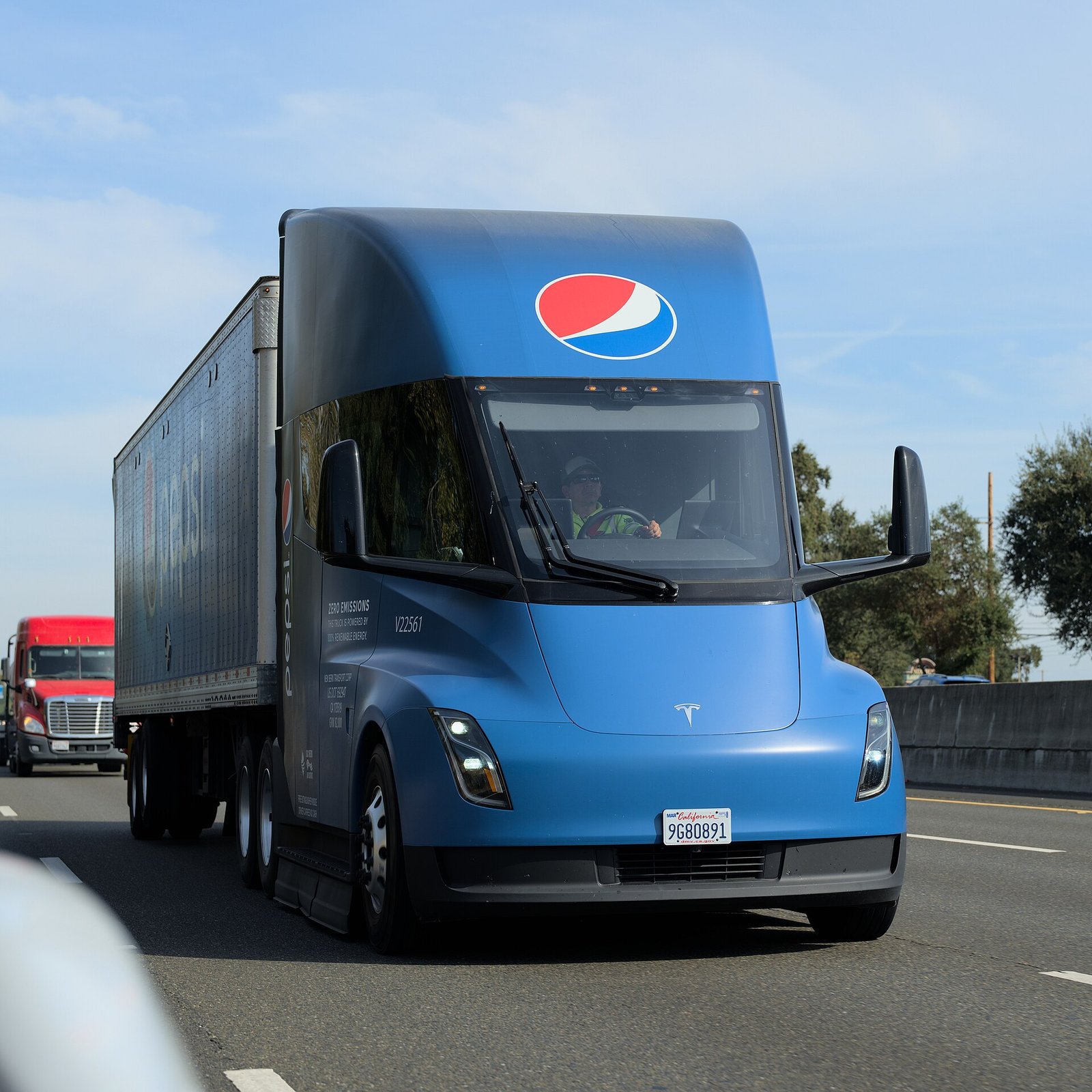
Maintenance and Total Cost of Ownership
When you look under the hood of a traditional diesel rig, you’re staring at a complex mess of thousands of moving parts—injectors, turbochargers, and intricate exhaust systems that often fail at the worst possible time. The Tesla Semi ditches that mechanical burden. With a simplified electric drivetrain, you aren’t changing engine oil or dealing with clogged diesel particulate filters, which typically eat into your profit margins through frequent shop visits.
The math on maintenance looks promising, but it isn’t straightforward. Regenerative braking takes the heavy lifting off the friction brakes, meaning your pads last significantly longer than in a conventional truck. Yet, that weight is a double-edged sword; these electric trucks are heavy, and tire consumption remains a persistent cost for fleet operators to track. Commercial logistics rely entirely on uptime, and while fewer moving parts should translate to more hours on the road, battery health is the ultimate variable.
We have seen how premium segments struggle with the realities of scale, as noted in our LiveWire Survival Warning: Why Premium Electric Motorcycles Stalled, and commercial trucking is arguably a tougher hurdle. For a Tesla Semi, the battery isn’t just a component; it is a high-mileage asset that must survive years of constant, rapid charging cycles. If a battery pack degrades too quickly, the total cost of ownership advantage vanishes overnight. Operators are not just buying a truck; they are betting on the long-term durability of that battery architecture under constant, heavy-duty strain. Can these packs hold up after five years of daily, high-intensity abuse? That remains the million-dollar question for every logistics manager.
The Role of Automation in Heavy Transport
When we talk about the latest tesla semi truck updates, the conversation naturally drifts toward automation. It’s easy to get lost in the hype of a truck that "drives itself," but the reality is currently grounded in driver-assist technologies. These systems—like lane-keeping and adaptive cruise control—are designed to reduce driver fatigue on long hauls, not to replace the person behind the wheel.
There is a massive gap between current assisted-driving capabilities and the level-five full autonomy we hear about in sci-fi. For logistics companies, the focus remains on safety and fuel efficiency rather than removing the driver entirely. Platooning, for instance, uses vehicle-to-vehicle communication to allow trucks to follow each other closely, cutting aerodynamic drag and saving energy.
However, getting these systems onto public highways involves significant regulatory friction. Legislators are cautious, and for good reason. Recent incidents, such as the battery fire that shut down I-880, as reported by msn.com, highlight that automated or not, we are dealing with high-voltage hardware that requires specialized emergency responses. Regulators aren’t just looking at software; they are scrutinizing the total operational safety of these heavy rigs. Until we see a more unified regulatory framework across states and countries, don’t expect to see driverless convoys on your morning commute anytime soon. It’s a slow, deliberate evolution, not a sudden change.

Global Logistics and Regional Adoption
Right now, North American and European markets are the primary testing ground for the Tesla Semi. These regions offer the regulatory support and high-voltage charging corridors necessary to move beyond simple pilot programs. If you are tracking fleet logistics, you might even be using tools like How to Build a Google Ads Reporting Dashboard with Claude to analyze operational efficiency, but the real hurdle remains the charging network.
Outside these regions, the Tesla Semi faces a tougher climb. International shipping standards and strict axle-weight regulations—which vary wildly between the EU, North America, and parts of Asia—dictate how much battery mass a truck can carry. When you look at how to buy Tesla Semi units for global operations, you have to account for these design constraints.
In emerging economies, diesel remains king for a reason: it is cheap, portable, and requires zero specialized infrastructure. For electric freight to compete there, we need more than just a truck; we need a complete energy overhaul. Without a massive investment in grid stability and high-voltage charging, the Tesla Semi will stay confined to the regions that can afford the infrastructure. Even in mature markets, companies are still waiting for definitive tesla semi truck updates on long-haul scaling. It is not just about the truck; it is about whether the road beneath it can handle the power demand.
Watch: My First Time Seeing The New Series Production Tesla Semi! Full Tour & Ride w/ Dan Priestley
Frequently Asked Questions
How does the range of a Tesla Semi compare to a diesel truck when fully loaded?
While standard diesel rigs easily cover 1,000 miles between refueling stops, the Tesla Semi is rated for roughly 500 miles when carrying a full load of 82,000 pounds. This creates a clear operational divide for long-haul logistics. If you are running regional routes, that range might suffice, but for cross-country haulers, it requires a major shift in route planning.
What is the primary barrier to widespread adoption of electric semi-trucks?
The biggest hurdle is the lack of massive, high-power charging infrastructure. Beyond just plug access, fleet operators must consider the safety and logistical footprint of these 1,000-volt systems. As we have seen with recent incidents on I-880, battery fires can force highway closures for nearly 10 hours, creating significant delays that impact both fleet managers and overall insurance costs.
How long does it take to charge a Tesla Semi to 80% capacity?
Tesla indicates that you can recover 70% of the Semi’s range in approximately 30 minutes using their specialized Megachargers. While an exact 80% benchmark isn’t the primary focus, this 30-minute window is the target for a driver’s mandatory break. Real-world success relies on whether charging depots can deliver that speed consistently without overwhelming the local power grid or infrastructure.
Do electric semi-trucks require different maintenance schedules than diesel trucks?
You will see a major shift here. Electric trucks ditch the complex internal combustion engine, meaning no oil changes or transmission repairs. However, you trade that for specialized battery health monitoring and cooling system care. These trucks require strict safety protocols, as seen in Tesla’s rescue sheets which mandate thermal monitoring for 24 hours following any significant fire incident.
The Global Reality of Electric Logistics
The transition to electric heavy transport is less about the hardware and more about the surrounding ecosystem. While we watch for consistent tesla semi truck updates, keep in mind that the current economics depend heavily on regional energy pricing and grid stability. In markets like India, where infrastructure for such massive loads is still maturing, the challenge of scaling this technology remains significant.
Safety remains a critical, unresolved variable for fleet managers. The recent October 2026 incident on I-880, where a battery fire necessitated a massive, hours-long closure, highlights that operators must factor in specialized emergency training. Dealing with a 1,000-volt lithium-ion pack is a far cry from managing a standard diesel engine.
Ultimately, the Tesla Semi is a sophisticated, specialized tool rather than a simple plug-and-play replacement. If you are curious about how its software might eventually handle long-haul navigation, read our deep dive on Is Tesla FSD Worth It? Safety, Robotaxis, and Real-World Data. Before committing to an order, compare your specific route’s charging downtime against the potential fuel savings to see if the math actually holds up for your business.
Sources and further reading
- Tesla Semi truck fire shuts down major Bay Area freeway for hours — msn.com
- Tesla Semi-Truck Burns for Nearly 10 Hours on Major Highway & Firefighters Finally Figure Out What Happened — yahoo.com
- A Tesla Semi Caught Fire on I-880 With No Crash, and CHP Shut Down Both Directions Over Possible Hazardous Smoke — autos.yahoo.com


Join the conversation