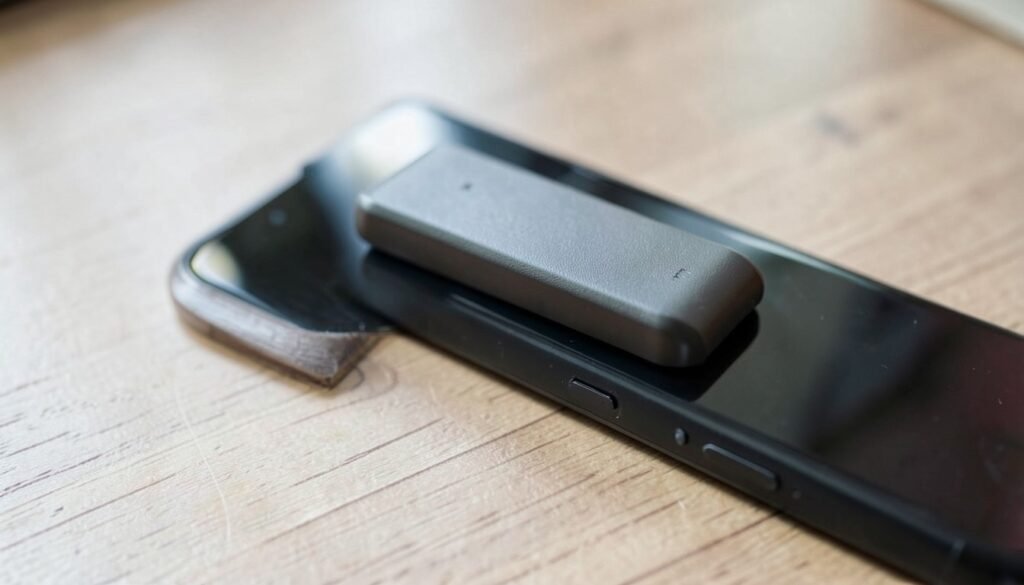
Key takeaways
- DGCA rules: power banks travel in hand baggage only, not in overhead bins, and you can’t use or charge them during the flight.
- Check the Wh rating printed on the casing before you head to the airport. Most 10,000mAh units are well under 100Wh.
- A magnetic power bank sits right on the phone, so heat has nowhere to go. Don’t charge inside a pocket or a packed bag.
- If the casing swells, turns brown, or smells of chemicals, stop using it right away.
Your iPhone drops to 5% on a crowded Mumbai platform, and that slim magnetic power bank in your bag suddenly matters a lot. Qi2 has finally made magnetic charging reliable, and affordable options are here, such as the Noise Qi2 MagSafe Power Bank at launch pricing of Rs 2,499. Air travel rules have also tightened since late 2025, though. This guide covers safe everyday use: heat, Wh labels, cabin rules and the warning signs to watch for. For the short version, see Power Bank Travel Basics: Wh Labels, Cabin Bags, One Good Cable.
What Qi2 Actually Changes
Older generic magnetic chargers often used loose, inconsistent magnets. A small shift on a bumpy ride could misalign the coils, and a misaligned coil turns energy into heat instead of charge. Qi2 adds a standard magnetic power profile that locks the phone’s coil onto the transmitter in the same position every time. That cuts wasted heat and makes charging more consistent.
Qi2 doesn’t make a power bank fireproof. What it gives you is a certified baseline for alignment and efficiency. Cell quality and thermal protection still depend on the brand.
Magnetic vs. Wired Power Banks: The Heat Trade-off
Magnetic packs are slimmer and easier to carry, but clipping one onto your phone creates a “heat sandwich”. Wireless losses build up right between two batteries with little airflow. A wired brick sitting in your bag, connected by a cable, stays cooler.
Quick checks before you buy:
- BIS mark: look for Bureau of Indian Standards certification on the box and the unit.
- Weight vs. capacity: a “10,000mAh” unit that feels suspiciously light is a red flag.
- Thermal protection: prefer models whose spec sheet lists temperature sensing or charge throttling.
- Qi2 logo: “magnetic” or “MagSafe-style” on its own does not mean certified.

DGCA Cabin Rules: What You Must Know
The DGCA issued Dangerous Goods Advisory Circular No. 01/2025 on 11 November 2025 after several lithium-battery incidents, including a power bank fire on an IndiGo flight at Delhi in October 2025. Under the circular, airlines now tell passengers the following (as reported by Business Standard and The Economic Times):
- Hand baggage only: carry power banks and spare batteries in your hand baggage, never in checked luggage.
- Not in overhead bins: keep them with you, where a problem would be noticed quickly.
- No use in flight: you can’t use a power bank to charge your phone or other devices during the flight.
- No recharging on board: you can’t plug the power bank into the aircraft’s in-seat power or USB ports.
- Speak up: tell cabin crew straight away if any device gets hot, smokes, or gives off an unusual smell.
For a 10,000mAh pack, the Wh figure printed on the casing is usually well under 100Wh. Keep that label readable, because a missing or worn-off rating can cause problems at security. Airlines may also have their own policies, so check yours before you fly.
Signs of Battery Distress
- Swelling: the casing bulges or no longer sits flat.
- Discoloration: brown tint or scorch marks near the ports.
- Odour: a sharp, sweet or metallic chemical smell.
Magnetic packs get dropped more often because they snap on and off the phone all day. After a hard drop, check the unit before you trust it again.
If a pack gets dangerously hot:
- Move it onto a non-flammable surface such as stone or tile.
- Disconnect cables if you can do so safely.
- Don’t recharge it. If you see smoke, keep your distance, then contact the brand’s India support about disposal.
Daily Habits That Extend Battery Life
- Don’t wirelessly charge inside a closed laptop bag or a tight pocket.
- If you don’t need wireless, use a good certified USB-C cable. Wired charging runs cooler and loses less energy.
- Keep the pack in a hard case or a dedicated pocket so it can’t be crushed in a packed backpack.
- Avoid heavy gaming or long video calls with the pack attached.
Troubleshooting Magnetic Charging
It keeps slipping off: you need a MagSafe-compatible case with a built-in magnet ring. Thick or textured cases weaken the hold.
Charging stops halfway: heat throttling or a handshake glitch is the usual cause. Detach the pack, let both devices cool, and reattach. Check the manual for the brand’s reset steps.
Battery drains fast in general: background load can play a part too. Try Phone Feels Slow? A 15-Minute Storage Cleanup.
Capacity looks lower than advertised: wireless transfer and voltage conversion both lose energy. A 10,000mAh rating refers to the internal cells, so expect noticeably less to reach your phone, and less again over wireless than over a cable.
Frequently Asked Questions
Can I use my magnetic power bank on an Indian domestic flight?
You can carry it in your hand baggage, but under DGCA’s November 2025 advisory you can’t use it to charge devices during the flight or recharge it from the aircraft’s power. Keep it with you, not in the overhead bin.
How can I tell if my power bank is Qi2 certified?
Look for the official Qi2 logo on the packaging and the device. Brands such as Noise and Stuffcool state “Qi2” or “Qi2.2” in their specs. “Magnetic wireless” on its own isn’t certification.
What should I do if it gets hot while attached to my phone?
Detach it, let both devices cool in the shade, and stop heavy phone use while charging. If it keeps getting very hot, stop using the pack.
Does magnetic charging hurt my phone’s battery?
The real enemy is heat. Certified Qi2 alignment reduces wasted heat compared with poorly aligned generic pads, but wired charging is still the cooler option.
Sources and further reading
- Airlines move to bar power bank use in flight after DGCA circular — Business Standard
- Use of power banks for in-flight charging barred by DGCA — The Economic Times
- Noise Qi2 MagSafe Power Bank launched in India — themobileindian.com
- Stuffcool launches Nido Qi2.2-certified 25W MagSafe power bank — moneycontrol.com

Join the conversation