Key takeaways
- OpenAI’s purchase of Orchestra Bio could slash drug development times in India.
- The deal positions India as a key player in AI‑driven pharma innovation.
- Regulatory clarity will be essential to bring AI‑derived drugs to market.
- Local startups stand to benefit from new funding and expertise.
- Patients may eventually see faster, cheaper access to life‑saving medicines.
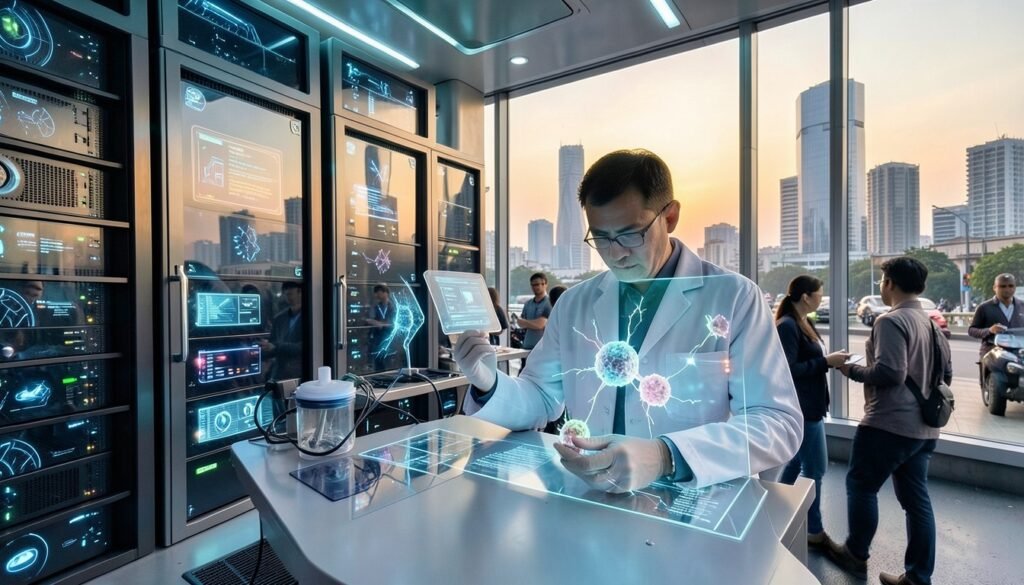
If you’ve ever wondered why a new medicine takes over a decade to reach a pharmacy shelf, the answer often lies in the messy, disconnected reality of lab work. That’s exactly what OpenAI is trying to fix. By acquiring Orchestra Bio, as reported by msn.com, the company is making a major push into the world of openai ai drug discovery.
So, what did openai acquire this week? They brought in Orchestra Bio’s team to supercharge their Rosalind life sciences unit, aiming to weave AI agents into the very fabric of clinical trials. For India, a country that powers global health as a leading vaccine and generic drug manufacturer, this shift is massive. If this openai drug discovery model can actually shave years off development, it could significantly change how our local biotech firms operate. Before we dive into the implications, remember that technical progress often brings legal baggage, just like we explored in our piece on the OpenAI Lawsuit: What It Means for Indian Users and Regulators.
Why OpenAI’s move into biotech matters
OpenAI is making a massive pivot. After dominating the language model space, they are now betting big on openai ai drug discovery. You might be asking, what did openai acquire this week? The answer is Orchestra Bio, a startup that builds AI agents designed to manage the messy, administrative slog of pharmaceutical research. If you’ve been tracking their growth, you might recall how the OpenAI Hindi Voice Model: Why ChatGPT Usage Doubled in India brought generative AI into local homes; now, that same logic is being applied to the lab bench.
The problem in pharma is simple: it takes 10 to 15 years to get a new medicine approved. Much of that time isn’t spent on breakthroughs, but on logistics, scheduling, and fixing failed experiments. Orchestra Bio’s agents step in to handle these bottlenecks, keeping trials on track when something goes wrong. By folding this team into their Rosalind unit, OpenAI is moving beyond basic research to become an operational partner for drugmakers like Moderna. This openai drug discovery model is clearly aimed at compressing those decade-long timelines. For global pharma, this changes the competition—if you can cut years off a trial, you save millions and get life-saving treatments to patients faster.
What Orchestra Bio brings to the table
Founded in 2022 by Ashoka Rajendra in San Francisco, Orchestra Bio is far from your average software firm. They didn’t just build another chatbot; they focused on the messy, high-stakes world of wet-lab biology. Their core technology involves AI agents that bridge the gap between abstract machine learning models and the practical, often chaotic realities of laboratory work.
According to androguider.com, the startup specialized in turning complex, noisy biological data into actionable experimental plans. Their platform integrates foundation models with structured lab protocols and sample tracking, allowing researchers to design CRISPR screens or optimize cell cultures with real-time, data-grounded guidance.
While their exact patent portfolio remains private, their impact is clear: they solved the logistics of science. By helping teams manage the financial and scheduling hurdles that frequently stall clinical trials, they transformed how research moves from theory to reality. Before this acquisition, they were already working with various biotech founders to refine their long-term planning tools. Now, this expertise is being folded into OpenAI’s Rosalind, turning the openai drug discovery model into a project-management powerhouse that understands the actual constraints of a lab environment.
How the acquisition could reshape India’s pharma landscape
India has long been the world’s pharmacy, churning out affordable generics at scale. But let’s be honest: our strength has been manufacturing, not necessarily the grueling R&D process that takes 10 to 15 years to bring a new molecule to market. By acquiring Orchestra Bio, OpenAI is signaling that their openai ai drug discovery efforts are moving from theory to operational reality.
If OpenAI integrates this tech into the Rosalind platform, it could be a significant shift for R&D hubs in Bengaluru and Hyderabad. Local biotech firms and SMEs, which currently struggle with the sheer cost of clinical trials, could use these AI agents to monitor scheduling and financial bottlenecks. This isn’t just about big pharma; it’s about democratizing experimental design. If you are wondering how this shifts the job market, Is AI a Good Career in India? Anthropic’s Hiring Reality offers a clear perspective on the ground.
We could see a new wave of public-private partnerships where OpenAI’s models assist Indian labs in optimizing cell culture or clinical trial management. Bringing this tech closer to home means we could finally move up the value chain from generic manufacturing to proprietary drug discovery.
Regulatory and ethical considerations for AI‑driven drugs
When we talk about the openai ai drug discovery push, we have to look at the guardrails. In India, the Drug Controller General of India (DCGI) is currently shaping how digital health tools enter our clinics. The catch? Most AI models like Rosalind are trained on global datasets that may lack the genetic diversity of our population. If a protein design model is biased, it might lead to treatments that aren’t as effective for Indian patients.
Beyond bias, we face the "black box" problem. Regulators need explainable science. If an AI agent suggests a clinical trial pathway, can the company prove why it chose that route? For Indian biotech firms adopting these tools, transparency is non-negotiable.
Then there is the matter of patient data. Using sensitive health records to train an AI requires strict consent protocols. If OpenAI wants to operate here, they must align with the Digital Personal Data Protection Act to ensure our citizens’ data doesn’t just become fuel for a foreign model. Ethical AI isn’t just a nice-to-have; it is the only way to get clinical trial approvals that actually stand up to scrutiny in our hospitals.
Cost and pricing: Will AI cut drug prices for Indian patients?
Bringing a new medicine to market typically takes 10 to 15 years, a timeline plagued by ballooning costs. By folding Orchestra Bio into its Rosalind unit, OpenAI aims to use AI agents to manage trial schedules and manufacturing, potentially slicing these timelines. If you cut years off development, you cut costs. But will this lower the price of tablets in Mumbai?
In India, drug pricing is heavily influenced by the National Pharmaceutical Pricing Authority. Even if an OpenAI drug discovery model makes R&D efficient, the final price remains tied to local policy and insurance. We’ve seen how patented drugs often face stiff price caps here. Without clear government subsidies for AI-derived therapies, those efficiency gains might stay in corporate pockets rather than reaching patients.
Furthermore, adopting this tech requires serious digital infrastructure. It isn’t just about the algorithms; it’s about the connectivity needed to push massive datasets between labs and cloud servers. As we look at When 6G Will Launch in India: Why the Uplink Matters for AI, it’s clear that reliable, low-latency networks are silent partners in making these medical breakthroughs accessible to the average Indian patient, not just the elite.
Impact on Indian biotech startups and academia
For India’s booming biotech hubs like Bengaluru and Hyderabad, OpenAI’s acquisition of Orchestra Bio is a double-edged sword. On one hand, the arrival of advanced tools into the Rosalind ecosystem, as reported by msn.com, signals a shift in the openai ai drug discovery paradigm. If OpenAI eventually opens Rosalind Workbench to local academic researchers, it could bypass years of infrastructure building, allowing our scientists to run complex simulations without needing massive server farms.
However, there’s the talent crunch. Indian startups now need to compete with global giants for engineers who understand both machine learning and molecular biology. The risk of market consolidation is real; if OpenAI keeps its proprietary models behind a walled garden, smaller Indian firms might struggle to innovate on the same level. Yet, this consolidation often sparks a wave of spin-offs. We’ve seen this before in our IT sector: as big players standardize, smaller, agile firms often find niche opportunities in data cleaning and local clinical trial management. To stay ahead, Indian labs should focus on building "bridge" expertise—scientists who can effectively prompt an openai drug discovery model while maintaining the rigour of wet-lab validation.
Future outlook: AI, pharma, and India’s health goals
OpenAI’s push into biotech through the Orchestra Bio deal could eventually align with India’s National Health Mission goals, especially regarding affordable diagnostics and localized drug development. If the Rosalind model can lower the R&D cost barrier, Indian pharma giants might stop being just "generic manufacturers" and start leading proprietary drug discovery. The potential for treating rare diseases—where research costs often outweigh commercial interest—is particularly high if AI agents like those from Orchestra streamline clinical trial scheduling in local hospitals.
However, sustainability depends on how quickly we adapt our regulatory frameworks. We need clear guidelines on how AI-generated trial data sits with CDSCO requirements. For local biotech founders, the strategy is simple: don’t just build a model; build a workflow that integrates with existing lab data. If you’re curious how these models stack up locally, check our recent Gemini 4 Argon vs GPT-6: India Test With Claude to see where the technology currently stands.
Ultimately, the goal isn’t just faster tech; it’s about ensuring that an openai ai drug discovery model doesn’t just benefit global giants but actively helps solve India’s specific public health burden. Keep an eye on how our regulatory bodies respond to these AI-driven clinical pipelines in the coming months.
Watch: OpenAI is launching a specialized AI model for drug discovery and life sciences research
Frequently Asked Questions
What is Orchestra Bio and why did OpenAI acquire it?
Orchestra Bio is a software startup that builds AI agents designed to manage the complex, messy logistics of drug development. OpenAI acquired the team as reported by SiliconAngle to bolster its Rosalind unit. By integrating these agents, OpenAI aims to shorten the 10 to 15-year timeline it currently takes to get new medicines through regulatory approval, making openai ai drug discovery a practical reality rather than just a theoretical research goal.
How will this acquisition affect drug development timelines in India?
India is a global powerhouse for generic medicine and clinical research. If the openai drug discovery model successfully automates scheduling and project tracking for local biotech firms, we could see a significant compression in research cycles. By minimizing delays in clinical trials and manufacturing, Indian pharma companies could bring life-saving treatments to market faster, effectively boosting the nation’s contribution to global health research.
Will AI-driven drugs be cheaper for Indian patients?
While the tech promises to lower R&D overheads by streamlining lab workflows, don’t expect an immediate price crash at your local pharmacy. The cost of bringing a drug to market involves heavy regulatory and distribution expenses. However, if OpenAI drug discovery tools significantly reduce the failure rate of experimental drugs, the long-term potential for more affordable, high-quality medication in India becomes a realistic possibility.
What regulatory hurdles must AI-generated drugs clear in India?
When considering what did openai acquire this week to transform medicine, remember that safety remains paramount. In India, the Central Drugs Standard Control Organization (CDSCO) still mandates rigorous clinical trials regardless of how an AI designs the molecule. AI-generated drug candidates must prove their safety and efficacy through the same human-centric testing protocols, ensuring that human health is never compromised for the sake of speed.
The Indian Pharma Reality Check
So, what does this actually mean for us? While OpenAI’s latest move—buying Orchestra Bio—aims to shave years off the typical 10-to-15-year drug development cycle, the real impact for India is about scale. As the "pharmacy of the world," our biotech firms need to move faster than ever. If Orchestra’s AI agents can manage lab logistics and clinical trial schedules as promised, Indian companies could potentially slash overheads and bring affordable medicine to market much sooner.
However, don’t ignore the risks. Integrating such powerful models into sensitive health data requires extreme caution, especially when we consider the OpenAI Spy Scandal: What It Means for Indian Users and Businesses. Before diving into this new OpenAI drug discovery model, keep an eye on how our local regulators set guardrails for these autonomous agents. My advice? Follow the pilot programs of global companies like Novo Nordisk; if they succeed, it is time for Indian firms to demand similar transparency.



Join the conversation