
Key takeaways
- The current AI market risk is driven more by unsustainable CapEx spending than by speculative software valuation.
- Enterprise AI adoption is facing a ‘pilot purgatory’ that prevents infrastructure costs from translating into revenue.
- Physical constraints like energy and cooling are becoming the primary regulators of AI scaling, not just software capabilities.
- A shift toward operational efficiency and domain-specific models is the most likely path to long-term market stability.
You’ve likely seen the headlines: market volatility is spiking, and everyone is asking if we’re standing on a cliff. When you examine the sheer scale of Big Tech CapEx, a thorough ai bubble risk assessment becomes unavoidable. Is there an ai bubble? While analysts at msn.com suggest the risks might be contained, the disconnect between massive infrastructure spending and actual enterprise revenue growth is impossible to ignore.
We aren’t just debating a binary bubble; we’re looking at a structural trap where the cost of building the future is far outpacing current profit. In this piece, I’ll break down why this matters and How to Hedge Against AI Bubble Risks Through Operational ROI. Whether you’re watching from Mumbai or Menlo Park, it’s time to look past the hype and focus on the hard numbers.
The Anatomy of the CapEx Escalation
Let’s be honest over a cup of chai: we aren’t just talking about software spending anymore. We are witnessing a massive, structural pivot in Big Tech CapEx toward physical data center footprints. It is a fundamental shift from the lean, high-margin SaaS world we grew accustomed to toward capital-intensive industrial utility.
This trajectory looks eerily similar to the late 90s dot-com era, where companies frantically laid down miles of fiber optic cable. Back then, the infrastructure massively outpaced actual utility. Today, we are burying billions into cooling units and massive server farms, hoping the enterprise revenue finally catches up to the overhead. When you perform a proper ai bubble risk assessment, the sheer volume of this physical investment remains the most glaring red flag.
Current market valuations are increasingly tethered to GPU-heavy compute capacity rather than traditional performance metrics. If you’re curious about how this dynamic holds up under scrutiny, take a look at The AI Infrastructure Debate: Why Market Discipline Matters. The risk is that we are building expensive castles on shifting sand.
Hardware is not software. Unlike a recurring cloud subscription, a warehouse full of GPUs is a rapidly depreciating asset. With hardware innovation cycles accelerating, these multi-billion dollar clusters risk becoming obsolete before they hit peak utilization. If the demand doesn’t materialize, we aren’t just looking at software write-offs; we are looking at billions in hardware that might be worth pennies on the dollar in a few short years.
The Revenue Disconnect in Enterprise AI
The most pressing part of your AI bubble risk assessment is the widening chasm between massive infrastructure investment and actual bottom-line growth. While Big Tech continues to pour billions into data centers, the enterprise sector remains largely in "pilot purgatory." Many firms run successful proof-of-concept tests, but moving those projects into full-scale production remains a hurdle that most traditional industries have yet to clear.
This isn’t just about technical debt; it’s a fundamental mismatch in economics. As nbcnews.com highlights, the "neoclouds" supporting this infrastructure boom are often taking on significant debt to survive, banking on future demand that hasn’t materialized in the form of steady enterprise revenue. For the downstream customer, the math is becoming increasingly difficult. High API costs for leading foundation models can erode the margins of the very applications companies hope to launch.
When you look at the adoption rates in sectors like manufacturing or logistics, the uptake of generative AI is sluggish. Management teams are cautious, realizing that the high cost of inference often offsets any modest gains in productivity. If the promise is efficiency, but the reality is a ballooning software bill, companies will eventually pull the plug. We are currently watching a high-stakes gamble where the upfront costs of training and hosting are outpacing the measurable productivity gains that CFOs require to justify long-term spending.

Physical Limits: The Data Center Bottleneck
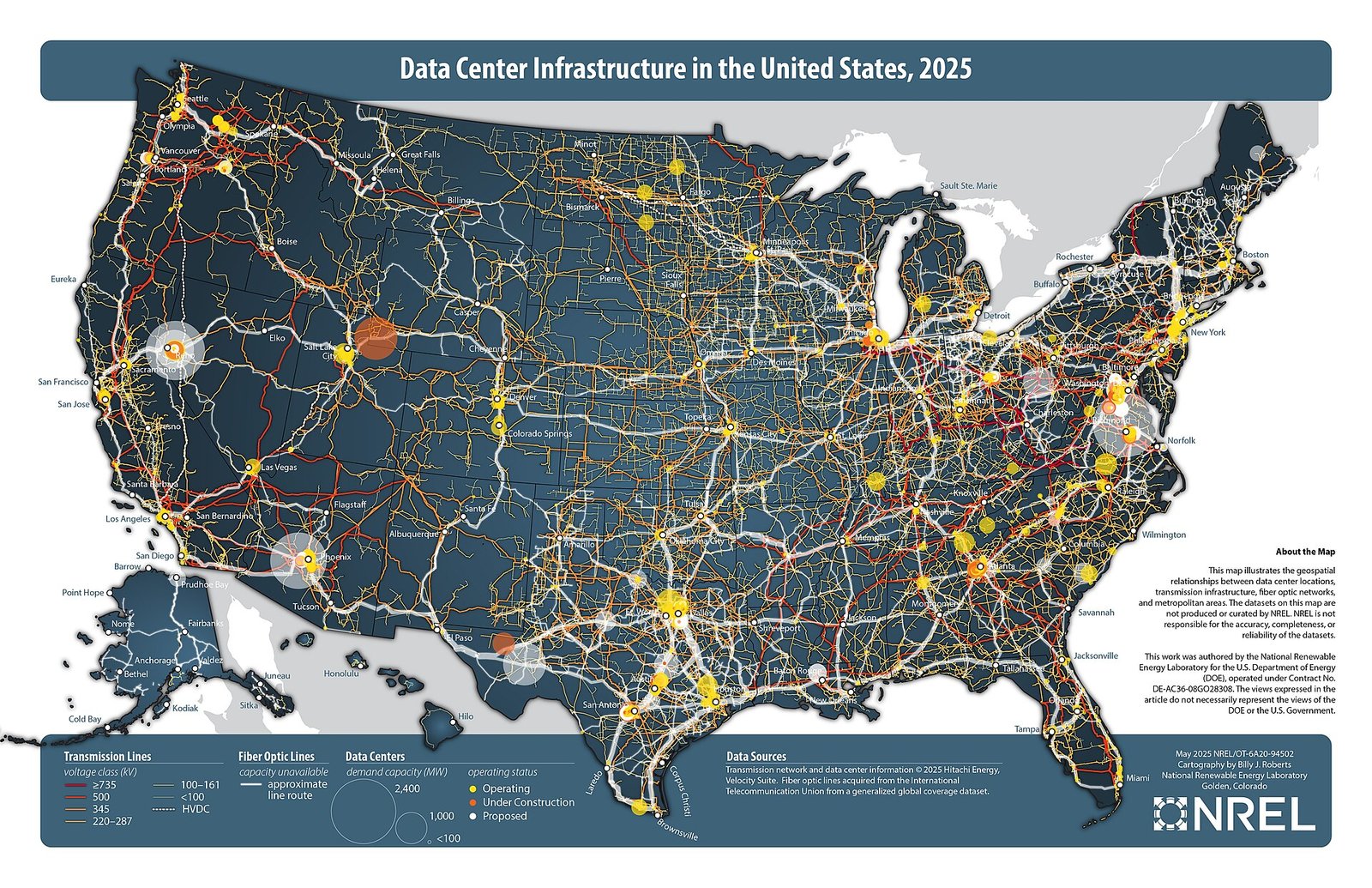
We often talk about AI as if it exists in a cloud, but it lives in concrete bunkers that are hitting a literal wall. The primary constraint on Big Tech CapEx isn’t just silicon; it’s the grid. Powering large-scale training clusters requires electricity at a scale that local utility grids often cannot sustain, driving up operational costs and stalling project timelines. When you try to figure out if there is an ai bubble, look at the power bills.
Securing prime real estate for these massive data centers is no longer just about geography; it is a complex geopolitical and logistical puzzle. Companies are competing for land that offers proximity to high-voltage power lines and consistent water sources for cooling. This scarcity acts as a hard ceiling on scaling. You cannot simply throw more money at a facility if the utility provider cannot deliver the megawatts.
As centralized data center costs soar, firms are pivoting toward edge computing to offload processing. By moving intelligence closer to the source of the data, companies hope to reduce their dependency on these gargantuan, expensive hubs. If you are analyzing your own internal models, you might find that How to Prompt AI for Data Analysis: 12 Ready Templates helps you manage data more efficiently before it hits the bottleneck. This shift isn’t just about speed; it’s a necessary reaction to the reality that physical infrastructure has reached its limit. Ignoring these bottlenecks is a key mistake in any rigorous ai bubble risk assessment.
Regulatory Headwinds and Compliance Costs
The era of "move fast and break things" is dead. Corporate R&D budgets are now being cannibalized by compliance mapping, as firms pivot toward "governance first" models to satisfy emerging legislative requirements. This shift isn’t just about ethics; it is about survival. Legal teams are increasingly holding the keys to product roadmaps, slowing the deployment of new models to ensure copyright and data privacy protocols meet stringent, evolving standards.
Every pending copyright lawsuit acts as a contingent liability on the balance sheet, introducing massive fiscal unpredictability. When companies face potentially massive litigation costs, the core math of Big Tech CapEx starts to look shaky. As noted by seekingalpha.com, these mounting cracks in the AI trade are exacerbated by a lack of clear, uniform regulatory guidance. Investors hate uncertainty, and the current landscape—where a company’s valuation can swing based on a single court ruling—is poison for long-term capital allocation.
Ultimately, what is ai bubble risk if not a mismatch between speculative growth and real-world friction? Regulatory headwinds are that friction, turning what was once a sprint into a sluggish, expensive crawl. If your governance strategy cannot keep pace with the law, your AI model becomes a liability, not an asset.

Lessons from the Chinese Market Correction
When we look at the $480 billion wiped from the Chinese AI sector recently, it is impossible to ignore the signal [Yahoo Finance, 2026-10-26]. This wasn’t just a routine market correction; it was a state-led reassessment of value that saw capital flee at record speed. Unlike the United States, where Big Tech CapEx is largely driven by corporate balance sheets and public market pressure, China’s AI investment ecosystem relied heavily on state directives and centralized planning.
This structural difference is vital when considering if this event acts as a global harbinger. In China, government oversight acted as a blunt instrument, forcing a rapid deflating of the AI bubble. In the West, the bubble is moderated by interest rates and institutional scrutiny rather than top-down mandates. Some analysts argue this makes the US more resilient, but others see the same revenue disconnect surfacing in domestic earnings reports.
Is this a leading indicator for our own markets? If you are looking at the AI Market Correction Warning: Is Indian Tech Maturing?, you know that global tech markets are rarely truly isolated. While our regulatory framework differs, the fundamental issue—a massive gap between massive infrastructure spending and tangible enterprise revenue—remains a shared, uncomfortable reality that no amount of corporate optimism can hide.
Institutional Exposure and Market Stability
When you look at your retirement account, chances are you are heavily exposed to a handful of AI-centric giants. Institutional players, including pension funds and passive index trackers, have piled capital into these names, effectively making them the foundation of modern portfolios. This concentration creates a precarious situation; if AI-heavy stocks face a sharp correction, the systemic contagion could spill over into the broader market, dragging down every index fund holder with them.
The bond market is already starting to signal its concern. As highlighted by Yardeni Research, while some analysts see the risks as limited, the reality is that credit markets are increasingly pricing in the volatility associated with this AI-led frenzy. Investors are demanding higher premiums for the uncertainty baked into Big Tech debt, essentially using the bond market to regulate the excesses that equity markets have ignored.
Institutional investors are not just spectators here. Their massive, automated rebalancing acts as both a stabilizer and a potential accelerator. If they decide to pivot away from tech-heavy positions to lower their risk profile, the resulting sell-off could be jarring. We are essentially watching to see if these institutional heavyweights act as a floor for valuations or if their collective exit triggers the very volatility they currently fear.
The Shift Toward Operational Efficiency
The mania for scale is ending. We are watching a pivot in how Big Tech approaches infrastructure, moving from "growth at all costs" toward a hard-nosed focus on operational ROI. This isn’t just a corporate buzzword; it’s a necessary ai bubble risk assessment strategy. Firms are finally questioning the massive CapEx that defined the last two years, realizing that billion-dollar data centers must produce more than just impressive chat results.
We see this in the pivot toward leaner, domain-specific models. Instead of training gargantuan, general-purpose LLMs that burn through electricity and capital, companies are prioritizing smaller, high-accuracy tools tailored to specific enterprise workflows. This shift forces a re-evaluation of current roadmaps, pushing management to prioritize features that offer immediate cost savings or tangible revenue—rather than speculative long-term gains.
For the labor market, this transition signals a cooling period. Companies are trimming redundant roles as they consolidate their AI research efforts. This aligns with what we’ve observed in regional shifts, such as the Microsoft Job Cuts in India: What the VEO Means for Tech Workers, which highlights how global talent strategies are being redefined by these fiscal constraints. Long-term viability for AI projects now depends on demonstrating a clear path to profitability. If a project doesn’t solve a specific, expensive business problem today, it is likely being moved to the chopping block as the industry matures.
Watch: Gartner Says AI Data Centers May Not Recover Costs, $3.5T At Risk
Frequently Asked Questions
Is the AI bubble actually bursting or just deflating?
Whether we are witnessing a full collapse or a controlled cooling depends on where you look. In China, reports indicate the bubble has already burst, wiping out $480 billion in value. Meanwhile, analysts like Ed Yardeni suggest the global market is simply deflating, with the bond market exerting pressure that forces a necessary, albeit painful, adjustment in capital allocation.
What specific metrics should investors look at to evaluate AI company health?
Focus on the revenue-to-CapEx ratio. If a company spends billions on infrastructure without showing corresponding enterprise revenue growth, that’s a red flag. Pay close attention to debt levels, especially among the "neoclouds"—the middlemen of the AI boom. If their debt service costs outpace their actual software earnings, they are prime candidates for a liquidity crunch when credit markets eventually tighten.
How does the current AI infrastructure spending compare to past tech bubbles?
The current Big Tech CapEx surge is staggering. Unlike the dot-com era, where speculation drove valuations, today’s risk centers on physical infrastructure—massive data centers that require billions in maintenance. Critics like Larry McDonald warn that this disconnect between spending and profit creates a 20-30% market crash risk. It’s no longer just about hype; it’s about the sheer weight of expensive hardware.
Are there industries that are effectively using AI to generate real ROI today?
While the broader market faces an ai bubble risk assessment, certain sectors are finding utility. Companies automating legacy data migration or optimizing supply chain logistics are seeing measurable ROI. However, widespread enterprise adoption remains uneven. If you are looking for stability, seek firms where AI is a silent tool for operational efficiency rather than the primary product being sold to venture capitalists.
The Path Forward: Beyond the Hype Cycle
We’ve spent months debating whether the AI bubble will burst, but the real issue is the structural inefficiency of Big Tech CapEx. When you look at the $480 billion wiped out in China’s recent market correction, it is clear that unsustainable capital allocation eventually meets a hard reality. Ed Yardeni suggests we might see a controlled deflation rather than a total collapse, but that doesn’t mean your portfolio is immune to volatility.
The risk isn’t just a market correction; it’s the widening disconnect between massive infrastructure spending and actual enterprise utility. If you are performing your own AI bubble risk assessment, don’t just track ticker symbols. Focus on Closing the AI Accountability Gap: A Corporate Roadmap to understand how firms are actually monetizing their compute. Investors need to watch for real revenue growth, not just capacity, to mitigate the fallout if the AI bubble risk 2025 intensifies.



Join the conversation