Key takeaways
- Apple Intelligence is officially launching in China with the iOS 27.3 update, tailored to meet local regulatory standards.
- The rollout reflects a broader trend of AI fragmentation, where global features are increasingly localized to comply with national data laws.
- Apple is utilizing specific infrastructure adjustments to maintain its privacy commitments while operating within China’s legal framework.
- The move sets a new precedent for how multinational tech firms can integrate advanced AI into the world’s most restrictive digital markets.
Imagine waiting two years for a feature your friend across the globe has already integrated into their daily routine. For users in China, that wait is finally ending. Apple has confirmed that apple intelligence in china mainland iphones will officially arrive with the iOS 27.3 update this December. This rollout is a significant move for the tech giant, especially as we see AI Infrastructure Spending 2026 Forecast: The Shift to Efficiency reach new heights worldwide.
According to thenextweb.com, you will soon see Writing Tools, Genmoji, and Live Translation hit your device, but there is a catch: the new, smarter Siri remains off the table for now. In this piece, we will look at how Apple is navigating strict local regulations, how they have integrated Alibaba’s Qwen model, and what this means for your iPhone experience.
The Regulatory Landscape: Navigating China’s AI Laws
Launching AI in China isn’t like flipping a switch in the US or Europe. The Cyberspace Administration of China (CAC) demands that any generative AI model strictly adheres to local content guidelines, which essentially means ensuring the output aligns with specific state-mandated values. For foreign companies, the barrier to entry is high: you must keep data on local servers and use models that have passed rigorous government audits.
While other tech giants have largely avoided the mainland market for their native AI suites, Apple took a pragmatic, partnership-heavy path. By integrating Alibaba’s Qwen model, Apple successfully navigated the regulatory maze that has kept most competitors out. This strategy stands in stark contrast to firms like OpenAI or Google, which have historically faced significant friction trying to bring their flagship generative services to the region. Just as A Guide to E-Bike Safety and Regulatory Compliance in India highlights the necessity of localized rules for hardware, Apple’s software shift confirms that strict compliance is the only price of entry.
The path to the December iOS 27.3 release was anything but straight. Following a brief, unapproved appearance of the features in March, Apple spent months in tense, complex negotiations. Finally, in July, the CAC gave the green light. This wasn’t just about features; it was about proving that Apple’s local "private cloud" infrastructure could respect Chinese data sovereignty while delivering the utility users expect. It is a delicate, calculated balance of global tech and local law.
Feature Parity: What’s Included in iOS 27.3 for Chinese Users
If you’ve been waiting to use Apple Intelligence on your iPhone in China, December is your month. With the upcoming iOS 27.3 update, Apple is finally bridging the gap, though it is not a direct replica of the global experience.
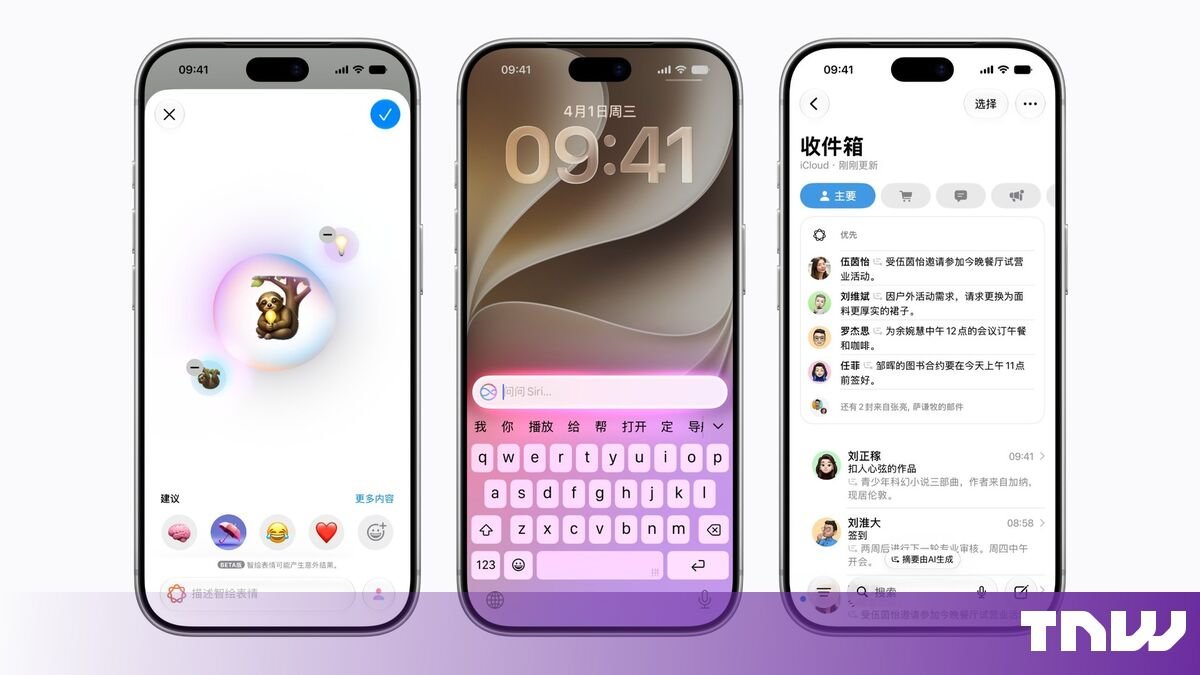
You will get access to the productivity essentials. This includes Writing Tools for drafting emails, the Clean Up tool for your photos, Genmoji for custom reactions, and priority notification sorting. Live translation will also work across Messages, FaceTime, and Phone calls. Crucially, these features support both English and simplified Chinese, ensuring that the primary languages used in the region are well-covered.
However, the "Siri AI" upgrade—the smarter, context-aware assistant unveiled at WWDC 2026—remains off-limits for now. To compensate, Apple is tapping into the local ecosystem. Instead of relying solely on its internal models, your iPhone will leverage Alibaba’s Qwen model for specific queries within Siri, Writing Tools, and Visual Intelligence. Whether you are asking about a PDF or identifying a photo, the system routes these requests through the localized model that regulators cleared back in July.
The experience feels familiar but distinct on your device. If you are using an iPhone 15 Pro or newer, including the new iPhone Air and Duo models, these tools will surface naturally in your existing menus. While you do not get the full, global AI suite, the integration of Qwen ensures your device remains functional within the specific constraints of the Chinese market.
Privacy and Data Sovereignty: Private Cloud Compute in China
Getting Apple Intelligence to work in China wasn’t just about language; it was a masterclass in navigating strict data sovereignty laws. While global users rely on Apple’s standard Private Cloud Compute (PCC) architecture, the implementation for mainland China is distinct. To comply with local regulations that require data to stay within borders, Apple has had to localize its server infrastructure. This means sensitive processing for features like Writing Tools and Visual Intelligence is anchored in local data centers rather than routing through global nodes.
This setup creates a unique tension for a company that prides itself on privacy. Apple has long championed the idea that user data shouldn’t be accessible even to them, a stance that resonates globally, much like the broader debates around What Is OpenAI Trained On? Why It Stopped Internet Training and What It Means for India. By integrating Alibaba’s Qwen model, Apple ensures compliance while attempting to maintain its "privacy-first" identity. However, local regulations often necessitate specific access protocols that differ from Western standards.
Transparency reports will be the ultimate litmus test for this strategy. As Apple expands, we expect these disclosures to clarify how much data, if any, is accessed by local authorities under existing cybersecurity laws. For now, the focus remains on keeping the user experience snappy on the iPhone 15 Pro and newer. If you are wondering how to use apple intelligence in china, remember that these safeguards are the invisible trade-offs enabling the rollout in December.
The Global Fragmentation of AI: Why Models Differ by Region
China’s unique regulatory environment is effectively pushing us toward a "splinternet" for artificial intelligence. Apple isn’t just shipping one global intelligence product; they are assembling a patchwork of localized capabilities. By integrating Alibaba’s Qwen model to satisfy local compliance, Apple is acknowledging the reality that national sovereignty currently trumps global feature parity.
Maintaining a unified codebase when your AI logic changes based on the user’s geolocation is a massive engineering headache. Instead of a single, universal "brain," Apple is forced to manage a modular architecture where specific regional models swap in and out. As reported by msn.com, while Apple Intelligence is finally arriving in the mainland with iOS 27.3 this December, core components like the advanced Siri AI remain excluded. This creates a fragmented ecosystem where engineers must constantly balance local legal requirements against the need for consistent software performance.
For travelers, this is a growing headache. Imagine moving between regions and suddenly losing access to features like Genmoji or Visual Intelligence because your Apple ID is tethered to a specific regulatory zone. This lack of interoperability suggests we are heading toward a future where "global" tech products are anything but. If you rely on consistent AI logic across your devices, these regional variations are a genuine hurdle. Long-term, this divergence threatens to fracture the standard of what we call "intelligent" software, making true global parity nearly impossible to achieve.
Impact on Local Chinese AI Competitors
Apple’s decision to integrate Alibaba’s Qwen model for apple intelligence in china mainland iphones is a massive signal for the tech sector. It is not just about regulatory compliance; it validates domestic large language models on a premium global stage. For local players like Baidu or DeepSeek, this creates immediate pressure to improve their own ecosystem integration. If their AI tools do not match the fluid performance of Apple’s Writing Tools or Visual Intelligence, they risk losing users who now expect high-end AI performance directly in their OS.
We have seen similar market shifts globally, such as the Microsoft AI Cloud Growth: Q1 Results and Market Impact, where deep integration often dictates the ultimate winner. In China, the "AI bubble" sentiment is cooling, replaced by a shift toward actual utility. Companies are now racing to prove their models are not just compliant, but indispensable for daily tasks.
Partnering with Apple is a double-edged sword. It brings massive distribution for a model like Qwen, but those firms must adhere to Apple’s strict UI/UX standards. As we approach the December rollout with iOS 27.3, local firms have a narrow window to harden their proprietary offerings before the iPhone becomes the default AI assistant for millions.
For Developers: Building Apps for the Chinese AI Market
If you’re building for the Chinese iOS ecosystem, your workflow just got more complex. With thenextweb.com confirming the December rollout of iOS 27.3, you need to pivot your strategy immediately. The integration of Alibaba’s Qwen model into Writing Tools and Visual Intelligence means your apps must now account for a different backend compared to the global standard.
Key Strategy Adjustments
- Local Compliance: You must ensure your app’s output adheres to local content moderation laws. Since Qwen handles the heavy lifting, your integration must respect the specific regulatory guardrails that Apple and its local partners have established.
- API Usage: Use the latest developer beta—available from November 4—to test how your features behave when they interact with the China-specific model. Don’t assume global Apple Intelligence APIs will return the same results locally.
- Cross-Region Logic: Build modular code. Use conditional checks to detect the region, ensuring your app gracefully degrades or adapts when advanced features like Siri AI remain unavailable.
Testing against these Chinese regulatory benchmarks is no longer optional. If your app relies on generative AI, verify your data flow against the provided documentation to avoid rejection in the local App Store.
Security and Compliance: Lessons for Multinational Tech Firms
Apple’s move to enable specific features through iOS 27.3 shows that success in the world’s largest market requires more than just high-end hardware. For multinational tech firms, the lesson is clear: you cannot force a "one-size-fits-all" model onto a strictly regulated market. Apple secured regulatory clearance by integrating Alibaba’s Qwen model, proving that bridging the gap between global standards and local compliance often means compromising on total feature parity, such as the exclusion of Siri AI.
Strategies for Global Scaling
- Prioritize Local Partnerships: Partnering with domestic players like Alibaba can de-risk entry and satisfy strict data sovereignty requirements.
- Regulatory Proactivity: Engaging early with local internet regulators is not optional; it is the fundamental prerequisite for any timely, legal launch.
- Modular Architecture: Build systems that allow for regional swapping of LLMs, much like how the Anthropic IPO Strategy: The $567B Compute Bet Explained highlights the immense complexities of managing massive, centralized infrastructure.
Companies managing AI in conflicting jurisdictions must move away from rigid, global software rollouts. By isolating specific models for the China market—while keeping other regions on a unified stack—firms can effectively mitigate legal exposure. True security today isn’t just about encryption; it’s about respecting the specific jurisdictional boundaries of data sovereignty that vary by border.
The Future of Apple’s AI Strategy in Asia
Apple’s decision to integrate Alibaba’s Qwen for local users in China isn’t just about catching up; it’s a blueprint for its future in Asia. By opting for a modular, region-specific backend, Apple has proven it can navigate intense regulatory scrutiny without sacrificing the "closed-garden" hardware-software synergy that users love.
This tight integration remains their most effective defensive moat. While competitors struggle to optimize cloud-based AI, Apple’s focus on running tools like Genmoji and Writing Tools directly on the A20 Pro and M6 silicon ensures the experience remains fast and private. As noted by macrumors.com, limiting these features to the iPhone 15 Pro and newer models reinforces their strategy of tethering cutting-edge AI to premium hardware.
Long-term, we should expect a "patchwork" of AI models. A single, global model simply won’t survive the regulatory requirements of different nations. Apple is setting a precedent where they swap backends based on local compliance, making them remarkably resilient in fragmented markets. For growing regions like India, this modular approach could be the key to faster rollouts, provided they identify the right local partners. They aren’t just selling phones; they’re building a compliant, localized ecosystem that can endure the world’s toughest digital borders.
Watch: Apple Intelligence Approved For Launch In China With Alibaba’s Qwen AI; OnePlus Exits US & Europe
Frequently Asked Questions
Is Apple Intelligence fully available in China with iOS 27.3?
No, it is not a full-feature launch. While Apple Intelligence in China mainland iPhones officially arrives with the iOS 27.3 update this December, the experience is limited. You will gain access to tools like writing assistance, Genmoji, and photo cleanup, but the highly anticipated Siri AI remains absent. It is a localized, tiered rollout rather than the complete global feature set.
How does Apple handle user data privacy in China compared to other regions?
Apple is navigating strict local regulations by adopting a hybrid model. While they rely on their own internal systems for many tasks, they have integrated Alibaba’s Qwen model for specific requests within Siri and writing tools. This ensures compliance with local data sovereignty laws, allowing Apple to offer these services in a region where standard global AI protocols face significant regulatory hurdles.
Are there specific AI features that Chinese users will not receive?
Yes, the most notable omission is the upgraded Siri AI. Despite the advanced capabilities shown at WWDC 2026, those specific improvements are not included in the China release. If you are wondering how to use Apple Intelligence in China, keep in mind that you are limited to features like Live Translation, Visual Intelligence, and notification summaries, excluding the newest, most advanced assistant functions.
Does iOS 27.3 use local Chinese AI models instead of Apple’s own?
It uses a combination of both. Apple utilizes its own proprietary models for core tasks, but for specialized requests—such as analyzing a PDF or interpreting a photo—the system taps into Alibaba’s Qwen model. This dual-model strategy allows Apple to provide functional AI tools while adhering to the specific safety and content requirements mandated by Chinese internet regulators for all generative AI products.
Balancing Global Ambition with Local Realities
Apple is essentially playing a game of "localization chess" with the apple intelligence in china mainland iphones rollout. By integrating Alibaba’s Qwen, Apple secures a compliant foothold, yet the exclusion of the new Siri AI proves that global feature parity remains a significant hurdle. You are not getting the full, generative experience that users elsewhere enjoy, but you are getting a functional subset that satisfies local regulators.
This regional fragmentation is worth watching as we see how other tech giants adjust to strict data sovereignty. It is a shift similar to the complex debates we see in GPT 6.1 Sol vs Terra: Impact on Indian Scientific Research, where local policy dictates the pace of progress. If you are wondering how to use apple intelligence in china when it arrives, watch for the November 4 developer beta. It is your best window to test these iOS 27.3 features before the final December release reaches your daily driver.



Join the conversation