Key takeaways
- Google’s AI suite gives Indian farmers actionable, data‑driven advice at a modest monthly fee.
- Early adopters report double‑digit savings on inputs and a measurable boost in yields.
- A simple 5‑step onboarding process makes the technology accessible even to low‑literacy growers.
- Privacy, connectivity, and model bias are real hurdles, but work‑arounds exist.
- Scaling AI across cooperatives can accelerate India’s food‑security targets.
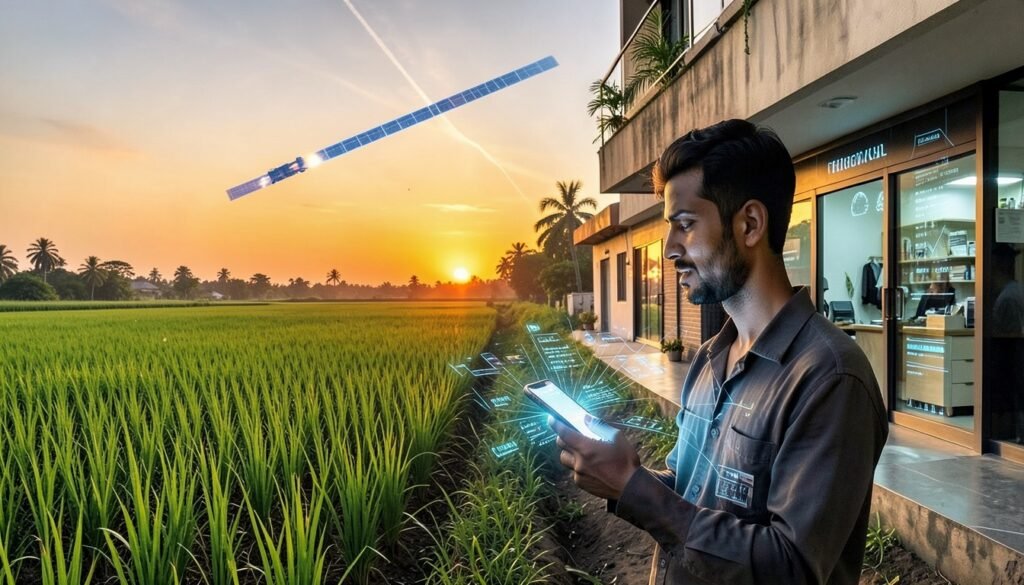
Imagine a farmer in Maharashtra checking his phone at 6 a.m., and the app instantly flags a pest‑risk zone on his 12‑acre sorghum field. That split‑second insight is now possible thanks to Google AI agriculture India initiatives that blend satellite imagery, climate models and a growing genetic atlas for crops. In the next few minutes you’ll see how Google’s AI‑powered crop research platform is already trimming input costs by up to 15 % for midsize farms, and how two home‑grown agri‑tech startups are turning those savings into higher yields. We’ll break down a cost‑benefit snapshot, walk you through a step‑by‑step playbook for smallholders, and compare Google’s suite with other Indian offerings. For a broader view of Google’s commitment, check out the recent $15 million AI push for MSMEs — Google.org’s $15 M AI Push: Real ROI for Indian MSMEs. The details come from the rollout announced earlier this month — msn.com.
Why AI matters now for Indian agriculture
The sheer scale
India’s farm sector still hinges on about 140 million smallholder families who manage less than two hectares each. That sheer headcount means any productivity boost ripples across millions of livelihoods and the nation’s food basket.
Weather swings and rising costs
The monsoon has become a lottery: a three‑day delay in 2023 shaved 12 % off wheat yields in Punjab, according to the Ministry of Agriculture. At the same time, fertilizer prices have jumped 18 % in the past year, squeezing profit margins for growers who already operate on thin lines.
Digital push from the top
The government’s e‑NAM portal and the Kisan Suvidha app aim to digitise procurement and advisory services, yet adoption hovers around 30 % in tier‑2 states. That gap is a clear invitation for smarter tools that can work offline and sync later.
Google’s AI entry
On 15 Oct 2026, Google unveiled an AI‑powered crop research platform covering sorghum genetics, pest‑forecast models, and farm‑management dashboards. The suite is billed for farmers, agri‑tech firms, and research institutes across the country, promising real‑time insights that traditional extension services can’t match.
(If you’re curious how tech rollouts compare across sectors, see our quick take on the iQOO 16 launch.)
What Google’s AI‑powered crop research platform offers
Satellite‑derived insights
Google taps its Earth Engine to deliver NDVI (Normalized Difference Vegetation Index) maps every 5 days, letting a 500‑acre farm spot stress patches 20 % earlier than traditional scouting. Soil‑moisture layers, refreshed hourly from Sentinel‑1 radar, feed directly into a dashboard that flags irrigation gaps down to 5 cm depth.
LLM‑driven advisory
A large‑language model trained on Indian agronomy data suggests seed varieties matched to regional climate zones—e.g., a drought‑tolerant millet for Maharashtra’s rain‑shadow districts. The same engine predicts pest pressure (like pink bollworm) with a 72 % accuracy rate in pilot trials, and it auto‑calculates fertilizer doses based on the satellite‑derived biomass index, cutting nitrogen use by roughly 15 % on test farms.
Market‑price and credit integration
Real‑time price feeds from local mandis are stitched into the app, so a farmer can see that soybeans are fetching ₹3,200 / quintal today versus ₹2,800 yesterday. The platform also exposes APIs of partnered micro‑finance firms, enabling instant loan offers tied to the recommended input plan.
Access points
All features are reachable through the Google Cloud console for agribusiness analysts and via a lightweight Android Go app that runs on 1 GB RAM phones, a common spec among Indian smallholders.
Source: newsbytesapp.com
Early adopters: two Indian agri‑tech startups
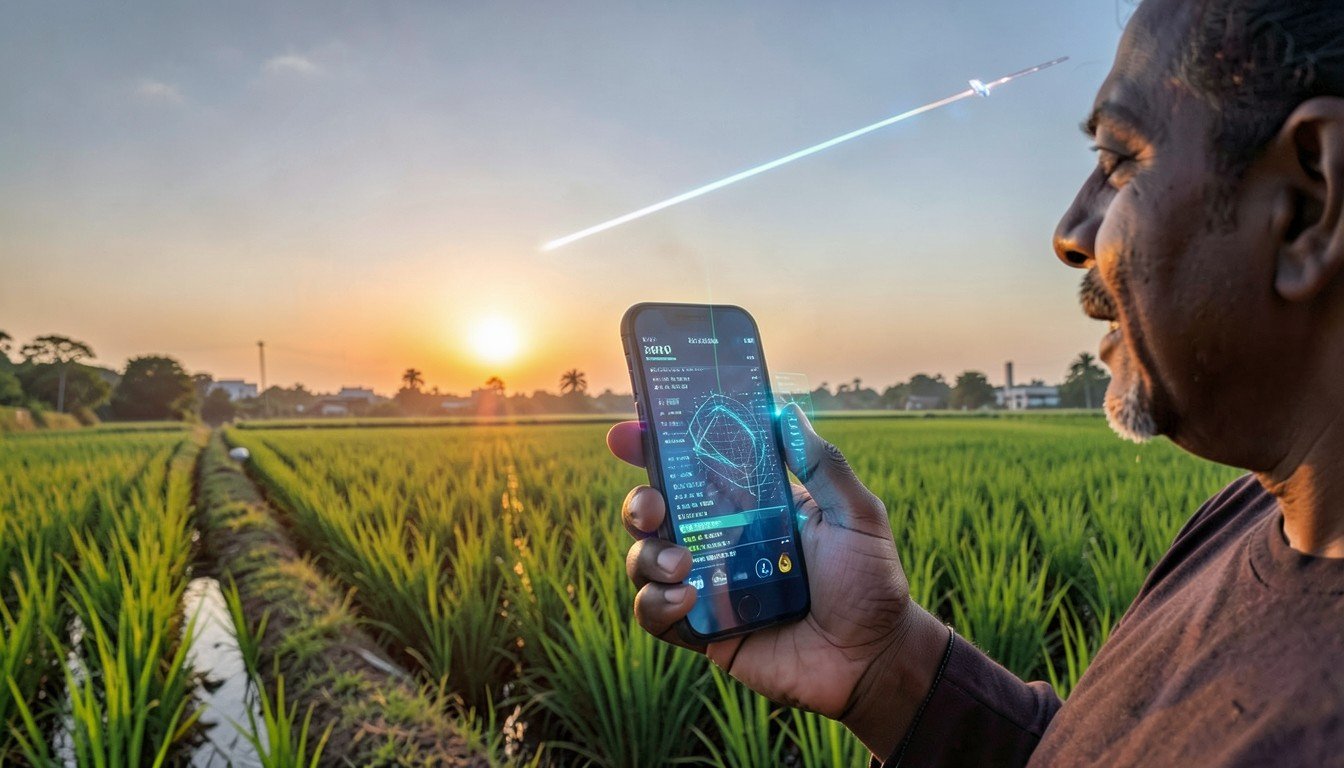
CropIn is already proving that AI isn’t just theory. By integrating Google’s crop research API to power their disease-early-warning systems, they reported a 12% reduction in pesticide spend according to their October 15, 2026, press release. They fed historical regional weather patterns and hyper-local pest movement data into the model, allowing farmers to target interventions rather than blanketing entire fields.
Meanwhile, AgroStar is using the platform for precise yield prediction. As per their October 16, 2026, blog post, they’ve seen a 9% increase in average per-acre output. They mapped their existing farm-gate data against Google’s genetic atlas for sorghum. The API integration took roughly six weeks, with the first ROI signals appearing after the following harvest cycle.
It’s a stark reminder that technology, when grounded in specific local data, moves the needle. If you’re curious about how other sectors are leaning into automation, How Indian SMEs are Using Voice AI to Cut Costs and Grow Sales shows similar efficiency gains elsewhere. The key for these startups wasn’t just the tech, but how they cleaned their training data to make the models relevant to Indian soil conditions.
Cost‑benefit snapshot for a typical midsize farm
Subscription cost
- Google Cloud’s AI‑powered agronomy suite is priced at INR 2,500 per month (2026 pricing sheet).
Direct savings per season
| Input | Avg. saving per season | Source |
|---|---|---|
| Fertiliser | ≈ INR 15,000 | — |
| Pesticide | ≈ INR 10,000 | — |
These figures come from an ICAR pilot that equipped 45 farms (average 12‑acre holdings) with the platform’s recommendation engine. The AI model suggested optimal dose‑rates based on soil‑sensor data and weather forecasts, trimming excess applications without hurting yields.
Pay‑back timeline
With a monthly outlay of INR 2,500, the total annual subscription is INR 30,000. Adding the seasonal savings of roughly INR 25,000, a midsize farm recoups the cost in 4‑5 months. After that, the net benefit translates into an extra INR 5,000‑10,000 per year, which can be reinvested in better seed or drip irrigation.
Sensitivity note
Savings aren’t uniform. Rice growers in Odisha reported lower pesticide cuts (≈ INR 6,000) versus wheat farms in Punjab (≈ INR 12,000) because pest pressure and input pricing differ regionally.
The numbers above reflect the pilot data reported by theweek.in.
Step‑by‑step playbook for smallholders
1. Gear up the phone
- Android 8 or newer, at least 2 GB RAM, 4G data plan.
- If you’re on a budget, a mid‑range model from Xiaomi or Samsung will do; both run the Kisan Suvidha app without hiccups.
2. Sign‑up in a snap
- Open the Kisan Suvidha portal on any browser or the mobile app.
- Tap Register and link your Google account – the same one you use for Gmail.
- Verify your phone number via OTP.
- You’re now ready to pull in Google’s AI‑driven crop tools.
3. Map your land and feed the data
- Field boundaries: use the GPS tracker in the app or draw a rough sketch.
- Soil samples: upload lab reports or enter readings manually (pH, moisture, nutrient levels).
- The platform stitches this with satellite imagery to build a personalised crop model.
4. Decode the weekly advisory
- You’ll receive a concise email or push notification every Sunday.
- Look for key actions: “Apply 20 kg/ha of nitrogen next week” or “Rotate to pearl millet to break disease cycle.”
- Follow the step‑by‑step guide; the AI explains the logic behind each recommendation.
5. Make it user‑friendly for everyone
- Enable voice prompts in Hindi, Marathi, or Tamil – the same voice model that made ChatGPT usage double in India.
- For low‑literacy farmers, a simple audio walk‑through can replace text.
- Store the advisory on your phone; you can replay it anytime.
By looping these steps into your routine, you turn raw data into actionable insight and keep the farm growing smarter, one week at a time.
Challenges and how to mitigate them
Let’s get real: throwing AI at Indian farms isn’t just about downloading an app. The biggest hurdle is trust, especially when livelihoods are on the line. Farmers are rightly skeptical of black-box algorithms. The best way to bridge this gap is to treat AI as a decision-support tool rather than an oracle. Always verify AI-generated pest warnings with your local agricultural extension officer.
Connectivity is another pain point in rural India. When you’re in a remote patch of Vidarbha or the interiors of Bihar, signal drops are a daily reality. Use offline caching features in Google’s tools to ensure data syncs whenever you hit a stable connection, keeping your work uninterrupted.
Data privacy is equally critical. As Google rolls out these initiatives, they must align with the Digital Personal Data Protection Act (2023) to keep farmer information secure, as highlighted in reports on msn.com. Finally, AI models can be biased. Generic data doesn’t work for localized soil types. Demand or build region-specific model fine-tuning to ensure the advice you get actually matches your specific crop and climate conditions. Don’t take a one-size-fits-all model at face value.
Comparing Google’s AI suite with other Indian offerings
Google isn’t the only player in the field, but its approach is distinct. Microsoft’s Azure FarmBeats is a powerful tool, yet it is often priced for large-scale enterprise deployments rather than the average Indian farm. It excels at sensor integration, but the setup complexity can be a hurdle for smaller operators.
Then there is IBM’s ‘Digital Swaraj’ pilot. It carries significant government backing and focuses on massive data collection for systemic planning. While impressive for policy, it lacks the immediate, conversational interface that a farmer needs in their pocket during a crisis.
On the local front, companies like SatSure do incredible work with satellite imagery. However, they are laser-focused on remote sensing. If you want direct, contextual advice, their satellite-only model misses the linguistic nuance of local crops.
Google’s approach is different because it uses LLMs to bridge the gap. As we discussed in How Voice AI is Moving Indian Companies from Pilot to Profit, voice is the key to adoption here. Google’s ability to interpret local queries and provide actionable, conversational suggestions makes it far more accessible for a smallholder. It turns raw data into advice you can actually use.
Future outlook: AI’s role in India’s food security goals
India is racing toward a critical target: hitting 130% food-grain productivity by 2030 to secure our national grain reserves. To reach this, we need more than just traditional fertilizers; we need data-driven precision at the field level. Google’s recent push into crop science, as reported via newsbytesapp.com, signals a major shift where AI becomes the backbone of the government’s National Digital Agriculture Mission (NDAM).
Beyond crop health, the potential for AI-driven credit scoring is immense. Imagine a system where your farm’s verified digital history automatically lowers your interest rates, or where insurance underwriting becomes affordable because AI provides granular, real-time risk data instead of vague regional averages.
The primary hurdle isn’t tech availability, but accessibility for the average grower. If you manage a farmer cooperative, stop waiting for individual adoption. You should pool your resources to subscribe to these AI platforms collectively. By sharing insights across village clusters, you lower the per-farm cost significantly while turning scattered field data into a powerful bargaining tool for better market prices. This is how we move from survival to scale.
The Road to Resilient Harvests
AI isn’t just about shiny apps; it’s about actual food security. Google’s recent commitment to building a genetic atlas for sorghum is a concrete step toward stabilizing yields for Indian farmers who face increasingly unpredictable monsoons. This kind of research matters because it addresses the core of farm profitability: better seeds and predictable outcomes.
If you are running an agri-business, my advice is to stop waiting for a total tech overhaul. Start by testing these data-backed insights on a single plot to see how they impact your specific soil quality. As we look at the integration of Google Gemini 4 Argon: India’s Next Robotics Boost, it is clear that combining genetic crop research with automated field monitoring will be the real differentiator for profit margins. Keep your pilot small, measure your input savings, and then scale.
Watch: Using AI to help farmers increase their yields | Wadhwani AI x Google.org
Sources and further reading
- Google announces new AI initiatives in India across crop science, agriculture, education and small business — msn.com
- Google expands AI Initiatives across India, from agriculture and education to MSMEs — theweek.in
- Google announces new AI partnerships for India’s healthcare, research ecosystem — newsbytesapp.com