
Key takeaways
- AI regulation is shifting from voluntary ethical guidelines to mandatory, SEC-enforced financial and operational disclosures.
- Global chip manufacturing hubs face a dual-compliance burden as they navigate conflicting US and local regulatory requirements.
- Data centers are increasingly being classified as critical national infrastructure, bringing them under stricter government oversight.
- Market volatility in the AI sector is being driven as much by regulatory uncertainty as by technological performance.
When the markets opened on November 5, 2026, the euphoria of the U.S. midterm results vanished in a heartbeat. The Nasdaq plummeted 5.52%, and the Philadelphia Semiconductor Index (SOX) took a brutal 12% hit—its sharpest decline since March 2020. This wasn’t just a market correction; it was an awakening to the real impact of ai regulation on semiconductors.
As the Democratic Party takes control of both the House and Senate, investors are bracing for a shift toward stricter ai regulation and compliance. We are moving beyond the philosophical debates found in the UNESCO Recommendation on the Ethics of AI: From Principles to Action and into the cold reality of industrial policy. As detailed on note.com, the sell-off in giants like AMD and Micron signals a fragmented supply chain future. Let’s look at why policy now dictates hardware value.
The Regulatory Pivot: Beyond Ethics
The recent U.S. midterm elections haven’t just shifted political seats; they’ve signaled a hard pivot in the impact of ai regulation on semiconductors. We are moving rapidly past the era of voluntary ethics into a period of rigorous, mandatory compliance. When the Nasdaq Composite Index dropped 5.52% on November 5, 2026, losing 1,421.52 points, it wasn’t just a market correction; it was a direct reaction to the realization that the era of non-binding, soft oversight is effectively over.
For years, we discussed why ai regulation is important in terms of abstract safety, but the current legislative focus has shifted decisively toward SEC-enforced transparency. Companies must now account for specific AI development risks in their formal public filings, forcing a transition from vague, feel-good goals to concrete ai regulation and compliance metrics. You can see how this creates a new, expensive baseline for operational costs, as firms scramble to audit their internal development processes. If you’re looking for stability, How to Hedge Against AI Bubble Risks Through Operational ROI becomes a vital part of your investment strategy.
This shift isn’t just about software code; it creates significant friction throughout the semiconductor supply chain. While industry players once prioritized raw speed-to-market, they are now forced to factor in the heavy, recurring cost of regulatory adherence. Both federal mandates and emerging what is state ai regulation initiatives are adding layers of complexity, ensuring that compliance is no longer an optional "feature" but a fundamental prerequisite for staying operational.
The South Korean Dilemma: Caught in the Middle
South Korean chip giants are at a critical junction. With the U.S. midterm elections shifting political conditions, Seoul finds its semiconductor industry trapped between US-led export controls and evolving domestic AI governance. As reported by news.sbs.co.kr, analysts are already signaling that the recent Democratic sweep in the U.S. could disproportionately affect economies heavily reliant on semiconductor exports.
The dual-compliance burden is intensifying. Companies are now forced to manage both the rigorous requirements of US state AI regulation and the emerging domestic mandates in Korea. This creates a friction-heavy environment where the simple act of selling hardware requires meticulous legal oversight. The concentration of the semiconductor supply chain in specific, high-risk geopolitical zones makes this even more dangerous for global stability.
Why is this shift happening now? It’s about infrastructure control. As we try to understand why ai regulation is important, we see that governments are increasingly treating data centers and processing power as national assets. Seoul is adjusting its industrial policy in response to the market volatility seen on November 5th, when the Nasdaq dropped 5.52%. For our readers in India, where electronics manufacturing is scaling up, this fragmentation serves as a reminder: the days of frictionless global chip trade are effectively over. Companies are no longer just fighting for market share; they are fighting for the right to operate across conflicting regulatory regimes.

Data Centers as Critical National Infrastructure
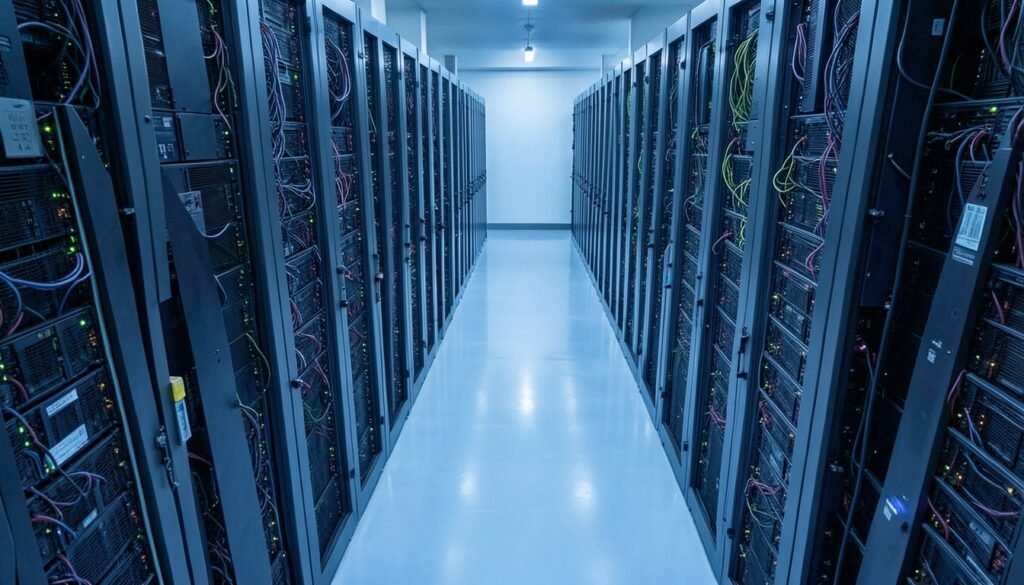
Data centers are no longer just commercial real estate; they are being treated as critical national infrastructure. This shift significantly alters the impact of ai regulation on semiconductors because every massive GPU cluster now requires power commitments that many municipalities are struggling to approve.
In major technical hubs, land-use regulations are tightening rapidly. Local authorities are increasingly questioning whether the extreme energy required for large-scale training runs justifies the strain on municipal power grids. For engineers and managers, monitoring these infrastructure threats is vital, as noted in our guide on How to Use Claude for Cybersecurity Analysis and Log Review. The regulatory scrutiny is no longer just about software; it is about the physical footprint of the chips themselves.
The connection between hardware build-outs and power consumption is the core of current ai regulation and governance. Governments are shifting toward public-private partnerships to ensure that grid capacity keeps pace with the semiconductor supply chain expansion. Unlike strictly private ventures that often face local zoning battles, these partnerships offer a faster, albeit more regulated, path to deployment.
| Model | Regulatory Burden | Infrastructure Priority |
|---|---|---|
| Private Venture | High Scrutiny | Low |
| Public-Private | Streamlined | High |
The SEC and the Transparency Mandate
The SEC is shifting its focus toward mandatory disclosure of AI-related operational risks. Recent filings show that tech firms can no longer treat AI as a generic productivity gain. Instead, the commission is pushing for clear breakdowns of how reliance on specific GPU architectures or cloud dependencies impacts the semiconductor supply chain. This transparency is vital because current reporting standards often mask the extreme volatility inherent in AI-heavy balance sheets, failing to capture the true cost of data center energy and specialized hardware upkeep.
Official regulatory notices increasingly emphasize the standardization of AI performance reporting. Without common metrics, assessing the real-world impact of ai regulation on semiconductors remains a guessing game for analysts. Investors are now moving beyond the hype, specifically demanding disclosures that bridge the gap between ai regulation and compliance. Institutional investors are leading this push, asking for granular data on how prospective ai regulation and governance frameworks could jeopardize hardware lead times.
When you look at the recent market volatility, as reported by msn.com, the concern is clear: the market is finally pricing in the risk of regulatory friction. Understanding what is global ai regulation or why ai regulation is important isn’t just an academic exercise anymore; it’s a fiduciary necessity. If a company cannot define its vulnerability to what is state ai regulation, it represents a blind spot that institutional capital is no longer willing to tolerate.

Supply Chain Vulnerabilities in an Age of Regulation
The impact of ai regulation on semiconductors is not just about software ethics; it is about the heavy iron that powers the future. When regulatory goalposts shift, the procurement of advanced lithography tools becomes a high-stakes gamble. Companies are currently hesitant to commit billions to extreme ultraviolet (EUV) equipment without knowing if a sudden change in policy will lock them out of key markets or render their hardware investments obsolete.
The traditional ‘just-in-time’ model is buckling under this pressure. It relied on a frictionless global flow, but today’s fragmented regulatory landscape makes that reliance a massive liability. If a single compliance bottleneck stops a shipment of critical raw materials or components, the entire semiconductor supply chain stalls. We have already seen how reciprocal tariffs, such as those introduced in April 2025, directly inflate the cost of high-end AI compute resources, making large-scale data center projects significantly more expensive for everyone involved.
We are witnessing a clear shift toward regionalization as a hedge against this instability. Firms are prioritizing local fab capacity over raw efficiency, essentially trading lower costs for the security of having parts produced closer to home. This transition is about control in an era where digital risks are escalating. As we look at CrowdStrike AI Agent Security: Managing Rogue Autonomous Risks, it is clear that securing the physical hardware is as vital as the code running on it. Efficiency is taking a backseat to resilience, and that is a trade-off executives are now forced to make.
Navigating the Fragmented Global Market
The current global trade environment is no longer unified. When you look at the impact of ai regulation on semiconductors, it’s clear that multinational firms are no longer deploying identical models worldwide. Instead, they are forced to fracture their technology to satisfy conflicting international standards, essentially building walled gardens of compliance.
While the "Brussels effect" historically influenced global standards, we are seeing a shift. The U.S. and various Asian nations are developing their own unique approaches to ai regulation and governance. For an established giant, the cost of compliance is just another line item, but for mid-sized firms, it is an existential threat. These smaller players often lack the budget to pivot their hardware designs every time a new policy surfaces, leading to market exits or stagnation.
Maintaining interoperability across these regional regimes is becoming a technical nightmare. If a chip designed in Seoul must meet one set of performance parameters for the U.S. and another for local markets, the efficiency of the entire semiconductor supply chain suffers. As reported by note.com, the recent market volatility highlights how quickly sentiment shifts when these regulatory risks crystallize.
To visualize the disparity, consider the following regulatory hurdles:
| Region | Primary Focus |
|---|---|
| EU | Fundamental rights protection |
| U.S. | National security and economic dominance |
| Asia | Domestic industrial sovereignty |
This fragmentation means global AI is becoming a myth, replaced by a series of localized, compliance-heavy silos that slow down innovation for everyone.
The Future of Industrial Policy
Governments are moving from passive observers to active architects. It is no longer just about R&D tax credits; it is about direct intervention in the semiconductor supply chain. The recent market volatility, where the Nasdaq dropped 5.52% on November 5, 2026, highlights how sensitive the hardware sector has become to political tides.
We are witnessing a tug-of-war. Companies want the freedom to innovate, while states demand strict ai regulation and governance to secure national infrastructure. This creates a difficult environment for firms balancing ai regulation and compliance with the need to scale. As we explore in The AI Infrastructure Debate: Why Market Discipline Matters, the risk of over-regulation could stifle the innovation governments seek to control.
What is global ai regulation doing to competitiveness? It is creating regional silos. When a region focuses on state ai regulation, it forces companies to build redundant, localized supply chains. For Indian firms integrating into these global networks, this means higher costs and complex compliance. Why ai regulation is important boils down to control over the silicon powering our digital future.
To survive, firms must shift from "just-in-time" to "just-in-case" resilience. This involves diversifying manufacturing beyond single-country hubs to mitigate risks from sudden policy pivots. Success now requires agility—anticipating the next regulatory wave before it hits the bottom line. The impact of ai regulation on semiconductors is clear: the era of unchecked globalized growth is being replaced by a more fragmented, policy-driven reality.
Watch: How AI Is Pushing the Semiconductor Supply Chain to the Limit | Bloomberg Primer
Frequently Asked Questions
How does the change in US political leadership affect AI regulation?
The Democratic victory in the U.S. midterm elections has triggered a sharp market pivot. While investors initially cheered the end of political uncertainty, the mood shifted quickly to concerns over the impact of ai regulation on semiconductors. On November 5th, the Nasdaq dropped 5.52% as traders began pricing in a more interventionist approach to ai regulation and governance from the incoming majority.
Why are South Korean chip manufacturers facing increased regulatory risk?
South Korea’s semiconductor supply chain is heavily tethered to U.S. markets, making it sensitive to domestic policy shifts. With the Democratic sweep, analysts anticipate a more complex environment regarding why ai regulation is important in trade relations. For these firms, this means heightened exposure to ai regulation and compliance mandates that could complicate their global export strategies and profitability.
What role does the SEC play in regulating AI-related market performance?
While the SEC continues its mandate to ensure market transparency, it is watching AI-driven volatility with increased scrutiny. After the Nasdaq’s $2 trillion market cap wipeout on November 5th, regulators are focused on whether companies are accurately reporting their AI reliance. This oversight forces firms to be more precise about the actual impact of ai regulation on semiconductors in their official financial filings.
Are data centers now considered critical national infrastructure?
Data centers are the backbone of modern computation, and their status as critical infrastructure is becoming clear as policymakers weigh what is global ai regulation. With the massive build-out required for AI, governments are increasingly viewing these facilities as essential assets. This designation invites stricter oversight, ensuring that the semiconductor supply chain remains secure and aligned with broader national interests during high-intensity deployment.
The New Reality of Chip Governance
The recent 12% drop in the Philadelphia Semiconductor Index (SOX) on November 5, 2026, isn’t just a market correction; it’s a clear signal regarding the impact of ai regulation on semiconductors. When the Nasdaq sheds approximately $2 trillion in market capitalization in a single day, the message is clear: political uncertainty surrounding ai regulation and compliance now carries more weight than raw performance benchmarks.
For industry leaders, the semiconductor supply chain is no longer just about optimizing process nodes or manufacturing yields. It is about operating within a reality where data centers are treated as critical national infrastructure. You cannot evaluate these firms without acknowledging that their growth is tethered to government oversight. If you want to understand how this shifts accountability, read our guide on Securing Agentic AI Workflows: Solving the Accountability Gap. My advice? Watch how firms adjust their compliance spending.
Sources and further reading
- [Breaking News] Nasdaq Plunges 5.5% Entering Correction Phase… Is the AI Bubble Bursting? Behind the 12% Drop in Semiconductor Stocks and Future Outlook for the Nikkei 225 — note.com
- Nasdaq plunges 5.5% on AI regulation fears — msn.com
- K-Semiconductor Stocks Stumble on AI Regulation Fears, EVs Show Promise — news.sbs.co.kr


Join the conversation